csrreporters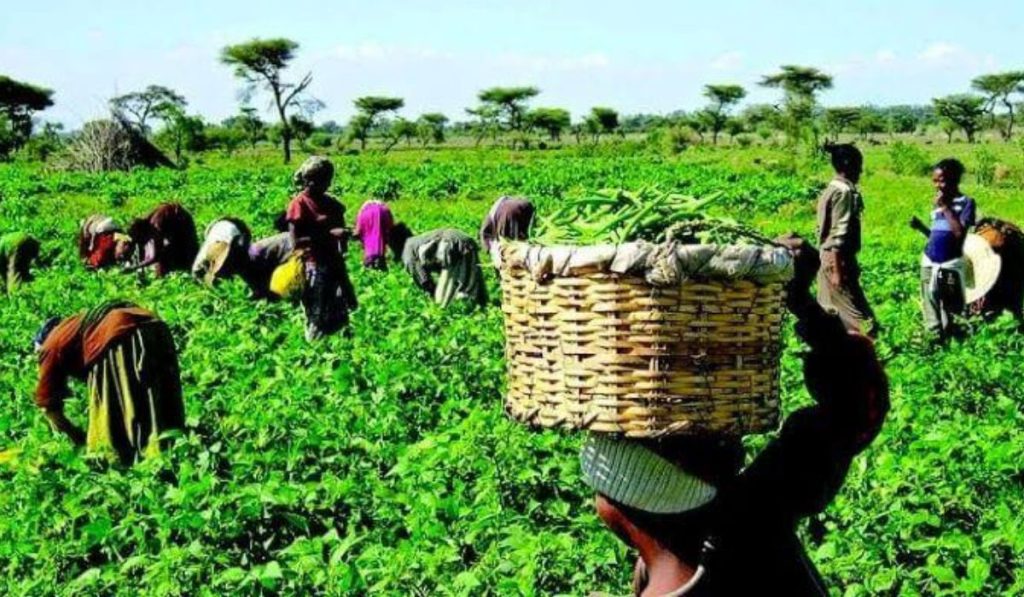
Aerial view of Nasarawa Farmers
African Development Bank (AfDB), has partnered a non-governmental organization, Sasakawa Africa Association (SAA), under its funded Policy and Human Resource Development Grant of Japan to trained a total of 5,119 rice farmers drawn across three Local Government Councils in Nasarawa State.
The two-day training held in Lafia, the Nasarawa State capital was to arm the farmers on how to adopt climate-smart technologies and good agronomic practices to improve yields and their livelihood.
The benefiting farmers were drawn from Akwanga, Doma and Lafia Local Government Areas
The program, tagged 2025 Mega Field Day, had other organizations like the International Institute of Tropical Agriculture, (IITA), SoftBank, Technologies for Africa Agriculture Transformation, (TAAT) and Excellence in Agronomy (EiA) as implementing partners.
Read Also: World Bank Disburses $250,000 Loan to Nasarawa Communities
The training, which mainly focuses on Good Agronomic Practices, Urea Deep Placement, Biochar, E-Kakashi, Green House Gas Emission Measurement, among other skills acquired to sustain food security in the State, was also aimed at proffering solutions to the effects of climate change impacting food security in Nigeria.
Godwin Atser, the Country Director of SAA, who led a team during the training to the rice farm in Yalwata Wuji and Assakio Communities, all in Lafia, said that as an NGO, they operate under the private agricultural extension services to deliver best practices on the farmers.
Idris Garko, the SAA-PHRDG Facilitator, who represented the Country Director, said, apart from adopting the technologies to mitigate the effects of climate change, the project aims to promote regenerative agricultural practices in Nigeria.
He added that, the practices were with the view to increasing food and nutrition security, crop productivity, and household incomes.
Atser further stressed that after undergoing the rigorous trainings, the farmers were given inputs such as the improved rice and maize seeds, fertiliser, insecticides, herbicides and biochar to enable them carry out seamless farming activities during rainy and dry seasons farming.
“The project is expected to last for three years. We planned that the direct beneficiaries in the state are going to be 5,000. Now, we are in the second year, and we have already exceeded our target, as we have so far reached 5,119 farmers since we commenced the programme in the State.
“People hear about global warming, What it means is an increase in temperature like we are currently witnessing, and this is a result of climate change. Human activities are the reasons for climate change.
“For instance, the issue of deforestation has been a major challenge to us because, when trees are cut down, the temperature increases because the carbon that is released were supposed to be absorbed by the plants, but it goes into the atmosphere and breaks down the ozone layer which then makes us have a very hot weather condition,” he added.
Bello Shehu, the Technical Coordinator, Regenerative Agriculture of SAA, affirmed that the intervention was yielding the desired results in the State and promised to continue to give maximum support to the farmers in order to improve their livelihoods.
Abdullahi Ibrahim, a rice farmer, who spoke on behalf of others, expressed gratitude to Sasakawa and other partners for empowering them with the skills to improve their farming activities, despite the prevailing challenges of climate change.
“Before now, we were wasting our rice during the planting seasons, because we broadcast too much of rice on the farms but Sasakawa Africa Association, Nigeria taught us to plant our rice on nursery beds before transplanting each of them, and since we started practicing all that, our yields have been massively increasing.
“I used to harvest two to three bags of rice after broadcasting one full basin of rice during the planting season, but with the new technology we acquired from Sasakawa, I now harvest over 10 bags of rice after planting about 16 kg of rice.”
Salome Sabo, State Coordinator of SAA, while expressing gratitude to the farmers and partners for turning up during the two-day Mega Field visit, reiterated the commitment of the NGO to continue to support farmers to enable them increase their yields.
[give_form id="20698"]