csrreporters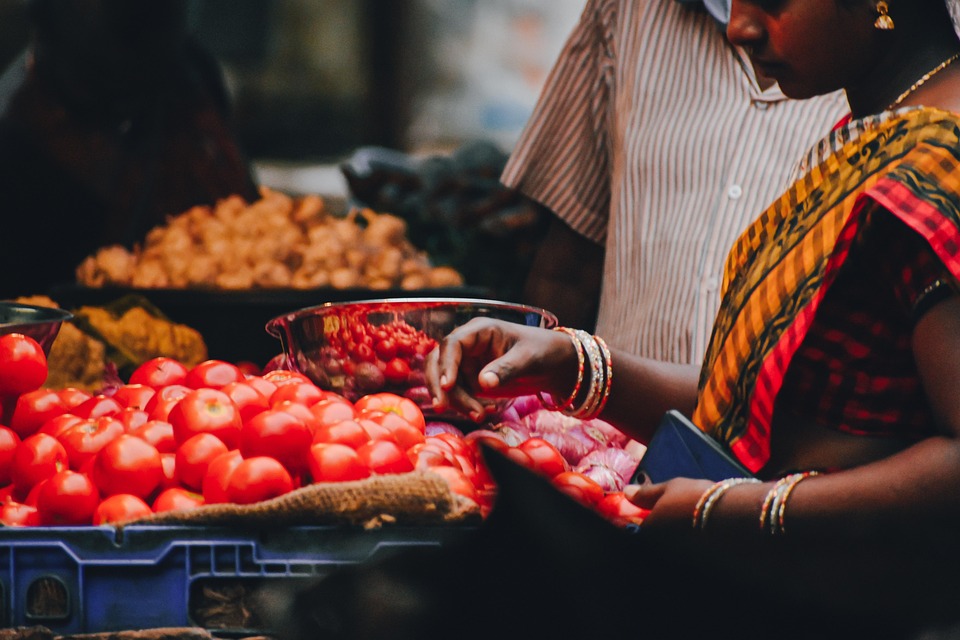
SDGs Lens to Nigeria’s Food Security Crisis
Nigeria spends over $10 billion each year importing essential food commodities despite being blessed with vast arable land, abundant human capital, and immense agricultural potential.
This paradox, recently underscored by the Minister of Agriculture and Food Security, Abubakar Kyari, is more than an economic embarrassment. It is a sustainability crisis. It exposes decades of policy neglect and mismanagement that have left the country dangerously dependent on imports while millions of its citizens go hungry. Beyond economics, this contradiction undermines Nigeria’s commitments to the Sustainable Development Goals, particularly SDG 2, which aims to end hunger and achieve food security.
The crisis is not theoretical. Rising food prices have pushed millions into poverty, with the World Bank estimating that over 106 million Nigerians now live in extreme deprivation. Staple foods have recorded astronomical hikes, rice by 129 per cent, beans by 217 per cent, and yams by 428 per cent, pushing household food spending to nearly 60 per cent of income, the highest globally. Such realities are not only devastating for families but also a direct affront to SDG 1’s ambition to end poverty in all its forms. When a majority of income is spent on food alone, little remains for health, education, or other basic needs, perpetuating cycles of inequality.
The irony lies in Nigeria’s resources. The country sits on 85 million hectares of agricultural land, with at least 35 million hectares still uncultivated. Agriculture already contributes about 26 per cent to GDP and employs 70 per cent of the workforce, mostly smallholder farmers who provide 90 per cent of the country’s food supply. Yet, productivity remains abysmally low. For example, while Nigerians consume about 6.5 million tonnes of wheat annually, local production barely scratches the surface. The gap is filled with imports, draining foreign reserves and entrenching food insecurity.
From a sustainability perspective, this is not just an agricultural failure, it is a missed opportunity to create resilient food systems, as envisioned by SDG 12 and SDG 13. Nigeria’s over-reliance on imports makes it vulnerable to global shocks, as seen during the COVID-19 pandemic when disrupted supply chains worsened local scarcity. Building sustainable domestic production would cushion the country against such vulnerabilities while reducing its carbon footprint from massive food imports.
But the structural barriers are daunting. Financing models for agriculture remain unfit for purpose. High-interest rates and stringent loan conditions lock smallholder farmers out of credit. The federal government’s budgetary allocation to agriculture is perpetually low just 1.5 per cent in 2025, far below the Maputo Declaration benchmark of 10 per cent. Without adequate investment, farmers remain trapped in subsistence cycles, unable to adopt mechanisation or climate-smart techniques necessary for sustainability. Nigeria’s tractor density of 0.27 horsepower per hectare is woefully below the FAO’s 1.5 hp/ha recommendation. Unsurprisingly, 90 per cent of farmers still depend on crude hand tools, limiting both scale and yields.
Climate change intensifies these challenges. Erratic rainfall, desertification in the North, flooding in central states, and soil degradation continue to shrink available farmland and reduce productivity. These environmental pressures, linked directly to SDG 13 (Climate Action) and SDG 15 (Life on Land), demand urgent adaptation strategies from drought-resistant seeds and irrigation infrastructure to large-scale reforestation. Yet, extension services and agricultural research remain underfunded, leaving farmers ill-equipped to cope with a warming climate.
Insecurity compounds the crisis. Banditry, terrorism, and persistent herder-farmer clashes have displaced communities and reduced access to farmland. This undermines not just SDG 2 on food security but also SDG 16 (Peace, Justice, and Strong Institutions). Without peace and security in rural areas, the sustainability of food production is unattainable.
The inefficiencies extend into value chains. Nigeria loses billions annually due to poor storage, weak logistics, and underdeveloped processing industries. Cocoa, one of the country’s most valuable exports, loses $2 billion annually as processing facilities operate at just 30 per cent capacity. Fisheries tell a similar story. Despite abundant coastal and inland waters, Nigeria produces only 1.2 million metric tonnes of fish against a demand of 3.6 million, importing the balance at an annual cost of $1.2 billion. Ironically, foreign trawlers exploit Nigerian waters, exporting fish abroad only for Nigerians to buy them back as imports. This is both unsustainable and economically tragic.
The dairy sector reflects untapped promise. With 20 million cattle, including over 2.3 million dairy cows, Nigeria could anchor a thriving dairy economy worth $6.5 billion, according to the US Department of Commerce. Yet, traditional, low-yield practices dominate. Embracing modern ranching would not only boost milk and beef production but also reduce violent conflicts between herders and farmers, aligning with SDG 2, SDG 8, and SDG 16.
Other countries have shown what is possible when sustainability is made central to agricultural policy. The Netherlands, with just 500,000 hectares of arable land, exports $70 billion worth of agricultural products annually through mechanisation, smart research, and efficient logistics. Israel, a desert country, has transformed its food systems with heavy investment in irrigation and water management, dedicating 30 per cent of its budget to agriculture. These models prove that resource endowment is not the key determinant of food security sustainability, innovation, and governance are.
Nigeria must urgently pivot. This requires more than isolated government programmes or symbolic distribution of farm inputs. What is needed is a whole-of-society approach, integrating government, private sector, academia, and local communities into a coherent sustainability framework. Financing must shift towards equity-based and climate-smart models. Farmers must be supported to adopt technologies that improve yields while conserving resources. Local processing must be expanded to retain value within communities, reducing post-harvest losses and creating jobs in line with SDG 8.
Importantly, food security must be treated not as a welfare issue but as a matter of national security and sustainability. A hungry nation cannot prosper; an import-dependent nation cannot be sovereign. By embedding the SDGs into agricultural policy from zero hunger to climate action and responsible production Nigeria can chart a path towards not only feeding itself but also reclaiming its place as an agricultural powerhouse.
The road will be long, but the direction is clear. If the country continues with business as usual, food poverty, hunger, and social instability will deepen. But if it embraces sustainability, invests in its people, and leverages its natural endowments responsibly, Nigeria can turn its agricultural paradox into an agricultural revolution. In doing so, it would not only achieve SDG 2 but also unlock progress across multiple development goals, securing a more prosperous, resilient, and equitable future.
[give_form id="20698"]