csrreporters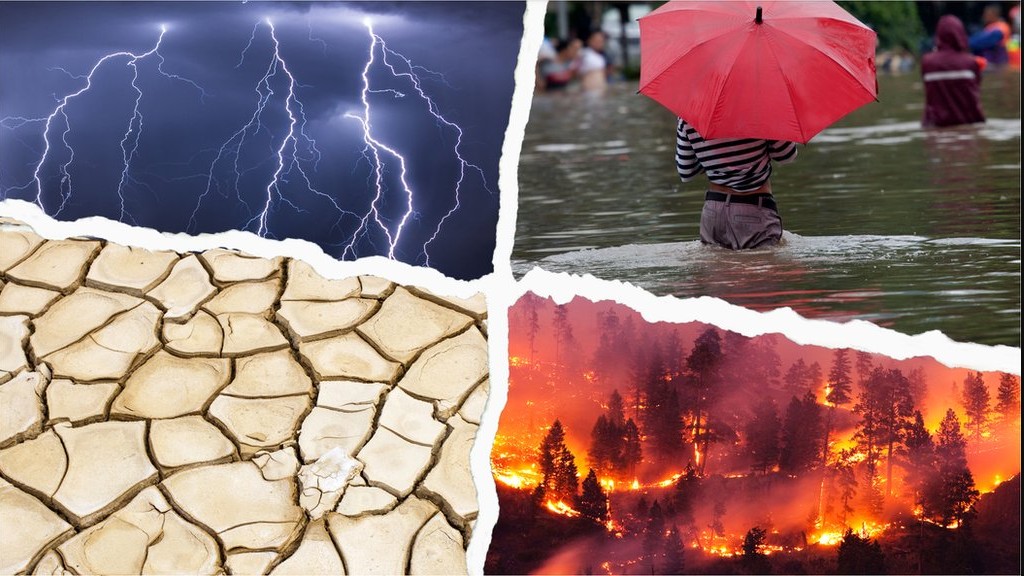
The Weather We Can No Longer Ignore
From January to August 2025, the world has witnessed a disturbing wave of extreme weather conditions that have caused widespread destruction and the tragic loss of thousands of lives.
Scientists and policymakers increasingly attribute these events to the intensifying effects of climate change. While humanity has always lived with the reality of floods, droughts, storms, and heatwaves, what is new and profoundly worrying is the sheer intensity and frequency with which these disasters are now striking. Regions once thought to be immune to certain hazards are suddenly finding themselves on the frontlines, and the global community is left grappling with the unmistakable warning that the climate crisis is escalating faster than many expected.
Nigeria has been particularly hard-hit. In the country’s northern belt, torrential rainfall triggered devastating floods that swept through entire communities. One of the most harrowing incidents occurred on May 29, 2025, in Mokwa, Niger State, where more than 200 lives were lost and at least 600 people remain unaccounted for. Survivors recounted how the rising waters engulfed homes, schools, and farmlands with a force unlike anything they had seen before. Although communities in this region had endured flooding in years such as 2012, 2018, and 2020, residents were unanimous in declaring that this year’s disaster was unmatched in scale. The floods did not simply arrive; they arrived with a ferocity that suggested nature itself had broken free of familiar patterns.
Environmental analysts, drawing on data from Global Forest Watch, pointed to deforestation as a major contributor to Mokwa’s tragedy. Over the years, residents had cut down vast swathes of trees and bushes, vegetation that once served as natural buffers against flooding. These forests were not only protective barriers but also sanctuaries where criminals once hid, prompting communities to clear them out for safety reasons. Ironically, this human intervention left the land exposed and vulnerable, paving the way for the torrents to wreak havoc. The Mokwa disaster thus stood as a stark reminder of how short-term decisions, when compounded by climate change, can produce catastrophic long-term consequences.
The Nigerian floods were not isolated. Across the globe, extreme weather battered countries and communities with tragic consequences. Early in the year, Europe endured a ferocious heatwave that claimed more than 2,000 lives. Towns and cities accustomed to mild summers were suddenly thrust into searing temperatures that overwhelmed healthcare systems and highlighted the fragility of aging infrastructure. In Sudan, heavy rains in early September triggered a massive landslide in the Marra Mountains of Darfur. The catastrophe killed nearly 370 people, most of whom were displaced civilians who had fled ongoing civil conflicts and sought refuge in what they thought would be a safer location. Days of relentless downpour saturated the soil until it gave way, burying settlements under tons of rock and mud.
India, too, found itself paralyzed by climate-related events. On September 1, torrential rainfall brought Gurugram—one of the country’s wealthiest suburbs and a vital business hub to a standstill. Thousands of commuters were trapped in traffic for six to eight hours, as highways turned into rivers and vehicles stood stranded in knee-deep water. The incident not only exposed the inadequacy of urban drainage systems in the face of extreme weather but also underscored the vulnerability of modern megacities to climate shocks.
In Yemen, a country already ravaged by civil war and humanitarian crises, flooding brought even greater misery. Torrential rains swept across the south, affecting more than 100,000 people. The International Rescue Committee reported that floodwaters destroyed homes including those in camps meant for internally displaced people and submerged farmland that millions depend on for survival. Roads, power lines, and water facilities were severely damaged, cutting communities off from essential services. For thousands, this disaster meant not just temporary displacement but a new round of suffering in a country where hunger and instability are already at emergency levels.
Meanwhile, Afghanistan reeled under another natural tragedy when a powerful earthquake struck its eastern region. On a Sunday in August, a magnitude-6.0 quake killed more than 1,400 people and injured 3,000. Just two days later, as survivors and aid workers scrambled to mount rescue efforts, a magnitude-5.2 aftershock shook the same region. Landslides triggered by the tremors blocked roads, further complicating relief operations and leaving many communities unreachable. Once again, a country with fragile infrastructure and limited emergency response capacity bore the brunt of nature’s fury.
The United States was not spared either. In Texas, two lives were lost to sudden flash floods in San Antonio. Although the death toll was not as large as in other regions, the disaster was a sobering reminder that no part of the globe is immune. In Europe, scientists warned of an increase in supercell storms, intense, rotating thunderstorms capable of producing large floods and tornadoes. To make matters worse, experts have also raised alarms about volcanic activity and the accelerating melting of glaciers, developments that further endanger millions around the world.
These cascading events illustrate a grim reality: Climate change is no longer a distant concern. It is not something our grandchildren might face in some imagined future. It is here, it is present, and it is disrupting lives, economies, and nations with increasing frequency.
This urgency is precisely what inspired the Paris Agreement, adopted on December 12, 2015, during the UN Climate Change Conference in Paris. The treaty, legally binding and ratified by nearly every nation on earth, aims to limit global warming to well below 2°C, with a more ambitious target of 1.5°C above pre-industrial levels. At its core, the agreement compels countries to reduce greenhouse gas emissions, adapt to the unavoidable impacts of climate change, and collaborate to build a climate-neutral world. Yet, despite the noble intentions of Paris, events in 2025 show that the global response is still falling far short of what is needed.
Institutions like the World Economic Forum have consistently outlined strategies that world leaders must adopt. These include reducing emissions by embracing renewable energy and energy efficiency, investing heavily in early warning systems to help communities prepare for disasters, protecting and restoring ecosystems that serve as natural shields, promoting sustainable agriculture and transportation systems, and encouraging individual responsibility in energy consumption. Every solar panel installed, every forest preserved, every commuter who opts for public transportation rather than a private car—these seemingly small actions collectively determine whether humanity can avert the worst of the climate crisis.
Nigeria, with its unique vulnerabilities, offers a clear case of what must be done at the national level. The Nigerian Meteorological Agency (NiMET) issues periodic warnings about expected weather patterns. Too often, these warnings are ignored by government agencies and private stakeholders, leading to preventable disasters. Incorporating NiMET’s forecasts into agricultural planning, infrastructure development, and urban management could go a long way in saving lives. Furthermore, all tiers of government must act decisively to tackle practices that amplify climate risks such as indiscriminate bush burning, widespread deforestation, unregulated land clearing, and the reckless dumping of refuse that clogs drainage systems and waterways.
It is also essential for the private sector to join the effort. Businesses can integrate climate resilience into their operations, whether by adopting green technologies, funding reforestation programs, or supporting disaster response initiatives. Educational institutions must also play their part, embedding environmental consciousness in curricula so that the next generation grows up with a sense of responsibility toward the planet.
The period from January to August 2025 has thus been more than a tragic series of isolated disasters. It has been a global wake-up call. Each flood, heatwave, landslide, and quake underscores the fragile balance between human societies and the environment. The message is unmistakable: the climate crisis is not waiting for international negotiations to catch up. It is unfolding in real time, testing the resilience of communities everywhere.
If world leaders fail to rise to the challenge with urgent, coordinated action, the disasters of 2025 will be remembered not as extraordinary aberrations but as harbingers of a new normal. But if governments, institutions, and individuals summon the courage to act boldly reducing emissions, protecting ecosystems, and building resilience there is still hope that the trajectory can be changed. The choice before humanity could not be starker, nor could the consequences of inaction be more devastating.
🏆 SISA 2025 is calling! On Nov 28, the Social Impact & Sustainability Awards lights up Lagos at Muson Centre. Sponsoring isn’t just visibility, it’s aligning your brand with impact, trust & legacy. 📩 DM us to partner. Let’s make history together.
[give_form id="20698"]