csrreporters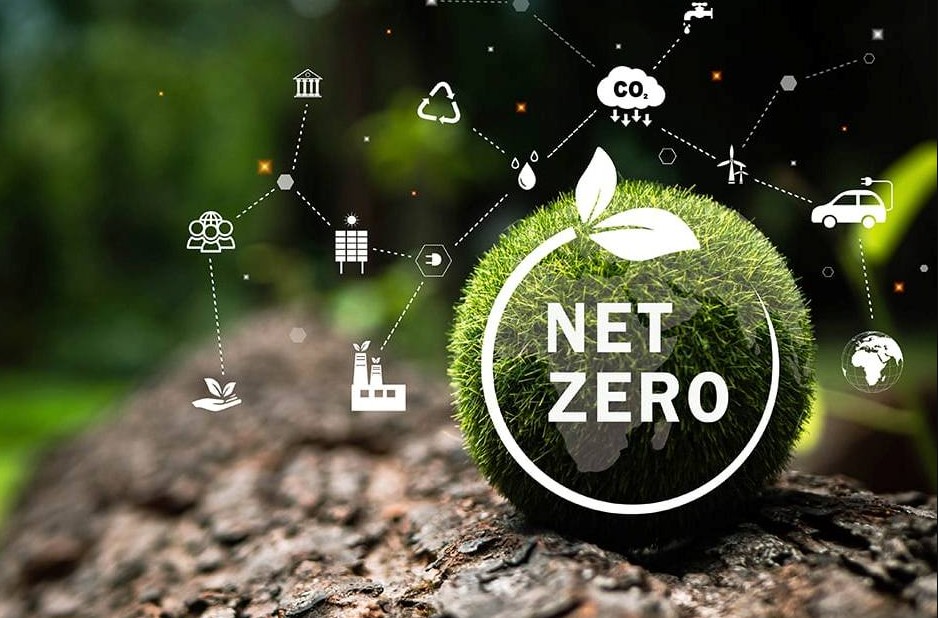
Net Zero: Understanding World’s Biggest Climate Promise
Everywhere you turn these days, people are talking about “net-zero.” Politicians declare it at international summits, CEOs announce it in glossy reports, and climate activists wave banners demanding it. Yet for many Nigerians, and indeed many people across the world, the phrase remains fuzzy, a high-sounding term tossed about in air-conditioned conference rooms.
With this simple piece by CSR Reporters, let’s strip “Net-Zero” of all the complex jargon and make it digestible, even fun, while still rich enough to educate corporate Nigeria, policymakers, students, and everyday citizens.
What exactly does net zero mean? Why should anyone outside the elite circles of science, policy, or business care?
To break it down simply, imagine a balance scale like the kind you see in a kindergarten drawing. On one side you have the gases we humans pump into the air that heat up the planet, and on the other side you have the efforts we make to remove or absorb those gases. Net-zero is the point at which that scale is even. Not tilted, not wobbling, but balanced.
To make it even plainer, think of your monthly household budget. Let’s say you earn ₦200,000 and you also spend ₦200,000. You have broken even. Now, imagine that instead of money, you are dealing with carbon dioxide and other greenhouse gases that come from burning fuel, running factories, cutting down trees, or even the simple act of driving to work. Every time a generator hums, every time a car moves, every time a factory produces, carbon goes up into the sky like invisible smoke. Net-zero means that whatever you send up must be equal to what you take back down. It doesn’t mean you stop producing completely, but it means you balance out your “carbon books.”
Globally, the idea took hold when scientists warned that if the world does not drastically cut emissions, we are heading towards catastrophic climate change, more floods, harsher droughts, deadlier heatwaves, vanishing farmlands, and rising seas swallowing coastal cities.
To prevent this nightmare, the United Nations set an ambitious goal: by 2050, the world must reach net-zero emissions. Many countries have since signed up, including Nigeria, which pledged to hit net zero by 2060. The number may look like a far-off date, but the work to get there is enormous and must start immediately.
So how do you achieve net-zero? There are two main levers. The first is cutting emissions as much as possible. This means moving away from coal, oil, and gas toward cleaner energy sources like solar, wind, hydropower, and, in some cases, nuclear. It means improving energy efficiency, such as designing buildings that use less electricity for cooling, or manufacturing processes that waste less. It means rethinking transport, investing in electric cars, or even encouraging people to walk and cycle more in cities that are safe enough to allow it.
The second lever is removing whatever emissions remain. Because some carbon will always slip through, humanity needs ways to pull it back out of the air. Nature has always done this through forests, wetlands, and oceans, which absorb carbon dioxide like sponges. Protecting and expanding forests is therefore central to net-zero. But technology also comes into play. Machines now exist that can literally suck carbon out of the atmosphere, although they are expensive and still in early stages. Another method is capturing carbon at the point of emission, such as fitting factories with devices that trap CO₂ before it escapes.
Of course, talking about net-zero is easier than achieving it. For oil-dependent countries like Nigeria, it presents a tough challenge. Oil is the lifeblood of the economy, yet it is also one of the dirtiest fuels contributing to global warming. How can a nation so reliant on crude suddenly pivot to clean energy? This is where fairness enters the conversation. Developed nations, which became rich by burning fossil fuels for over a century, are now asking developing nations to decarbonize quickly. But developing nations argue that they need time and financial support, because their people are still climbing out of poverty and need affordable energy. This tension is one reason why climate negotiations are so heated, and why climate finance essentially money and technology support from rich nations to poorer ones is a critical piece of the net-zero puzzle.
To put a Nigerian lens on it, think of our daily power struggles. Millions of homes and businesses run on small petrol or diesel generators. Every one of those contributes to emissions. The net-zero conversation asks: what if these were replaced with affordable solar solutions that power homes without the fumes? Or what if our transport system shifted gradually from the old combustion engines to electric buses powered by renewable energy?
Even in agriculture, which contributes significantly to emissions through deforestation and methane from livestock, there are ways to cut the carbon footprint by adopting climate-smart farming techniques. Net-zero is not just a global theory, it has local, practical meaning if we are willing to innovate and invest.
Critics argue, however, that the net-zero movement risks becoming another greenwashing exercise. Some companies announce net-zero targets for 2050 but continue business as usual today, delaying the tough actions required. Others rely heavily on offsets, paying for tree planting in faraway lands to cancel out emissions while their own operations remain dirty. The danger here is that net-zero becomes a slogan rather than a real commitment. Transparency and accountability are therefore vital. Citizens, NGOs, and watchdogs must ask: What exactly are companies and governments doing today, not in 2050, to cut emissions?
There are examples that show net-zero is achievable with determination. Denmark has set a legally binding target to reduce emissions by 70 percent by 2030, one of the most ambitious in the world. The country invests heavily in wind power, which now supplies most of its electricity. In the private sector, companies like Microsoft have pledged not just to reach net-zero but to become carbon negative by 2030, meaning they will remove more carbon than they emit. These examples matter because they prove net-zero is not science fiction. It is a choice that can be made when there is political will, technological investment, and social buy-in.
For Nigeria, the stakes could not be higher. Climate change is not some distant threat. It is already here in the form of devastating floods that wipe out farmland, heatwaves that threaten lives, and desertification that pushes herders and farmers into conflict. Achieving net-zero is therefore not just about pleasing the international community. It is about protecting our own survival, safeguarding our food systems, and securing the future of our children.
Make sense?
Next time, you hear the phrase “net-zero,” don’t roll your eyes and dismiss it as jargon because it is not. Picture that balance scale. Think of the invisible smoke rising from every exhaust pipe, factory, and generator. Remember that for the world to remain livable, that smoke must not outweigh the planet’s ability to absorb it. Net-zero, simply put, is the magic point where what goes up must come down. It is a kindergarten lesson applied to the most urgent crisis of our time.
The clock is ticking.