When Speeches Travel Faster Than Action: Nigeria, Sustainability, and the Credibility Gap
 csrreporters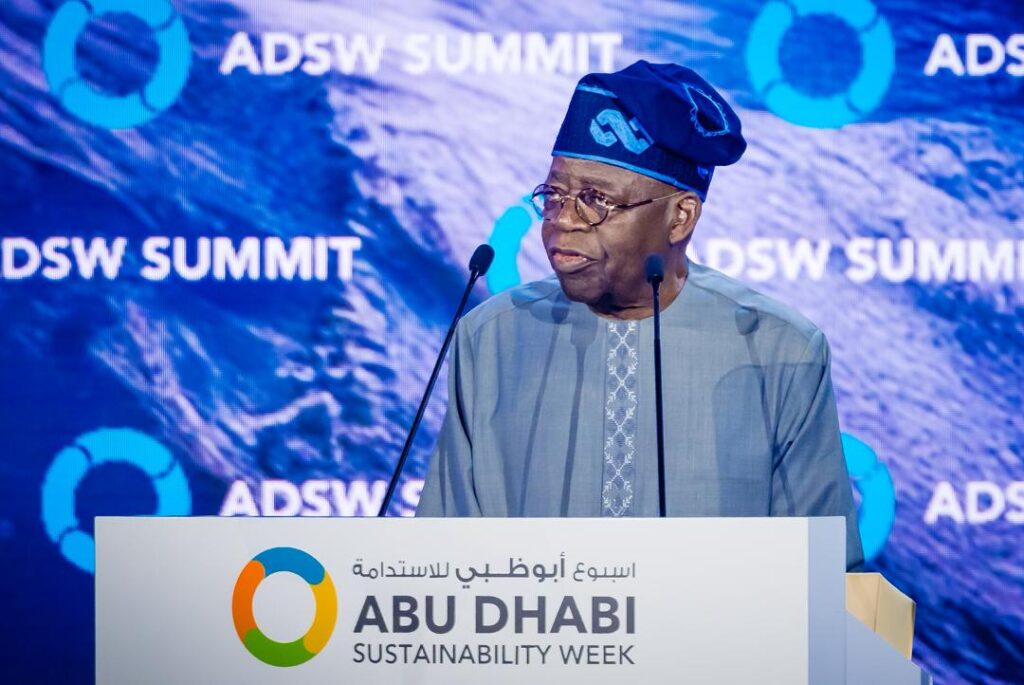
When Speeches Travel Faster Than Action: Nigeria, Sustainability, and the Credibility Gap
A few days ago, President Bola Ahmed Tinubu delivered what many described as a rousing speech in Abu Dhabi. It was polished, aspirational, and framed Nigeria as a country ready to play its part in global conversations around development, climate responsibility, and sustainable growth.
On the surface, it was the kind of speech the international community expects. But from the standpoint of anyone who works daily in CSR and sustainability in Nigeria, it raises an uncomfortable question: are we preaching what we actually practice?
Across Nigeria today, environmental degradation is not an abstract concept. It is lived reality. Open waste dumping into drainages and waterways. Plastic pollution choking rivers and coastlines. Unregulated sand mining and deforestation. Oil spills that linger for decades. Weak enforcement of environmental standards. Communities forced to adapt to pollution they did not create.
These are not isolated incidents. They are systemic failures.
This is where the credibility gap begins.
A country cannot speak convincingly about sustainability on global stages while failing to address the everyday actions that are steadily destroying its ecosystems at home. Sustainability is not proven by speeches. It is proven by policy coherence, enforcement, and visible change on the ground.
Nigeria’s environmental crisis is not primarily a knowledge problem. We know what needs to be done. The challenge is governance. Policies are often announced but weakly implemented. Regulations exist but are poorly enforced. Agencies are underfunded, politicised, or bypassed entirely. The result is a culture where environmentally destructive behaviour has become normalised.
This disconnect erodes trust.
For citizens, it reinforces cynicism: government says one thing and does another. For the international community, it weakens Nigeria’s moral authority in sustainability conversations. For investors and development partners, it raises questions about seriousness and execution capacity.
Sustainability cannot be outsourced to speeches abroad while the domestic house is on fire.
If Nigeria truly wants to be taken seriously as a responsible actor, the work must start at home. That means enacting and enforcing clear environmental policies that address waste management, pollution control, ocean protection, land use, and climate resilience. It means empowering regulatory agencies with real authority, not ceremonial mandates. It means holding both individuals and corporations accountable for environmental harm, regardless of status.
It also means leading by example.
Governments must practice what they preach. When citizens see consistent enforcement, transparent penalties, and visible improvements, behaviour begins to change. When communities see government agencies taking environmental protection seriously, they begin to take it seriously too.
Sustainability is not about perfection. It is about honesty, consistency, and progress.
Nigeria does not need to stop speaking on global platforms. But those speeches must be anchored in visible domestic action. Otherwise, they risk becoming empty rhetoric—well-received abroad, but disconnected from reality at home.
The true test of leadership in sustainability is not how eloquently a country speaks to the world, but how responsibly it governs its own land, water, people, and future.
Until Nigeria closes the gap between words and action, every international sustainability speech will carry the same quiet question behind the applause: when will the practice finally match the preaching?
[give_form id="20698"]