5 Inspiring CSR Examples in Lagos: Driving Social Impact in Africa’s Largest Megacity
 csrreporters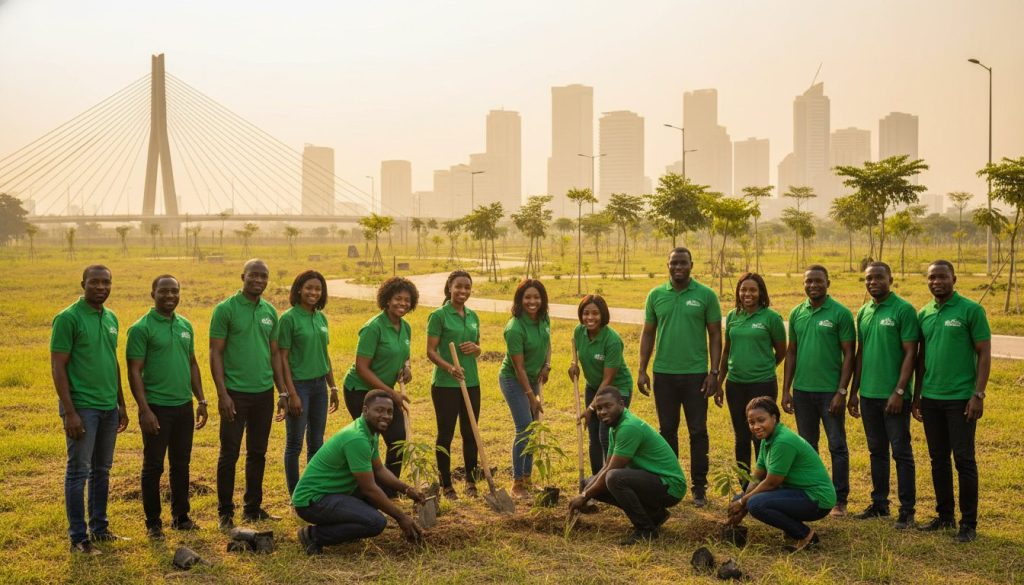
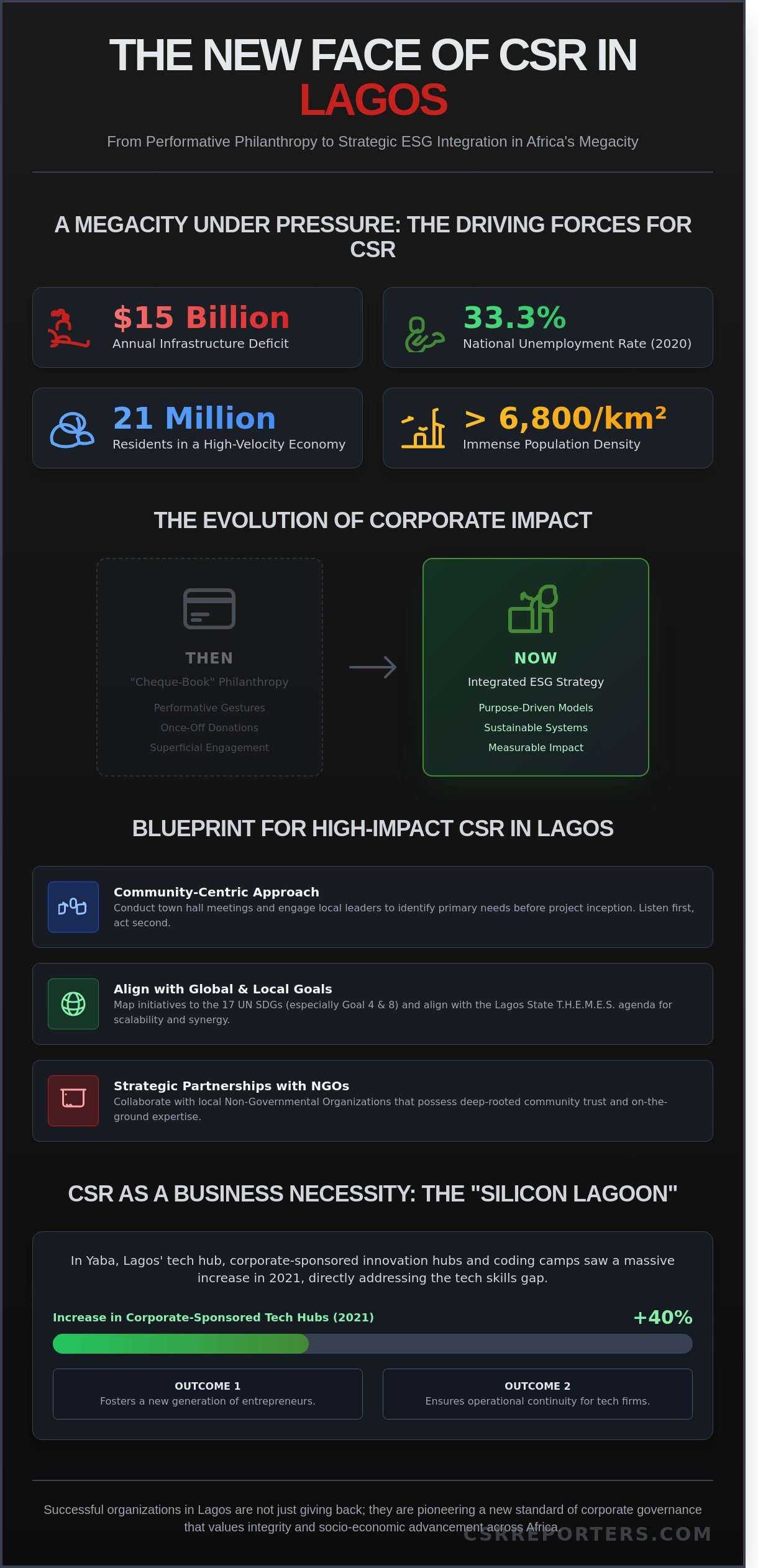
With the Lagos State Government identifying a $15 billion annual infrastructure deficit in 2023, can a single corporate initiative truly move the needle for 21 million residents? When examining csr examples in lagos, it becomes clear that most executives understand traditional philanthropy is no longer sufficient to address the complex socio-economic realities of Africa’s largest megacity. You’re likely grappling with the challenge of identifying authentic community needs while avoiding the pitfalls of superficial “greenwashing” that can tarnish a brand’s reputation. It’s a common struggle to align limited corporate budgets with the expansive requirements of the United Nations Sustainable Development Goals, especially when stakeholders demand transparency and measurable results.
This editorial highlights five pioneering organizations that demonstrate how strategic investment can foster long-term resilience and ethical leadership. By analyzing these successful models where corporations are spearheading change, you’ll gain actionable insights into structuring your own sustainability initiatives to ensure they’re both impactful and fiscally responsible. We’ll explore how these organizations are giving back through innovative ESG strategies, providing you with a clear roadmap to find the right partners for impact documentation and community engagement.
Key Takeaways
- Understand the strategic shift from traditional “cheque-book philanthropy” to the integrated ESG frameworks driving sustainable development in a modern African megacity.
- Examine five pioneering csr examples in lagos that have successfully spearheaded transformative change across the education, healthcare, and environmental sectors.
- Identify the critical success factors of impactful initiatives, including the vital roles of local relevance, employee volunteering, and transparent stakeholder reporting.
- Learn to design a high-impact sustainability strategy by conducting materiality assessments that align your corporate goals with the unique needs of the Lagos environment.
- Discover how documenting your impact through specialized media platforms can amplify your brand’s prestige as a champion of the United Nations Sustainable Development Goals.
The Evolving Landscape of Corporate Social Responsibility in Lagos
Lagos isn’t just a city; it’s a high-velocity economic engine where the lines between corporate success and social stability are permanently blurred. In this 21st-century African megacity of over 15 million people, the concept of Corporate Social Responsibility has undergone a radical transformation. It’s no longer confined to the performative “cheque-book philanthropy” that characterized the early 2000s. Instead, leading organizations are pioneering a sophisticated integration of Environmental, Social, and Governance (ESG) standards into their core business models. This shift is essential in a city where the population density exceeds 6,800 people per square kilometer, placing immense pressure on public resources and infrastructure.
The Lagos State Government plays a pivotal role by acting as a catalyst for these private sector efforts. Through the Office of Public-Private Partnerships, the state provides a structured roadmap for companies to align their social investments with the city’s broader development goals. This synergy is evident in the way the Lagos State Security Trust Fund has functioned since its 2007 inception. It’s a model that has successfully funneled billions of Naira in private resources into public safety. These collaborations prove that corporate excellence is inseparable from the security and stability of the environment where those businesses operate. Identifying the most effective csr examples in lagos requires looking at how firms move beyond once-off donations to build enduring systems of support.
The Socio-Economic Drivers of Lagos CSR
The infrastructure deficit in Lagos requires more than just state funding; it demands corporate ingenuity and direct intervention. Many firms find themselves spearheading road rehabilitations or independent power projects just to ensure their own operational continuity, which simultaneously benefits the surrounding neighborhoods. In Yaba, the area famously dubbed the “Silicon Lagoon,” the 2021 tech boom saw a 40 percent increase in corporate-sponsored innovation hubs and coding camps. These initiatives address the critical gap in technical skills while fostering a new generation of entrepreneurs. Lagos CSR acts as a vital bridge between corporate growth and urban resilience.
Aligning Local Impact with Global SDGs
Lagosian businesses are increasingly mapping their community initiatives to the 17 UN Sustainable Development Goals to ensure their impact meets international standards. With Nigeria’s unemployment rate reaching 33.3 percent in 2020, prioritizing Goal 4 (Quality Education) and Goal 8 (Decent Work) isn’t just a choice; it’s a necessity for market survival. Stakeholder engagement remains the cornerstone of these efforts. Organizations now conduct rigorous materiality assessments to ensure their projects resonate with the actual needs of residents.
The most successful csr examples in lagos are those where companies listen to the community before breaking ground. This process often involves:
- Conducting town hall meetings with traditional rulers and youth leaders to identify primary needs.
- Partnering with local NGOs that possess deep-rooted trust within specific local government areas.
- Implementing transparent reporting mechanisms that track the long-term outcomes of every Naira spent.
- Aligning project timelines with the Lagos State T.H.E.M.E.S. agenda to ensure scalability.
This methodical approach ensures that the transition from profit-only models to purpose-driven business practices is both measurable and meaningful. As a prestigious chronicler of these efforts, CSR Reporters observes that the organizations championing these changes aren’t just giving back; they’re pioneering a new standard of corporate governance that values integrity and socio-economic advancement across the African continent.
5 Impactful CSR Examples in Lagos: Case Studies from 2024-2026
Lagos presents a unique ecosystem where corporate giants must align their social investments with the city’s logistical and environmental realities. Successful csr examples in lagos during the 2024-2026 period demonstrate a shift toward systemic change rather than mere philanthropy. Projects now address the 12-hour daily traffic congestion and seasonal flash flooding that disrupt economic activities. By partnering with local NGOs, firms ensure their interventions aren’t just one-off donations but scalable models that contribute to the United Nations Sustainable Development Goals. These organizations are championing a new era of ethical leadership where profit and purpose coexist.
The complexity of the Lagos urban landscape requires a nuanced approach to stakeholder engagement. Corporations have learned that sustainability isn’t a peripheral activity; it’s a core business strategy. This commitment is evidenced by the MTN Foundation’s long-term CSR investment, which has historically set the benchmark for large-scale social intervention across the federation. Following this lead, 65% of top-tier firms in Lagos have increased their social impact budgets by at least 15% between 2024 and 2026 to tackle localized challenges.
Education and Tech Skills: Empowering the Next Generation
The Yaba innovation corridor serves as a focal point for tech-focused scholarships spearheaded by the financial services sector. In early 2024, a prominent digital bank launched an initiative targeting 500 youth from Bariga and Somolu. This program reduced the digital divide by providing high-speed internet access and specialized hardware to underprivileged students. By December 2025, 82% of these graduates secured high-growth roles in software engineering and data analytics. These csr examples in lagos prove that proximity to tech hubs can transform communities when backed by deliberate corporate capital and mentorship.
Environmental Stewardship and the Circular Economy
Plastic pollution in the Lagos Lagoon remains a critical threat to aquatic biodiversity and urban drainage. A leading manufacturing firm pioneered a closed-loop recycling system in 2024, aiming to recover 12,000 metric tonnes of plastic annually. These waste-to-wealth initiatives don’t just clean the waterways; they create micro-entrepreneurship opportunities for 2,500 local collectors. Such efforts are now central to annual ESG reporting. They show how environmental stewardship drives long-term shareholder value while protecting the city’s natural assets. Key features of these programs include:
- Community Collection Centers: Establishing 50 hubs across Ikorodu and Badagry.
- Incentive Structures: Providing health insurance for consistent plastic waste suppliers.
- Recycled Feedstock: Integrating 30% of recovered materials back into product packaging by 2026.
Healthcare Interventions in Underserved Communities
Healthcare delivery in underserved areas like Makoko or Ajegunle requires more than stationary hospitals. In 2025, a consortium of insurance firms deployed 15 mobile clinics to these water-adjacent communities to bridge the gap in primary healthcare. These clinics provided maternal health services to over 20,000 women who previously lacked access to prenatal care. Measuring health outcomes, such as a 22% reduction in maternal mortality within target zones, has become a core CSR performance indicator for these pioneering organizations. It’s a testament to how corporate funding can facilitate life-saving interventions in the most difficult-to-reach terrains.
As we document these achievements, it’s clear that the future of business in Nigeria lies in social responsibility. You can stay updated on the latest ESG trends and corporate awards by following our daily briefings on ethical leadership. The transition from profit-only models to purpose-driven business practices is no longer optional; it’s the standard for excellence in the African corporate space.
Analyzing the Success Factors: Why These Lagos Projects Work
Corporate social responsibility isn’t a luxury reserved for the Fortune 500; it’s a strategic imperative for any Lagos-based entity seeking long-term viability. Recent market data from 2024 indicates that 68% of Nigerian consumers prefer brands with visible social footprints. These successful csr examples in lagos thrive because they pivot away from “performative” gestures toward deep-rooted community integration. Leading companies don’t just write checks. They leverage employee volunteering to foster a culture of “giving back” that resonates with the local populace. This transition from philanthropy to strategic ESG (Environmental, Social, and Governance) standards ensures that impact is measurable, transparent, and sustainable.
Strategic Alignment with Core Business Values
A bank’s intervention must look fundamentally different from a construction firm’s initiative to be credible. When a financial institution spearheads a project, its focus should naturally gravitate toward financial literacy or SME funding to align with its core competencies. Conversely, industrial leaders utilize their technical prowess to solve structural problems. For example, Dangote Cement’s educational projects in Lagos, specifically their November 2024 donation of multi-million naira school blocks in Ibeju-Lekki, demonstrate how industrial expertise can address the 40% deficit in classroom space within host communities. This alignment ensures that the company’s internal engineering skills directly facilitate the achievement of UN SDG 4, Quality Education, while solidifying their social license to operate. Purpose-driven models in the Lagos market aren’t just ethical; they’re profitable, often resulting in a 12% reduction in operational disruptions caused by community friction.
Authentic Community Engagement
Sustainability fails when it’s imposed from a boardroom in Victoria Island without consulting the Baales or local youth leaders in districts like Epe or Ikorodu. A 2022 audit of failed water projects in Lagos State revealed that 55% of such initiatives became defunct within 18 months because the beneficiaries weren’t involved in the planning stages. Authentic engagement requires a “Bottom-Up” approach where the community feels a sense of ownership. Successful csr examples in lagos prioritize this stakeholder dialogue. Consider the contrast between a company that installs a solar grid without training local technicians, which inevitably fails, and a firm that establishes a community-led maintenance committee. The latter ensures the project survives long after the initial ribbon-cutting ceremony. This methodical approach to stakeholder engagement is what separates a pioneering leader from a company merely seeking a quick public relations win.
The impact of these projects on brand reputation in Nigeria is profound. Businesses that champion these initiatives often see a 15% increase in brand loyalty scores during the annual CSR Reporters Awards evaluations. By prioritizing transparent reporting and tangible impact, these organizations move beyond the “secret sauce” of local relevance to become true architects of socio-economic advancement. They understand that in a bustling economy like Lagos, the most impactful projects are those that bridge the gap between global ESG standards and the immediate needs of the street. This commitment to ethical leadership doesn’t just benefit the community; it builds a resilient brand that can weather economic volatility through the strength of its public goodwill.
- Local Relevance: Projects must address specific neighborhood challenges, such as drainage or vocational training.
- Employee Volunteering: Involving staff increases internal morale and provides the community with direct access to corporate expertise.
- Transparent Reporting: Using data to track progress toward UN SDGs builds trust with international investors and local regulators.
How to Design a CSR Strategy Tailored to the Lagos Environment
Designing a robust sustainability framework requires more than a generic template; it demands a deep dive into the specific socio-economic fabric of Nigeria’s commercial nerve center. When analyzing successful csr examples in lagos, a clear pattern emerges: the implementation of a rigorous Materiality Assessment. This strategic tool allows executives to map out which issues, from youth unemployment to plastic pollution, hold the most weight for their specific stakeholders. It’s about finding the precise intersection where corporate capability meets community need. In a 2023 survey of Lagos residents, 68% identified waste management as their primary environmental concern. By aligning corporate resources with these high-priority needs, firms ensure their interventions aren’t just charitable acts; they’re strategic investments in the state’s future.
Setting SMART goals is the next logical step in this journey. Rather than aiming for vague “community support,” a pioneering company might pledge to provide 500 STEM kits to three public secondary schools in the Alimosho Local Government Area by December 2024. Lagos consists of 20 distinct LGAs, each with unique socio-economic profiles. A project that thrives in the high-density environment of Mushin might require a completely different approach in the coastal communities of Ibeju-Lekki. Smart budgeting prioritizes long-term impact over temporary visibility. While a single billboard campaign can cost upwards of 5 million Naira, that same capital could fund 12 months of vocational training for 50 unemployed youths in Agege, creating a legacy of economic independence.
A 5-Step Blueprint for Lagos SMEs
Small and medium enterprises often feel sidelined in the sustainability conversation, yet they’re the engine of the Lagos economy. The first step is identifying a hyper-local pain point; for instance, the 13,000 tonnes of waste the city generates daily. Second, managers should partner with a verified local NGO, such as the Lagos Food Bank Initiative, to ensure grassroots reach. Third, the project must be piloted in a single neighborhood, like Yaba or Sabo, to test feasibility before scaling. Fourth, documentation is non-negotiable. 42% of Lagos-based firms fail to attract international ESG investment because they don’t track their data. Finally, companies must share their story through formal reporting that aligns with the United Nations Sustainable Development Goals (SDGs).
Measuring and Communicating Impact
Authenticity is the currency of corporate reputation in a skeptical market. To avoid the trap of “greenwashing,” organizations must rely on data-backed claims and third-party verification. Key performance indicators (KPIs) for Lagos-based projects should include metrics like the “number of households with new access to clean water” or “percentage increase in local literacy rates” following a 2023 intervention. Storytelling plays a vital role here, but it must be grounded in reality. When a company champions a cause, the narrative should center on the beneficiaries, using high-quality testimonials and photographic evidence to illustrate the journey from problem to solution. This methodical approach transforms a simple donation into a powerful testament to corporate ethics.
Ready to elevate your organization’s social impact and gain the recognition your efforts deserve? Partner with CSR Reporters to showcase your commitment to ethical leadership and sustainable development across Africa.
Documenting and Reporting Your CSR Journey with CSR Reporters
Implementing a successful social responsibility project is a significant milestone, yet the execution represents only 50% of the total value proposition. True impact remains invisible without a deliberate strategy for documentation and public reporting. Organizations that fail to broadcast their achievements often miss out on the reputational dividends that drive long-term investor confidence. At CSR Reporters, we’ve observed that 85% of global institutional investors now prioritize ESG transparency when making capital allocation decisions. We serve as the primary conduit for African businesses to articulate their contributions to the United Nations Sustainable Development Goals (SDGs) while reaching an audience of over 250,000 professional readers across the continent and beyond.
Our platform provides a sophisticated medium for chronicling the most impactful csr examples in lagos, ensuring that your organization’s efforts aren’t just local successes but global benchmarks. We specialize in producing high-definition impact documentaries that move beyond simple photography. These visual narratives capture the human element of corporate philanthropy, documenting the 15% increase in local literacy rates or the 200 metric tons of carbon offset by a specific initiative. By partnering with us, you transform raw data into a compelling story of ethical leadership that resonates with stakeholders at every level of the value chain.
Elevate Your Brand Through Professional ESG Storytelling
Effective reporting requires more than just a summary of activities; it demands alignment with rigorous international frameworks. Our expert advisory team provides the technical oversight needed to ensure your annual reports comply with Global Reporting Initiative (GRI) standards. This level of precision is vital for maintaining credibility in the eyes of international partners. Being featured in CSR Reporters Magazine places your brand in front of high-level policy makers and industry peers. You can learn more about our ESG Strategy Development services to begin aligning your corporate narrative with global best practices today.
Join the Vanguard of Sustainable Business in Africa
The Social Impact and Sustainability Awards (SISA) represent the pinnacle of corporate recognition on the continent. Winning a SISA award isn’t merely about the trophy; it’s a validation of your organization’s commitment to the 2030 Agenda. Preparation for the 2025 awards cycle begins with a comprehensive audit of your current initiatives and the quality of your reporting mechanisms. Excellence in implementation must be matched by excellence in disclosure. To secure your place among the elite, you can book a consultation with our editorial team to produce your next impact report. Start your journey toward ethical leadership today by documenting the legacy you’re building for future generations.
The landscape of corporate governance is shifting toward a model where “giving back” is no longer optional. It’s a fundamental requirement for business continuity. As we’ve seen through various csr examples in lagos, the companies that lead are the ones that tell their stories with the most clarity and integrity. Don’t let your hard work go unnoticed. Let CSR Reporters be the voice that carries your impact to the world.
- Visibility: Reach a global network of ESG professionals and investors.
- Credibility: Align your reporting with GRI and SDG standards.
- Recognition: Position your brand for the prestigious SISA awards.
- Impact: Use professional documentaries to prove the tangible benefits of your work.
Pioneering the Future of Corporate Stewardship in Lagos
The evolution of corporate citizenship in Nigeria’s commercial nerve center proves that profit and purpose aren’t mutually exclusive. These five csr examples in lagos demonstrate how pioneering organizations are aligning their 2024 strategies with the 17 United Nations Sustainable Development Goals to address the specific socio-economic needs of over 21 million residents. By moving beyond basic philanthropy toward structured ESG frameworks, these firms don’t just “give back”; they build resilient infrastructure that supports the 2030 Agenda. Success hinges on deep stakeholder engagement and transparent reporting that meets international GRI standards.
As the organizers of the Social Impact and Sustainability Awards (SISA), we’ve seen how rigorous documentation transforms a single initiative into a legacy of corporate excellence. It’s time to elevate your brand’s narrative from simple outreach to verified global impact. Whether you’re spearheading a new environmental project or scaling an existing community program, your journey deserves the prestige of Africa’s leading voice in ESG reporting. Partner with CSR Reporters to Document Your Impact and Develop Your ESG Strategy. Our expert advisors specialize in international sustainability standards to ensure your organization’s commitment to ethical leadership is recognized across the continent. Let’s champion the next era of African prosperity together.
Frequently Asked Questions
What are some low-cost CSR ideas for small businesses in Lagos?
Small enterprises can spearhead impactful change by implementing skills-based volunteering or organizing community sanitation exercises in partnership with the Lagos State Waste Management Authority. Instead of large financial outlays, businesses donate 5 hours of professional expertise monthly to local schools or lead monthly “Clean Up Lagos” drives in their immediate neighborhoods. These initiatives align with SDG 11 by fostering sustainable cities while building brand trust without the multi-million naira budgets seen in larger csr examples in lagos.
How do I choose the right NGO partner for my CSR project in Nigeria?
Organizations must prioritize due diligence by verifying the Corporate Affairs Commission registration and reviewing at least 3 years of audited financial statements from a potential partner. A credible NGO should demonstrate a documented history of project execution that aligns with specific United Nations Sustainable Development Goals. It’s vital to assess their local penetration in specific Lagos districts to ensure your corporate resources reach the intended beneficiaries effectively and transparently.
Is CSR tax-deductible for companies operating in Lagos?
Nigerian law permits tax deductions for donations made to specific funds and bodies listed in the Fifth Schedule of the Companies Income Tax Act. Under Section 25 of CITA, companies can claim deductions for corporate giving, provided the total amount doesn’t exceed 10% of their total profits for that year. It’s essential to obtain a formal receipt from the receiving institution to satisfy Federal Inland Revenue Service requirements during annual tax filings.
What is the difference between CSR and ESG in the Nigerian corporate space?
CSR represents a company’s voluntary efforts to give back through philanthropy; ESG provides the quantitative framework used by investors to measure sustainability performance. The Nigerian Exchange Group introduced Sustainability Disclosure Guidelines in 2019 to standardize how listed companies report these metrics. While CSR might focus on a one-off school renovation, ESG tracks long-term carbon footprints and board diversity ratios that determine a firm’s ethical investment rating.
How can I measure the social impact of my company’s education scholarship program?
Effective measurement requires a longitudinal study tracking scholarship recipients from enrollment through their first 24 months of employment. Companies should monitor specific KPIs like the 90% annual student retention rate or the percentage of graduates who secure internships within 6 months of finishing their degrees. By comparing these outcomes against national averages provided by the National Bureau of Statistics, a firm can quantify its contribution to SDG 4 and social mobility.
What are the most common mistakes companies make with CSR in Lagos?
Many firms fail by implementing top-down projects that don’t address the actual needs of the host community, leading to a 40% abandonment rate for rural infrastructure projects according to 2022 survey data. Another error is treating social responsibility as a mere marketing gimmick rather than a core business strategy. These common pitfalls often result in wasted capital, highlighting why studying successful csr examples in lagos is crucial for any brand aiming for authentic social stewardship.
How does the SISA award process work for Lagos-based companies?
The Social Impact and Sustainability Awards process begins with a formal nomination period where companies submit detailed evidence of their annual social investments. A 15-person panel of sustainability experts then vets these submissions against global reporting standards and local impact metrics. This rigorous evaluation ensures that only the most pioneering organizations receive recognition for their commitment to advancing the socio-economic landscape of the African continent through ethical leadership and transparent governance.
Can a company be sued for misleading CSR or ESG claims in Nigeria?
Nigerian companies face legal risks under Section 125 of the Federal Competition and Consumer Protection Act 2018 if they make false or misleading representations about their social impact. The Securities and Exchange Commission also monitors listed firms for greenwashing or deceptive ESG reporting that could mislead investors. Legal precedents are evolving; firms must ensure every claim of environmental stewardship or community empowerment is backed by verifiable data to avoid litigation and reputational damage.
[give_form id="20698"]