csrreporters
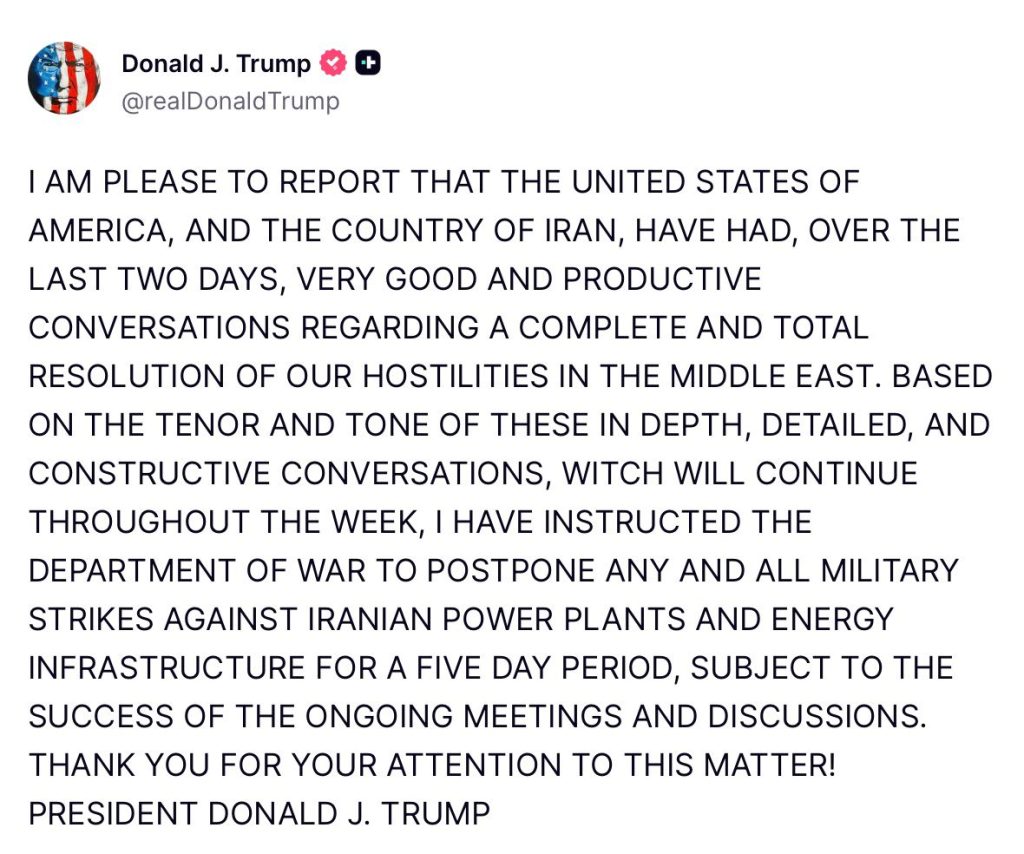
Global markets responded quickly after U.S. President Donald Trump announced a five-day pause on planned military strikes against Iran’s energy infrastructure. The decision followed what he described as productive diplomatic conversations between Washington and Tehran. As a result, oil prices, which had surged close to 100 dollars per barrel amid fears of supply disruption, dropped sharply.
For many economies, this was a moment of cautious optimism. However, for Nigeria, the implications run deeper. As a country heavily influenced by global oil dynamics, even temporary shifts in price can affect inflation, transportation costs, and household spending.
At the same time, Nigerians remain skeptical. Historically, when prices of commodities rise, they tend to remain elevated even after causative factors ease. Therefore, while the pause offers relief, it also raises important questions about resilience, governance, and long-term sustainability.
Oil Prices and Nigeria’s Economic Reality
Nigeria’s economy maintains a complex relationship with oil. On one hand, higher global prices can boost government revenues. On the other hand, they often translate into higher domestic fuel costs, especially in a deregulated or partially deregulated market.
As oil prices climbed during the escalation between the U.S. and Iran, Nigerians felt the effects almost immediately. Transportation fares increased, food prices followed, and inflationary pressure intensified across sectors. Now, with prices dipping after the announcement, there is hope for some easing.
However, the real issue lies in transmission. Price reductions in global markets do not always translate into immediate or proportional relief locally. Structural inefficiencies, supply chain constraints, and market speculation often delay or dilute the benefits.
For businesses, this creates an unpredictable operating environment. Costs fluctuate rapidly, while consumer purchasing power remains fragile. Consequently, companies must look beyond short-term gains and focus on long-term resilience.
The Strait of Hormuz and Global Vulnerability
The tension surrounding the Strait of Hormuz highlights how interconnected the global energy system has become. This narrow waterway handles a significant portion of the world’s oil supply. When access is threatened, the entire market reacts.
In this case, concerns about shipping disruptions pushed prices upward. Meanwhile, diplomatic signals triggered a sharp correction. This pattern underscores a critical lesson for Nigeria and its businesses: reliance on a single commodity or supply route exposes economies to external shocks.
Although Nigeria is an oil producer, it still depends heavily on imported refined petroleum products. Therefore, global disruptions affect both export earnings and import costs. This dual exposure increases vulnerability.
From an ESG perspective, this situation reinforces the importance of diversification and energy transition. Reducing dependence on volatile global systems is no longer optional. Instead, it is becoming a core element of responsible business and national strategy.
CSR Lessons from a Global Crisis
Crises often reveal gaps in preparedness, but they also offer opportunities for improvement. The recent developments provide several practical lessons for Nigerian businesses, particularly in the context of Corporate Social Responsibility.
First, businesses must prioritize stakeholder protection. During periods of rising costs, employees and customers bear the brunt of economic pressure. Companies that support staff with transport allowances, flexible work options, or welfare programs demonstrate genuine responsibility.
Second, transparency matters. When prices fluctuate, customers expect clear communication. Businesses that explain pricing decisions and cost drivers build trust, even in difficult times.
Third, community engagement becomes critical. As inflation rises, vulnerable populations face increased hardship. Companies that invest in community support programs, such as food distribution or education initiatives, strengthen their social impact.
While these actions may seem straightforward, they often determine how organizations are perceived during crises. CSR, therefore, moves from being a branding exercise to a practical tool for resilience and trust-building.
Read Also: 5 Inspiring CSR Examples in Lagos: Driving Social Impact in Africa’s Largest Megacity
ESG as a Risk Management Framework
Environmental, Social, and Governance principles provide a structured way for businesses to navigate uncertainty. In the context of the current situation, ESG offers more than compliance. It serves as a risk management framework.
On the environmental side, companies can reduce exposure to oil price volatility by investing in alternative energy sources. For example, adopting solar power for operations can lower dependence on fuel and reduce long-term costs.
On the social front, businesses must consider how economic shocks affect employees, suppliers, and customers. Fair wages, ethical sourcing, and inclusive policies become even more important during periods of instability.
Governance, however, remains the backbone. Strong governance ensures that companies make decisions based on long-term value rather than short-term gains. It also promotes accountability, which is essential when navigating complex global dynamics.
By integrating ESG into core strategy, businesses can better anticipate risks and respond effectively.
Between Hope and Skepticism
The reaction in Nigeria reflects a mix of optimism and caution. On one hand, falling oil prices could ease inflationary pressure. On the other hand, past experiences have shown that relief is not always immediate or sustained.
This skepticism is not unfounded. Structural challenges within the energy sector, including refining capacity and distribution inefficiencies, often limit the impact of global price changes.
Nevertheless, the current situation presents an opportunity. Policymakers and business leaders can use this moment to rethink strategies and address long-standing issues. For instance, improving local refining capacity could reduce dependence on imports and stabilize prices.
Similarly, investing in renewable energy could provide more predictable and sustainable alternatives. While these solutions require time and resources, they offer a path toward greater resilience.
Turning Short-Term Relief into Long-Term Strategy
Temporary price drops should not lead to complacency. Instead, they should serve as a catalyst for strategic planning. Businesses that treat this moment as a warning rather than a victory will be better positioned for the future.
One practical approach involves scenario planning. Companies can model different outcomes based on oil price fluctuations and develop contingency plans. This allows them to respond quickly when conditions change.
Another approach focuses on efficiency. Reducing energy consumption, optimizing logistics, and minimizing waste can help businesses manage costs regardless of external conditions.
Furthermore, collaboration plays a key role. Industry groups, government agencies, and civil society organizations can work together to address systemic challenges. Collective action often produces more sustainable results than isolated efforts.
A Broader View of Sustainability
The events surrounding the U.S. and Iran highlight the broader concept of sustainability. It is not limited to environmental concerns. Instead, it encompasses economic stability, social well-being, and effective governance.
For Nigeria, sustainability means building systems that can withstand global shocks. It also means creating an economy that supports inclusive growth and long-term development.
Businesses, therefore, have a crucial role to play. By aligning operations with ESG principles, they contribute to a more stable and resilient economy. At the same time, they enhance their own competitiveness.
Lessons in Uncertainty
The pause in military action between the U.S. and Iran offers a moment of relief for global markets. For Nigeria, it provides both hope and a reminder of vulnerability.
While falling oil prices may ease immediate pressure, the underlying challenges remain. Therefore, the focus must shift from short-term relief to long-term resilience.
CSR and ESG frameworks offer practical tools for navigating this landscape. They help businesses manage risk, support stakeholders, and build trust. More importantly, they encourage a proactive approach to uncertainty.
In a world where global events can quickly influence local realities, preparedness is no longer optional. It is essential.
CSR Reporters cuts through the noise so your business doesn’t have to. Follow us for expert analysis on the global events shaping corporate Nigeria.
[give_form id="20698"]