csrreporters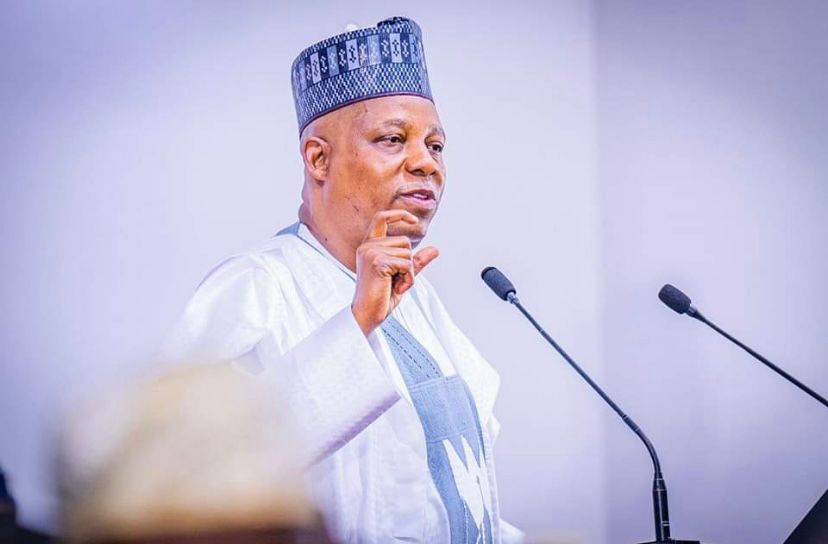
Nigeria has taken another step toward addressing youth unemployment with the launch of the Office of the Vice President Generation Unlimited Secretariat, widely known as OVP GenU.
The initiative, supported by UNICEF’s Generation Unlimited programme, aims to connect 20 million young Nigerians to education, skills training, and employment opportunities by 2030.
At first glance, it may sound like another government programme. But the bigger question is this.
Can coordinated partnerships finally close the gap between education and employment in Nigeria?
The GenU Secretariat is designed to help answer that question.
Why Youth Employment Is Still a Major Challenge
Youth unemployment remains one of Nigeria’s most pressing social and economic challenges.
Every year, thousands of young people graduate from universities, polytechnics, and vocational institutions. However, many struggle to find meaningful work. In many cases, the problem is not just a lack of jobs. It is also a mismatch between available skills and industry needs.
Young people often leave school with theoretical knowledge but limited practical experience. As a result, businesses spend additional time and resources training new employees.
This gap between education and employment has long been recognized. The GenU initiative aims to address it by creating a structured system that connects skills training directly with economic opportunities.
What the GenU Secretariat Will Do
The newly launched OVP GenU Secretariat will act as a national coordination hub. Its primary role is to bring together government agencies, private sector organizations, development partners, and youth groups to expand access to opportunities.
Speaking during the launch, Vice President Kashim Shettima, represented by Ibrahim Hadejia, explained that the secretariat will help align existing programmes and accelerate implementation.
According to him, collaboration will be central to the initiative’s success.
The goal is simple but ambitious. Young Nigerians should not only receive education. They should also gain practical skills that lead directly to employment and entrepreneurship opportunities.
Connecting Skills to Local Economies
Another important aspect of the programme is its connection to the Renewed Hope Ward Development Programme.
This broader national programme targets economic stimulation across 8,809 electoral wards in Nigeria. By linking skills development with local economic activities, policymakers hope to ensure that training programs reflect the real needs of communities.
For example, the type of training offered in an agricultural community may differ from that in a technology focused urban area.
This localized approach helps ensure that skills development is relevant, practical, and economically meaningful.
Abubakar Bagudu, Minister of Budget and Economic Planning, noted that aligning skills with community needs is essential for sustainable development.
When young people develop skills that are directly applicable within their communities, they are more likely to contribute to local economic growth.
Why Data Will Play a Critical Role
One of the most significant elements of the GenU programme is the planned national skills census.
The Federal Ministry of Education intends to adopt the GenU framework as a technical guide for understanding Nigeria’s skills landscape.
According to Suwaiba Ahmad, Minister of State for Education, the census will generate valuable data on existing skill gaps across the country.
This information will help policymakers answer key questions.
What skills are most in demand?
Where are the biggest employment gaps?
Which regions require the most urgent intervention?
With better data, training programs can be designed to meet actual labor market needs, rather than relying on assumptions.
In the long term, this approach could significantly improve the effectiveness of Nigeria’s education and workforce development strategies.
A Strong Signal of Government Commitment
The decision to host the GenU Secretariat within the Office of the Vice President is also significant.
It sends a clear signal that youth development is being treated as a national priority.
Wafaa Abdelatef, a representative involved in the programme, described the move as an indication of Nigeria’s commitment to coordinated action.
Placing the secretariat at such a high level of government helps ensure stronger collaboration across ministries, agencies, and development partners.
It also increases accountability for results.
When youth employment initiatives are fragmented across institutions, progress can be slow. A centralized coordination structure may help improve efficiency and impact.
What This Means for Businesses
While the programme focuses on youth development, it also has important implications for businesses.
Companies often struggle to find workers with the right mix of skills and experience. This challenge can slow growth and reduce productivity.
A stronger skills development system could help address that problem.
If more young people receive practical training aligned with industry needs, businesses will benefit from a larger and more capable talent pool.
In addition, improved workforce readiness may encourage investment in sectors that rely heavily on skilled labor.
Over time, this could strengthen Nigeria’s competitiveness in areas such as technology, manufacturing, and services.
Why Collaboration Will Be Essential
No single institution can solve the youth unemployment challenge alone.
This is why the GenU initiative emphasizes partnerships between government, private sector organizations, civil society groups, and development agencies.
Each partner plays a different role.
Government institutions create policy frameworks and provide national coordination.
Private sector organizations help identify industry needs and offer practical opportunities for training and employment.
Civil society organizations engage communities and ensure that vulnerable groups are not left behind.
When these groups work together, the impact can be significantly greater than isolated efforts.
What This Means for Communities
Beyond economic statistics and policy frameworks, youth employment has direct consequences for communities.
When young people lack access to jobs or skills development opportunities, the effects can be felt across families and local economies.
Conversely, when youth gain access to meaningful employment, the benefits ripple outward.
Household incomes improve.
Local businesses grow.
Communities become more resilient.
Better access to education, training, and employment also reduces social inequality and expands opportunities for the next generation.
In this sense, youth empowerment is not only an economic priority. It is also a social and developmental one.
Looking Ahead
The launch of the OVP GenU Secretariat represents an important step toward building a more structured approach to youth development in Nigeria.
However, the real test will lie in implementation.
Connecting 20 million young Nigerians to opportunities by 2030 is an ambitious target. Achieving it will require sustained collaboration, strong policy coordination, and consistent investment in skills development.
If successful, the initiative could reshape Nigeria’s workforce landscape and unlock the potential of millions of young people.
Final Thoughts
Youth represent one of Nigeria’s greatest assets. Yet for many years, the country has struggled to translate that demographic advantage into economic opportunity.
The GenU initiative attempts to change that narrative.
By aligning education, skills development, and employment opportunities, the programme seeks to build a system where young people are better prepared for the future.
Ultimately, the success of this initiative will depend not only on government leadership but also on the commitment of businesses, communities, and development partners.
If these groups work together effectively, Nigeria could take a significant step toward turning its youth population into a powerful driver of sustainable growth.
[give_form id="20698"]