Lagos State Personal Income Tax Deadline Extended to April 14, 2026. How to File on Time.
 csrreporters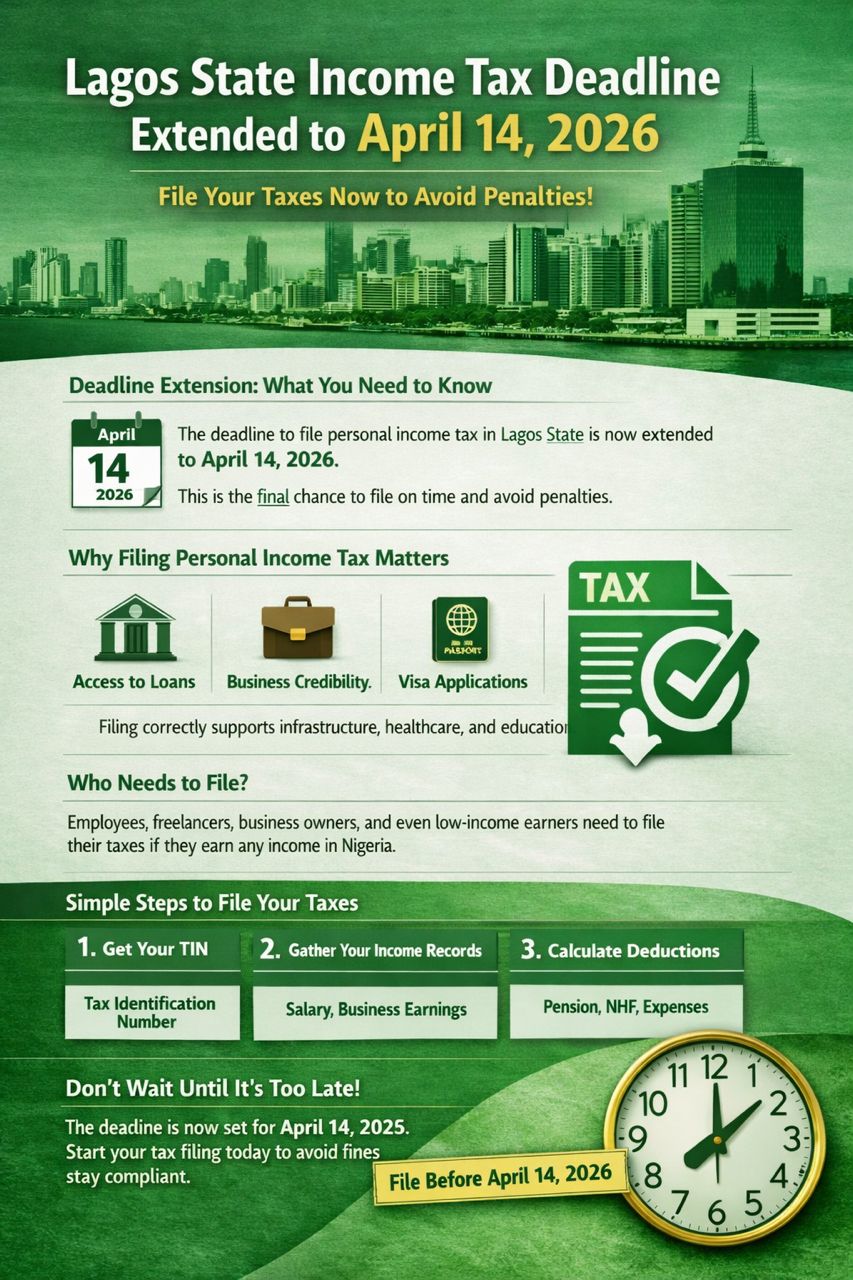
The Lagos State Government has extended the deadline for personal income tax returns to April 14, 2026, giving individuals more time to organize documents, file correctly, and avoid penalties.
Whether you are an employee, freelancer, or business owner, timely tax filing is crucial not just to stay compliant, but also as a form of civic responsibility that contributes to community development.
Why Filing Personal Income Tax Matters
Filing personal income tax is a legal requirement for all individuals earning income in Nigeria. Beyond legal compliance, it supports infrastructure, healthcare, education, and other public services.
For individuals and entrepreneurs, proper filing also enables:
• Access to loans and financial services
• Credibility for business and professional ventures
• Smooth visa or international application processes
• Avoidance of penalties and legal consequences
Who Needs to File
You are required to file personal income tax if you:
• Earn a salary (PAYE employees)
• Run a business or side hustle
• Work as a freelancer or consultant
• Receive rental, investment, or digital platform income
Even low income earners may need to file to confirm exemption status.
What You Need Before Filing
Gather these documents before starting:
• Tax Identification Number (TIN)
• National Identification Number (NIN)
• Bank Verification Number (BVN)
• Proof of income such as salary slips, invoices, or bank statements
• Records of business or work related expenses
• Employer details for salary earners
Having accurate records reduces mistakes and speeds up filing.
Step by Step Guide to Filing Personal Income Tax
1. Get Your TIN – Register or retrieve through the FIRS portal using your NIN.
2. List All Income Sources – Salary, business income, freelance earnings, rental, or investment returns.
3. Calculate Total Income – Add up all earnings for the year.
4. Deduct Allowable Expenses and Reliefs – Pension, NHF contributions, health insurance, and business expenses.
5. Determine Taxable Income – Income after deductions is your taxable amount.
6. Apply Tax Rates – Nigeria uses a progressive tax system. Some may fall below the taxable threshold.
7. Log In to the Tax Portal – Use your state tax authority or FIRS portal account.
8. Fill Out Your Tax Return Form – Enter personal info, income sources, employment or business details, and deductions.
9. Submit Your Return – Confirm submission and save acknowledgment.
10. Pay Any Tax Due – Follow portal instructions and keep receipts.
11. Keep Records – Retain copies of filed returns, payment receipts, and supporting documents for future reference.
Common Mistakes to Avoid
• Incorrect personal information
• Failing to declare all income sources
• Ignoring eligible deductions
• Filing late or not filing at all
Why You Should File Before April 14, 2026
Filing early:
• Prevents last minute errors
• Avoids system delays
• Keeps you compliant with tax laws
• Prevents penalties and fines
Filing Taxes as an Act of Civic Responsibility
Filing personal income tax is more than a legal obligation. It is an investment in society and community development. By staying compliant, individuals and businesses contribute to infrastructure, healthcare, education, and social programs. This reflects the same responsibility and impact principles that guide Corporate Social Responsibility.
Start filing today to stay compliant, avoid penalties, and contribute to a sustainable and thriving society.
[give_form id="20698"]