csrreporters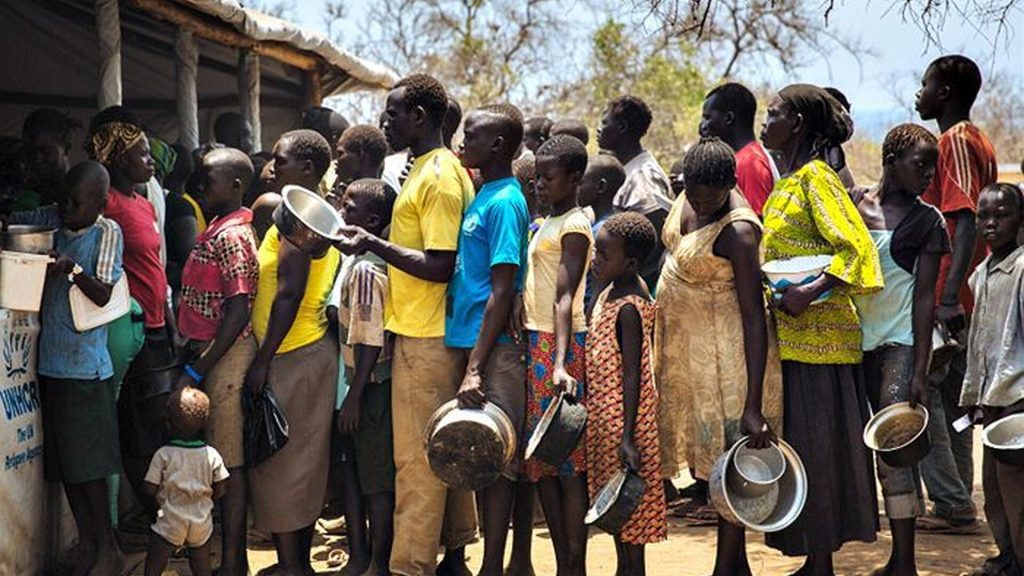
Rich Land, Poor People: Who is Actually Responble for Nigeria's Development Failure
By Eche Munonye
There is a gas flare burning somewhere in the Niger Delta right now. It has been burning, without interruption, for decades. A few kilometres away, there is a village without electricity. Children do their homework by candlelight. Mothers walk hours to fetch water. Clinics run out of medicine before the month ends. The flare illuminates the sky above a community it has never illuminated from within.
This is not a metaphor. It is a geographic fact repeated across oil-producing communities in Nigeria. And it captures, more precisely than any economic statistic, the central contradiction of the Nigerian condition: a nation of extraordinary wealth surrounded by people of extraordinary deprivation.
Nigeria holds the largest proven oil reserves on the African continent. It is the continent’s biggest economy by nominal GDP. It has produced some of the world’s most successful entrepreneurs, most celebrated artists, and most decorated academics. And yet, by nearly every measure of human welfare — poverty headcount, child mortality, access to clean water, quality of education, nutrition — Nigeria ranks among the worst performers on earth.
The question is not whether Nigeria has failed its citizens. The evidence on that is settled. The question is: who bears the responsibility for that failure — and what are they doing about it?
THE NUMBERS DON’T LIE
Let the data speak plainly. According to the World Bank, more than 133 million Nigerians — nearly 63 percent of the population — live in multidimensional poverty. This is not a rounding error. It is a humanitarian crisis wearing the clothes of a development statistic.
Nigeria earns billions annually from oil exports. Between 1960 and 2020, it is estimated that the country earned over $1 trillion in oil revenues. Where did that money go? Not into functional public hospitals. Not into schools that produce literate graduates. Not into roads that connect markets. Not into the kind of infrastructure that converts natural wealth into human welfare.
The inequality is as striking as the poverty. Nigeria’s richest 10 percent hold over 40 percent of national income. The country’s GDP per capita — often cited to suggest prosperity — masks a distribution so skewed it is almost meaningless as a welfare indicator. An average built on extremes tells you nothing about the middle, and even less about the bottom.
These numbers are not destiny. They are the outcome of choices — political, institutional, and corporate — made over decades by people with the power to make different ones.
HOW DID WE GET HERE? THE STRUCTURAL BETRAYAL
The honest account of Nigeria’s development failure must begin before independence. The colonial economy was designed for extraction, not production. Railways did not connect communities to each other; they connected mining sites and agricultural zones to ports. Institutions were built to serve the metropole, not the population. The post-colonial state inherited a structural orientation toward taking out rather than building up.
Then came oil. The discovery of petroleum in commercial quantities in 1956 was supposed to change everything. It changed things, but not in the way the optimists hoped. What economists call the ‘resource curse’ — the paradox by which resource-rich nations often perform worse on development metrics than their resource-poor neighbours — took hold with remarkable speed.
Oil revenues made it possible for the Nigerian state to fund itself without taxing its citizens. That fiscal arrangement sounds like a benefit; it is, in fact, a catastrophe. Governments that do not depend on citizen taxation have diminished incentives to be accountable to citizens. The social contract that taxation creates — you pay, we deliver — was never properly formed. The state became answerable to the commodity market, not to the people.
Nigeria’s oil did not make the state powerful. It made the state independent — independent of its own citizens.
Military rule compounded the damage. Decades of governance by decree entrenched a culture in which institutions served rulers rather than citizens, in which accountability was not a feature of the system but a threat to it. The democratic transitions of 1999 and beyond restored civilian governance, but could not, overnight, rebuild institutions that had been systematically hollowed out.
This is the structural inheritance. It does not excuse anyone currently in power. But it is necessary context for understanding why fixing Nigeria is not simply a matter of electing better leaders. The architecture of failure runs deep.
THE USUAL SUSPECTS — AND WHY THAT’S NOT ENOUGH
It is tempting, and not entirely wrong, to lay this failure at the feet of government. Corruption is real, costly, and well-documented. The Transparency International Corruption Perceptions Index consistently places Nigeria in the bottom third of countries globally. Public funds have been looted at a scale that would fund multiple development budgets. The systemic theft of national resources by those entrusted to manage them is among the great crimes of the postcolonial era.
But stopping the analysis at government lets too many other actors off the hook.
International oil companies have operated in the Niger Delta for over sixty years. They have extracted hundreds of billions of dollars in value from Nigerian soil. They have left behind pipeline networks that leak, gas flares that poison, and communities that sue. Some have since faced legal consequences in European courts precisely because the accountability they evaded in Nigeria eventually caught up with them elsewhere.
The financial system — local and international — has been a willing vehicle for capital flight. Nigerian elites do not hide their wealth under mattresses. They park it in London real estate, Swiss accounts, and Delaware shell companies. The global financial architecture facilitates this. Developed nations that lecture Nigeria on governance simultaneously accept stolen funds through their financial institutions.
Local corporate actors are not innocent either. Businesses that operate in a broken environment often develop a sophisticated relationship with that brokenness — knowing when to pay, who to pay, and how to structure transactions that never appear on any official record. Corruption in Nigeria is not a government monopoly. It is an ecosystem.
Assigning full responsibility to any single actor is analytically convenient and practically useless. The failure is distributed. So must the accountability be.
CSR AS SYMPTOM, NOT SOLUTION
Here is where the corporate sector’s relationship with Nigerian poverty becomes most complex — and, from where CSR Reporters stands, most worth interrogating.
Walk through the CSR reports of major companies operating in Nigeria. You will find boreholes and classrooms. Scholarships and skill acquisition programmes. Health outreach and tree planting. You will find communities described as ‘beneficiaries’ and development outcomes described in units — number of students trained, number of wells sunk, number of women empowered.
And then consider: these companies are operating in communities that should have functioning public infrastructure. The borehole a company drills in an oil-producing community is not generosity. It is a substitute for what a functioning state, funded by oil revenues, should already have provided. When a company drills for water in the same ground from which it extracts oil, the arithmetic of responsibility becomes very complicated indeed.
CSR cannot be a laundry service for extractive business models. Philanthropy that offsets harm is not responsibility. It is reputation management with a charitable face.
This matters not because CSR is inherently wrong, but because the framing of corporate giving as development contribution allows companies to participate in a system of deprivation while receiving credit for addressing its symptoms. The company that pollutes a river and then donates water filters to riverside communities has not become responsible. It has become strategic.
Genuine corporate responsibility in a context like Nigeria’s requires something more uncomfortable: an honest audit of how the business itself — its supply chains, its tax arrangements, its community engagement practices, its lobbying positions — either contributes to or helps dismantle the structures that keep people poor. That audit rarely appears in a CSR report.
Nigeria’s corporate sector has enormous potential influence — over employment standards, over local procurement, over tax compliance, over the advocacy positions it takes publicly and privately on policy. The question is whether that influence is being used to demand a better system, or to navigate a broken one more profitably.
THE ACCOUNTABILITY VACUUM
Underlying every dimension of Nigeria’s development failure is a single structural weakness: the absence of credible accountability infrastructure.
There is no independent, functioning system for tracking what the government spends and what outcomes it produces. Budget implementation data is inconsistent, incomplete, and rarely subject to genuine public scrutiny. The Auditor-General’s reports surface findings that go unaddressed for years. Legislative oversight is episodic at best, performative at worst.
Corporate accountability is no different. CSR reporting in Nigeria is largely voluntary, largely unverified, and largely unchallenged. Companies report what they choose to report, in the format they find most flattering, to audiences who lack the data to challenge the claims. There is no national framework for CSR disclosure. There is no independent verification regime. There are no consequences for impact claims that do not hold up under scrutiny.
The result is a market for good-looking stories rather than good outcomes. Companies that genuinely invest in communities cannot be distinguished from companies that invest in communications about communities. The signal is indistinguishable from the noise. And when accountability is absent, it is always the most vulnerable who pay the price — because they are the ones who depended on the outcome being real.
This accountability vacuum is not accidental. It serves the interests of those who benefit from opacity. Closing it requires deliberate, institutional effort — from government, from civil society, from the media, and from within the corporate sector itself.
Nigeria’s development failure is not a natural disaster. It is an institutional and moral failure with identifiable actors and addressable causes. The path forward requires directness from everyone with a stake in the outcome.
To Nigeria’s corporate sector: Stop hiding behind your CSR reports. The communities around your operations do not need more boreholes and branded scholarships. They need you to pay your taxes honestly, obey environmental regulations without waiting to be sued, procure locally with genuine intent, and use your institutional voice to advocate publicly for the accountability systems that would hold everyone — including you — to a higher standard. Responsibility is not a department. It is a business model.
To government at all levels: The era of CSR as a substitute for governance must end. No company should be building what the state is mandated to provide. Revenue allocation, infrastructure delivery, and social protection are not corporate obligations — they are sovereign ones. Until government is held to account for what it receives and what it delivers, no amount of private sector goodwill will close the gap between Nigeria’s wealth and its people’s welfare.
To civil society, journalists, and independent institutions: The accountability infrastructure Nigeria lacks will not be built by the people who benefit from its absence. It must be built by those with the independence and the mandate to demand it. That means more rigorous reporting, more verification, more willingness to challenge powerful actors publicly, and more investment in the kind of institutional credibility that makes scrutiny stick. Good intentions without evidence are not accountability. They are aspiration.
The gas flare is still burning. The village is still dark. The question of who is responsible has an answer. The harder question is whether those responsible will act — or wait to be compelled.
[give_form id="20698"]