Act Now, or Own the Silence: A CSR Reporters Editorial on South Africa’s Violence Against Nigerians and the Failure of African Brotherhood
 csrreporters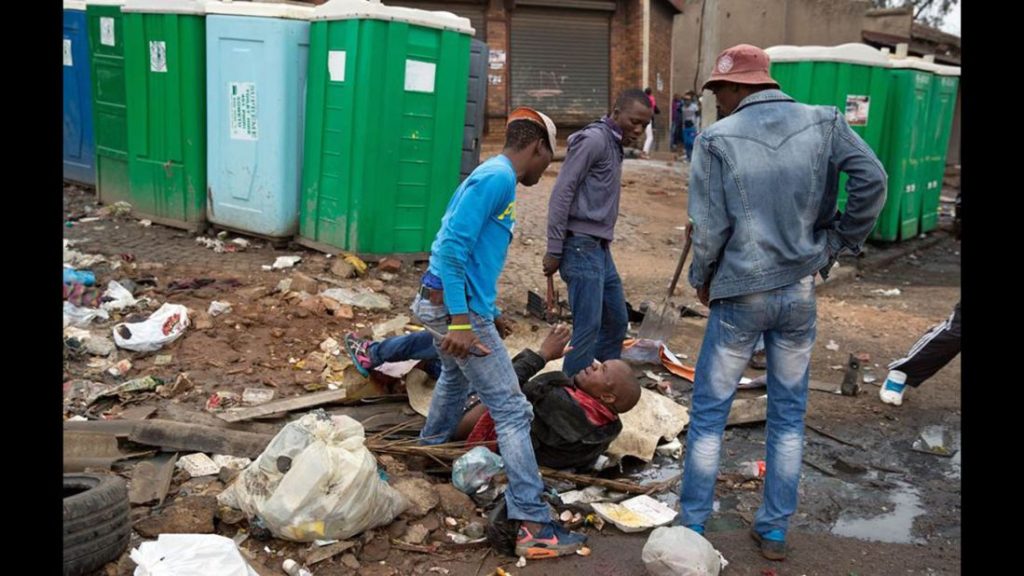
Act Now, or Own the Silence: A CSR Reporters Editorial on South Africa's Violence Against Nigerians and the Failure of African Brotherhood
People are being attacked. Homes are being looted. Businesses built over years of honest labour are being destroyed in hours. Nigerians — and other African nationals — are running for their lives on the streets of a country that once asked the world to stand with it in its darkest hour.
And the government of South Africa is watching.
That is the charge this editorial makes — directly, without diplomatic softening, and without apology. What is happening to Nigerians and other foreign nationals in South Africa is not a law enforcement problem waiting to be managed. It is a moral emergency demanding immediate governmental response. The images coming out of South Africa are not just troubling. They are a condemnation — of a government that has allowed a climate of xenophobic violence to persist, escalate, and repeat itself without consequence.
CSR Reporters is an independent platform committed to accountability, ethical leadership, and the principle that responsibility — whether corporate or governmental — must be demonstrated in action, not asserted in words. It is from that position that we speak today. Not as commentators. As a voice demanding accountability from those with the power and the obligation to act.
Silence in the face of violence is not neutrality. It is permission. And permission, in time, becomes complicity.
WHAT BROTHERHOOD ACTUALLY MEANS
There is a history here that cannot be ignored — and that the South African government would do well to remember before it mistakes inaction for a safe political position.
When South Africa was on its knees under the weight of Apartheid, Africa stood up. Nigeria did not look away. Nigerian students, intellectuals, and governments of successive eras made South Africa’s liberation struggle their own cause. Nigeria contributed financially, diplomatically, and morally to the international pressure that helped bring Apartheid to its end. When the world debated whether to sanction, Nigeria did not debate. When corporations were asked whether to divest from Apartheid South Africa, Nigerian voices were among those insisting that silence was not acceptable.
This is not ancient history invoked for sentiment. It is the foundation of a continental compact — that African nations would stand with one another, that the freedom of one was bound to the dignity of all, that what was built in the name of liberation would not be turned against the very neighbours who helped build it.
That compact is being violated. Not by rogue individuals alone — rogue individuals exist in every society and their violence, however horrific, is not itself a governmental failure. The failure is what happens after the violence. Whether the state speaks. Whether the state acts. Whether those who attack and destroy and terrorise face consequences — or find that the absence of consequences is its own form of official sanction.
Brotherhood is not a rhetorical position taken at continental summits. It is tested in moments like this one. South Africa is failing that test.
COMPLICITY BY INACTION
The government of South Africa must understand what it is being accused of here. It is not being accused of organising the violence. It is being accused of something in some ways more troubling: allowing a climate in which that violence has become a recurring feature of South African civic life, with inadequate deterrence, inadequate prosecution, and inadequate political will to confront the nationalist and economic anxieties that are being redirected, dangerously and illegally, against foreign nationals.
Xenophobic violence in South Africa is not new. It is not a surprise. It has been building, erupting, subsiding, and building again for years. Each cycle produces the same sequence: horror, condemnation, promises of action, and then a return to conditions that make the next cycle inevitable. Communities that have been targeted before are being targeted again. The pattern is not mysterious. Its persistence is a policy failure.
When a government knows that violence is recurring and does not restructure its response to prevent recurrence, it has made a choice. When political leaders use language — about job competition, about economic pressure, about the presence of foreigners — that feeds the grievance narratives that precede violence, they have made a choice. When prosecution of those who attack, loot, and destroy foreign-owned property is slow, inconsistent, or absent, that too is a choice.
A government that cannot or will not protect people on its soil from violence has failed the most basic test of responsible governance — regardless of the nationality of the victims.
We are not asking the South African government to do something extraordinary. We are asking it to do what every government owes every person within its borders: protection under the law, equal and without exception. The nationality of a victim does not diminish the obligation. If anything, the international dimension of this violence — the damage it does to South Africa’s standing on the continent and in the world — makes the obligation more urgent, not less.
NIGERIA’S FAILURE TOO
Accountability requires that we hold the mirror evenly. And turned toward Abuja, that mirror reflects its own uncomfortable image.
The Nigerian government’s response to the repeated targeting of its citizens in South Africa has been, by any honest assessment, inadequate. Statements have been issued. Ambassadors have been summoned. Concern has been expressed. And then, with remarkable regularity, the diplomatic temperature has cooled, the news cycle has moved, and Nigerians in South Africa have been left to navigate their vulnerability without the full weight of a government standing visibly and persistently behind them.
Nigeria is the most populous nation in Africa. Its economic scale, its diplomatic history, and its continental relationships give it leverage that it has consistently failed to deploy with the consistency and force that this situation demands. A Nigerian government that is serious about the welfare of its citizens abroad does not issue a statement and stand down. It maintains diplomatic pressure. It works multilateral channels. It makes clear — through the African Union, through bilateral engagement, through the consequences it is willing to impose — that Nigerian lives have a value that the South African government must reckon with.
Nigerian citizens living, working, and building lives in South Africa deserve a government that fights for them with the same energy it expects those citizens to show when they go abroad and represent the nation. That government has not yet fully shown up. It must.
WHAT RESPONSIBLE GOVERNANCE LOOKS LIKE HERE
CSR Reporters exists at the intersection of responsibility, leadership, and accountability. We apply those principles to corporations. We apply them equally to governments. And by those principles, responsible governance in this moment has a clear and specific shape.
It does not look like a press conference expressing regret. It does not look like a commission of inquiry with no timeline and no teeth. It does not look like the deployment of police after the damage is done and the cameras have arrived. It looks like prevention, prosecution, and political courage — in that order and without delay.
Responsible governance acknowledges, honestly and publicly, that xenophobic violence is a pattern with structural roots — and commits to addressing those roots, not just their most recent eruption. It means political leaders refusing to use the language of scarcity and competition that provides ideological cover for those who would direct economic frustration into racial and national violence. It means a legal system that prosecutes attackers with the same vigour it would apply if the victims were South African citizens.
And it means something that no government in this situation has yet fully done: an unambiguous, repeated, high-level statement that foreign nationals on South African soil are entitled to safety, dignity, and equal protection under South African law — and that the government will ensure they receive it.
THE EDITORIAL DEMAND
CSR Reporters calls on the Government of South Africa to act — immediately, visibly, and without further equivocation — on the following:
One: Deploy adequate law enforcement to protect foreign nationals in affected areas now — not after the next incident, but before it.
Two: Fast-track the prosecution of individuals responsible for attacks on foreign nationals. Impunity is the engine of recurrence. Remove it.
Three: Issue an unambiguous statement at the highest level of government — the Presidency — affirming that foreign nationals are entitled to full protection under South African law and that violence against them will be prosecuted without exception.
Four: Engage the Nigerian government and the African Union in a structured, transparent dialogue about the protection of African nationals in South Africa, with timelines and accountability measures.
Five: Commission and publish an honest assessment of the political, economic, and institutional factors that have allowed xenophobic violence to recur — and commit to a prevention framework with independent oversight.
South Africa was not liberated alone. It was not rebuilt alone. The continent that stood with it in its hour of crisis is watching what it does in this one. History is being written again — and the question is what role South Africa will choose to play in it.
The government of South Africa has a choice. It can act, and demonstrate that African brotherhood is more than a phrase deployed at summits. Or it can remain silent, and own everything that silence means.
CSR Reporters will be watching. So will the continent.
[give_form id="20698"]