Nine Years at the Table: What the GTCO Food and Drink Festival Has Built — and What It Still Owes
 csrreporters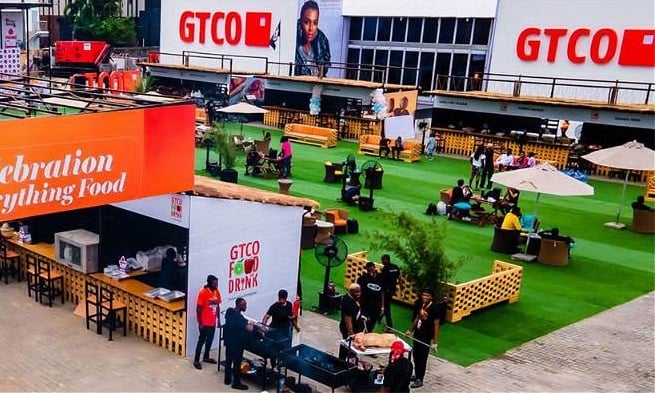
Nine Years at the Table: What the GTCO Food and Drink Festival Has Built — and What It Still Owes
What began as a bold experiment in corporate generosity has grown into Africa’s largest food and drink festival. Nine editions in, CSR Reporters examines the human stories behind the stalls, the economic power of the platform, and the accountability questions that GTCO must now answer honestly.
By CSR Reporters Editorial Team
Adaeze Nnadi was not supposed to be a food entrepreneur. She had a degree in accounting, a steady job at a Lagos audit firm, and a mother’s jollof rice recipe she had been making on weekends for friends. But in 2019, someone dared her to apply for a stall at the GTCO Food and Drink Festival. She filled out the form at midnight, half-expecting rejection.
She was accepted.
Within three days at the festival, Adaeze had sold out her entire stock, collected over 200 WhatsApp contacts from new customers, and been approached by two catering companies about a supply partnership. By 2021, she had quit her accounting job. Today, her brand — Mama Adaeze’s Kitchen — supplies ready meals to corporate canteens across Lagos Island.
Her story is not unique. It is, in fact, the story GTCO has been trying to tell — and largely succeeding at telling — for nine consecutive years.
The Idea That Became an Institution
When Guaranty Trust Bank (now GTCO Plc) launched its Food and Drink Festival in 2016, the Nigerian corporate CSR landscape was cluttered with scholarship cheques, hospital donations, and tree-planting ceremonies — all well-intentioned, most disconnected from any measurable development logic. The bank chose a different path.
Rather than writing cheques, it built a platform. Rather than selecting beneficiaries, it opened a marketplace. Rather than announcing numbers, it created an experience. The idea was elegantly simple: give Nigeria’s food entrepreneurs free stalls, free footfall, and free visibility. Let the market do the rest.
Nine years later, that idea has become Africa’s largest food and drink festival — a three-day annual event at GT Centre in Oniru, Victoria Island, Lagos, that draws hundreds of thousands of visitors, hosts hundreds of vendors, and injects billions of naira into the Nigerian economy. What began as CSR has hardened into cultural institution.
“The primary objective of the GTCO Food and Drink Festival is to showcase our diversity and industry as a people whilst delivering a sumptuous culinary experience. We want to see our retail customers who also own small businesses thrive.” — Segun Agbaje, Group CEO, GTCO Plc
That language — from GTCO’s own CEO — is important. It frames the festival not as charity but as ecosystem investment. And that distinction matters enormously when we begin to evaluate impact.
What Nine Editions Have Built
To understand the festival’s footprint, you have to move beyond the headline numbers and sit with the texture of what it has created over nearly a decade.
Free access has been non-negotiable from day one. Unlike premium food expos in London, Dubai, or New York — where a weekend pass can cost hundreds of dollars — the GTCO festival has remained completely free to attend since 2016. In a country where economic pressures have squeezed leisure budgets to breaking point, that commitment has preserved a rare democratic quality: a space where the akara seller from Ajegunle and the food blogger from Lekki stand on equal ground.
The vendor model has been transformative. In 2022, over 140 vendors were given free retail stalls. By 2025, that number had grown to 204 stalls. The 2025 edition specifically curated 213 food-based SMEs — all Nigerian-owned. Each vendor receives not just a stall but access to a high-traffic, high-visibility marketplace that compresses months of marketing into 72 hours. Entrepreneurs who participated consistently reported increased sales, expanded customer bases, and stronger brand recognition.
The festival’s cultural mission has been deliberate and proud. GTCO has consciously centred Nigerian and African cuisine — jollof rice, nkwobi, suya, moi moi — alongside international options. Renowned chefs have led masterclasses. In 2024, a children’s baking class was introduced, nurturing the next generation of culinary artists. The result is a festival that does not simply celebrate food; it reaffirms cultural identity at scale.
The economic multiplier is significant. The festival draws tourism spending that ripples across Lagos — hotels, transport, local attractions, artisan markets. In 2025, the launch of a debut Holiday Edition in December, targeting over 130,000 visitors, further expanded this economic footprint into the festive season, a previously untapped window.
“This event is capable of boosting the local economy. Some people you see here, they will make it. Some might just be one-time vendors, maybe vendors who do their business from their house.” — Festival participant, 2025
The Accountability Lens: Where the Hard Questions Begin
CSR Reporters does not exist only to applaud. We exist also to interrogate. And the GTCO Food and Drink Festival, for all its genuine achievement, presents accountability questions that deserve honest answers.
The festival’s narrative — as constructed by GTCO’s communications machinery — is compelling, well-produced, and consistently upbeat. But compelling narratives and verified impact are not the same thing. Nine years in, the festival has grown large enough that ‘we did a good thing’ is no longer a sufficient accountability standard. The question must now be: how do we know?
ACCOUNTABILITY SCORECARD: GTCO FOOD AND DRINK FESTIVAL (2016–2026)
CSR Reporters Assessment — Nine-Year Review
| Accountability Question | Finding | Verdict |
| Is vendor impact independently verified? | GTCO publishes vendor counts and testimonials but no third-party impact audit has been publicly released. Self-reported outcomes dominate the narrative. | ⚠ Unverified |
| How many vendors return year-on-year? | Repeat participation is referenced as evidence of ROI, but no published data on vendor retention rates or longitudinal business outcomes exists. | ⚠ Data gap |
| Are economic injection figures independently sourced? | ‘Billions of naira’ referenced in press coverage but no methodology or independent economic assessment has been publicly disclosed. | ✗ Unsubstantiated |
| Is there diversity monitoring among vendors? | Gender-inclusive and youth-led participation is referenced broadly. No published breakdown by gender, region, or business size has been released. | ⚠ Incomplete |
| Free access commitment maintained? | Confirmed across all nine editions — public attendance remains free with no ticket barriers. Consistent and commendable. | ✓ Verified |
| Does GTCO’s ESG reporting integrate festival impact? | Festival coverage in annual sustainability reports exists but lacks granular, measurable outcomes tied to SDG indicators or comparable benchmarks. | ⚠ Partial |
| Is there a post-festival vendor support mechanism? | The festival provides visibility but no publicly documented post-event financing, mentorship pipeline, or structured GTCO financial product linkage for alumni vendors. | ✗ Gap identified |
Source: CSR Reporters analysis based on publicly available GTCO communications, press coverage, and festival documentation (2016–2026).
The Gap Between Platform and Ecosystem
This is the fundamental tension at the heart of the GTCO Food and Drink Festival’s ninth year: it has built an exceptional platform, but not yet a complete ecosystem.
A platform gives people a stage. An ecosystem gives them what comes next. The festival excels at the former. For three days, small food businesses get the visibility, credibility, and market access that would otherwise take years to build. But when the tents come down, what follows?
There is no publicly documented GTCO programme that tracks vendor business growth post-festival. There is no announced pipeline that connects festival alumni to GTCO’s financial products — business loans, trade finance, digital banking tools — at preferential terms. There is no published mentorship framework that pairs emerging food entrepreneurs with established culinary industry operators over a sustained period.
This is not a small gap. GTCO is a financial services group. Its primary product is capital and financial infrastructure. The festival’s most credible long-term value proposition should be the bridge between market visibility and financial empowerment. Currently, that bridge exists in the rhetoric but not in the reporting.
“The festival provides a launchpad for growth. But a launchpad without trajectory data is just spectacle. What GTCO must now publish is not how many vendors attended — but how many of those vendors are financially stronger because of GTCO.” — CSR Reporters Editorial Assessment
What the Numbers Don’t Say
GTCO’s communication around the festival is professional and frequent. Press releases are well-written. Media coverage is extensive. Social media amplification is consistent. The festival website is polished. All of this is to the institution’s credit.
But communication volume is not the same as transparency. The questions CSR Reporters would need answered to render a full accountability verdict include:
- What percentage of festival vendors secured new contracts, clients, or revenue growth within 12 months of participation? By how much?
- What is the total estimated economic value generated by the festival across nine editions — and who independently validated that figure?
- How many female-led businesses, youth-owned businesses, and businesses from outside Lagos have participated, broken down by year?
- What is GTCO’s SDG alignment score for this initiative, and how is it measured, reported, and externally assured?
These are not trick questions. They are the standard accountability asks of any corporate social investment programme in its ninth year. The festival is mature enough to answer them. The question is whether GTCO’s reporting infrastructure is ready to do so.
The Credit GTCO Has Earned
Accountability journalism is not prosecutorial. It is honest. And the honest assessment of the GTCO Food and Drink Festival is that GTCO has earned significant credit.
In an environment where Nigerian corporate CSR often means a press release, a cheque, and a photo, GTCO built something that people actually show up for and look forward to. They built a free event that has survived nine years — through economic recessions, a global pandemic, currency devaluation, and a cost-of-living crisis that has made cultural participation a luxury for many Nigerians. That consistency alone is remarkable.
The festival has demonstrably created pathways for small food businesses. Stories like Adaeze Nnadi’s are not manufactured. They are the organic outcome of a well-designed platform meeting genuine market demand. The culinary masterclasses, the children’s baking classes, the SME-first vendor model — all reflect a programme that has been thoughtfully iterated over time.
The 2025 Holiday Edition, launched in December, signals institutional ambition. Expanding into the festive calendar, aiming for over 130,000 visitors, and sustaining the free access commitment — these are choices that cost money and signal genuine intent.
GTCO deserves recognition for building Africa’s most consequential food festival. The accountability question is not whether it has done good. It is whether it can now prove how much, with what rigour, and for whom.
The Road Ahead: What Accountability Requires
As GTCO enters its tenth year, this is what the accountability agenda demands:
- An independent impact evaluation commissioned from a credible third party — not a PR firm, but a development economics or social impact consultancy like CSR REPORTERS — covering the full nine-year period.
- A publicly disclosed vendor outcomes framework that tracks business growth, customer acquisition, revenue change, and financial inclusion metrics for participating SMEs.
- A structured post-festival support pathway — whether through GTCO financial products, mentorship partnerships, or strategic acceleration — that converts market exposure into long-term enterprise development.
- Integration of festival impact data into GTCO’s formal ESG and sustainability reporting, with verifiable SDG alignment and year-on-year benchmarking.
These are not requests for perfection. They are the baseline expectations of an institution that has enjoyed nine years of public goodwill, media celebration, and brand-building off the back of a social platform. At scale, goodwill must graduate into governance.
As Eche Munonye, Founder of CSR Reporters succintly put it, “Nine years of doing good must now become nine years of proving it. That is not a criticism. It is the next stage of maturity for one of Nigeria’s most consequential corporate social investments.”
A Festival Worth Scrutinising
The GTCO Food and Drink Festival is, by any reasonable measure, one of the most successful corporate social impact platforms in Nigerian history. It has fed dreams, built businesses, preserved culture, and injected economic energy into a city and country that needs every drop of it.
But it is precisely because of what it has built that it must now be held to a higher standard. The biggest compliment CSR Reporters can pay to the GTCO Food and Drink Festival is not applause. It is scrutiny. And our scrutiny tells us this: the platform is extraordinary. The accountability infrastructure must now catch up.
Adaeze Nnadi is thriving. So is the festival. The question entering Year Ten is whether GTCO can tell the whole story — not just the beautiful parts, but the verified parts. That story, fully told, would make the GTCO Food and Drink Festival not just Africa’s largest food festival, but Africa’s most accountable one.
That would be worth celebrating.
| PARTNER WITH CSR REPORTERS: CSR Reporters provides independent sustainability intelligence, ESG advisory, and accountability reporting across Africa. We work with corporates, investors, and institutions who want their social impact to be real, measurable, and independently verified — not just well-communicated. To commission an impact evaluation, explore our ESG advisory services, or discuss editorial partnership, contact: www.csrreporters.com |