Beyond the Photo Op: What the Interswitch Developer Academy Tells Us About Data-Driven CSR
 csrreporters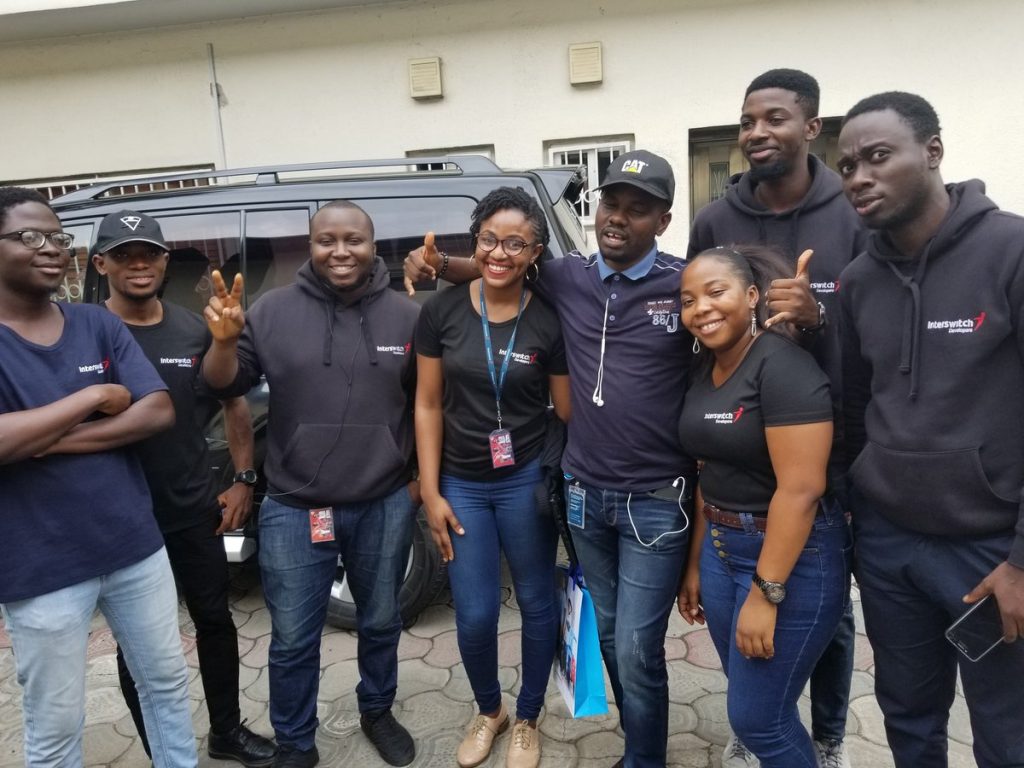
Beyond the Photo Op: What the Interswitch Developer Academy Tells Us About Data-Driven CSR
When a fintech giant announces it has inducted its largest-ever cohort of developer interns drawn from over 20,000 applications, the instinct is to applaud. And applause, on some level, is deserved. But applause without analysis is exactly the problem with how corporate social investment is often received in Africa. The picture is good. The press release is polished. The numbers sound large. The question that rarely gets asked is: what does the data actually show?
That is the question CSR Reporters is asking about the Interswitch Developer Academy — a programme that, by any reasonable measure, represents one of the more structured corporate human capital investments in Nigeria’s tech sector. And in asking it, we also want to make a
broader argument: that good CSR intentions, without data architecture to match, leave impact permanently in the dark.
What Interswitch Has Built — And Why It Matters
The Interswitch Developer Academy, now in its third cohort, is not a cheque-writing exercise. It is a nine-month immersive training programme covering Backend Development, DevOps, Mobile Development, Frontend Engineering, and Quality Assurance. Participants are not passive recipients of a scholarship; they are selected through a rigorous multi-stage process, mentored by senior professionals, and exposed to enterprise-grade systems that most young engineers only encounter years into a formal career.
The numbers behind this cohort are not trivial. Over 20,000 applications were received. A fraction made it through technical assessments and interviews. The ones in that photograph — uniformed, standing in front of the Interswitch Academy signage — represent the survivors of a highly competitive process. That alone signals something important about the demand for structured technical training in Nigeria: it is enormous, and it is largely unmet by the formal education system.
“While the migration of skilled talent remains a reality, our approach is to actively shape the outcomes by building a strong and sustainable pipeline of technology professionals.” — Mitchell Elegbe, Founder & Group CEO, Interswitch
Mitchell Elegbe’s framing is notable. He is not pretending that brain drain is not happening. He is arguing — credibly — that the response to brain drain is not to lament it but to build faster than it depletes. This is structurally sound thinking. Nigeria loses engineers to London, Toronto, and Amsterdam every quarter. The answer is not a closed border; it is a deeper bench. Every cohort that Interswitch trains adds depth to that bench, whether those engineers stay at Interswitch, join a Nigerian fintech, or export their skills and Nigeria’s reputation internationally.
To further institutionalise this commitment, Interswitch has also opened a dedicated facility in Victoria Island, Lagos — a physical hub for the Developer Academy and future training initiatives. This is not peripheral. It signals that the programme is not a temporary gesture but a
structural feature of the company’s long-term strategy.
The Impact on People: Real, But Incompletely Told
Let us be specific about what participants in the Interswitch Developer Academy receive that most young Nigerian engineers do not. They receive mentorship from practitioners who have built and scaled real payment systems. They receive exposure to enterprise-grade infrastructure — the kind that processes millions of transactions daily. They receive workplace readiness training: the soft architecture of professional identity that universities rarely teach. And they receive a credential that carries market weight in Nigeria’s tech hiring landscape.
The personal transformation this represents is substantial. For many participants, this programme is the bridge between theoretical education and economic self-sufficiency. In a labour market where graduate unemployment remains a structural crisis, nine months inside
Interswitch’s ecosystem is not a training programme — it is a career launchpad. The economic ripple effects extend outward. Engineers who graduate from the Academy and enter the workforce become taxpayers, consumers, and in some cases, founders. The human
capital investment Interswitch makes today compounds across careers, families, and communities. In the language of CSR measurement, this is what a high-multiplier social investment looks like: not a one-time donation to a cause, but a capability transfer that
generates returns across time horizons that the initial investment never imagined. Furthermore, as fintechs, banks, and startups continue to scale across Nigeria and the continent, the demand for skilled engineers is structural — not cyclical. By producing trained cohorts consistently, Interswitch is contributing to a talent supply chain that the entire ecosystem benefits from. This is ecosystem-level CSR: impact that extends far beyond the company’s own workforce needs.
The Economic Case: Talent as Infrastructure
Nigeria’s digital economy requires engineers the way its roads require asphalt. Without them, nothing moves at the pace the market demands. The World Bank and various development finance institutions have documented the link between technical skills development and GDP growth in emerging economies. Nigeria’s tech sector, despite remarkable entrepreneurial energy, faces a chronic shortage of job-ready engineers — a gap that the formal university system, under-resourced and curriculum-lagged, cannot close alone.
Corporate-led talent academies like Interswitch’s Developer Academy function, in economic terms, as private infrastructure investment.
The company absorbs costs that would ordinarily fall on government — curriculum design, facility provision, mentorship deployment, and programme administration — and delivers a public good: an engineer who is ready to work, ready to build, and ready to contribute to Nigeria’s digital output. When scaled across three cohorts and projected forward, the economic value is significant. Each engineer who enters productive employment as a result of this programme generates income tax revenue, reduces youth unemployment pressure, and adds productive capacity to Nigeria’s digital sector. In the aggregate, programmes like this are not philanthropy. They are private investment in national economic infrastructure — and they deserve to be recognised and measured as such.
“The economic value of a structured talent pipeline is not visible on a balance sheet. But its absence is felt in every fintech that cannot hire fast enough, every startup that cannot scale, and every government that cannot modernise its services.“
The Gap No One Is Talking About: Where Is the Data?
Here is where the CSR Reporters lens sharpens its focus. The Interswitch Developer Academy is, by the standards of corporate Nigeria, a genuinely well-designed programme. But the public account of its impact is almost entirely narrative. Press releases. Photographs. Quotes from executives. What is conspicuously absent is the data architecture that would allow anyone —including Interswitch itself — to make rigorous claims about its social return.
Consider what we do not know from the available public information:
- How many graduates from cohorts one and two are employed, and in what roles?
- What percentage remained in Nigeria versus relocating abroad?
- What salary ranges did graduates enter, and how does this compare to counterparts without the training?
- How many have gone on to found or co-found companies?
- What is the demographic breakdown — by gender, geography, socioeconomic background — of who is being reached?
- What proportion of the 20,000 applicants were from outside Lagos, and how many made it through?
- These are not hostile questions. They are the questions that separate a programme with measurable impact from a programme that simply looks like it has impact. They are also the questions that would allow Interswitch to make a more powerful case — to its investors, its board, and the public — for the value of what it is building.
The absence of this data is not unique to Interswitch. It is the defining characteristic of corporate CSR in Nigeria. Companies invest. Companies communicate. But they rarely measure — and when they do, they rarely publish the measurements independently. This is the accountability gap that CSR Reporters was founded to identify and close.
Why Data-Driven CSR Is Not Optional — It Is Strategic
The case for data-driven corporate social investment is not primarily ethical. It is strategic. Companies that measure their social impact are better positioned to improve it, defend it, and leverage it. Those that do not are flying blind — spending resources on programmes whose
effectiveness they cannot verify and whose value they cannot communicate with precision. For a company of Interswitch’s scale and ambition, the stakes of this measurement gap are particularly high. As the Developer Academy grows — and 20,000 applications suggest the demand to grow is real — the programme will require increasingly sophisticated decisions: Which engineering tracks produce the highest employment outcomes? Which selection criteria predict long-term success? Which mentorship models generate the most lasting skill transfer? Without longitudinal data, these decisions default to intuition. With it, they become science.
Data-driven CSR also changes the conversation with regulators and policymakers. A programme that can demonstrate — with evidence — that it has produced X engineers, at Y salary levels, with Z retention in Nigeria, becomes a policy asset. It becomes something governments want to replicate and incentivise. It becomes a model. A programme that can only offer photographs and testimonials remains, however genuine its impact, a story that cannot be verified.
There is also a competitive dimension. As ESG frameworks increasingly shape the decisions of global investors and multinational partners operating in Nigeria, companies that can produce credible, independently verified social impact data will have a material advantage over those that cannot. The Interswitch Developer Academy is the kind of initiative that — properly measured and reported — could become a flagship ESG asset. Without measurement, it remains an impressive footnote.
What Best Practice Looks Like: A Benchmark for Nigerian Corporates
What would data-driven CSR look like for a programme like the Developer Academy? It does not require complexity. It requires intention and consistency. At minimum, a rigorous impact measurement framework would include:
- Baseline data collection at intake: socioeconomic background, geographic origin, prior education level, employment status
- End-of-programme assessment: technical proficiency metrics, workplace readiness scores
- Six-month and twelve-month post-graduation tracking: employment status, role type, salary level, geographic location
- Three-year longitudinal tracking: career progression, further education, entrepreneurship activity
- Demographic disaggregation: gender, state of origin, disability status, first-generation graduate status
- Independent verification of reported outcomes — not just internal reporting
This framework does not exist yet for the Interswitch Developer Academy — at least not in any publicly available form. Building it would not diminish the programme. It would elevate it. It would transform it from a well-intentioned initiative into a replicable model that other Nigerian corporates — and African corporates more broadly — could learn from and build upon.
CSR Reporters calls on Interswitch, and on all Nigerian companies with structured social investment programmes, to make this transition. The talent is there. The infrastructure is being built. Now build the measurement system that proves it.
The Broader Implication: Responsible Business Must Be Accountable Business
The Interswitch Developer Academy is one of the most promising corporate social investment programmes in Nigeria’s technology sector. It is well-designed, structurally serious, and growing at the right pace. The company behind it has demonstrated, through three cohorts and a dedicated facility, that this is not a PR experiment but a long-term commitment. But commitment without accountability is incomplete. In an environment where public trust in institutions — corporate, governmental, civil society — is fragile, the bar for impact communication must be higher than a press release and a group photograph. The young men and women in that photograph deserve to be more than evidence of a programme’s existence. They deserve to be evidence of its outcomes.
That shift — from presence to outcomes, from narrative to data, from good intentions to verified impact — is what responsible business looks like in 2026. It is not a burden. It is the standard.
Interswitch has built something worth measuring. The next step is to measure it.
If your organisation wants to move from random CSR activities to structured, measurable impact, CSR REPORTERS helps organisations:
Conduct community needs assessments
Track and measure CSR impact
Document and report social investments
Communicate CSR efforts transparently and independently
Responsible business should not begin when companies become big. It should begin the day the business starts.