csrreporters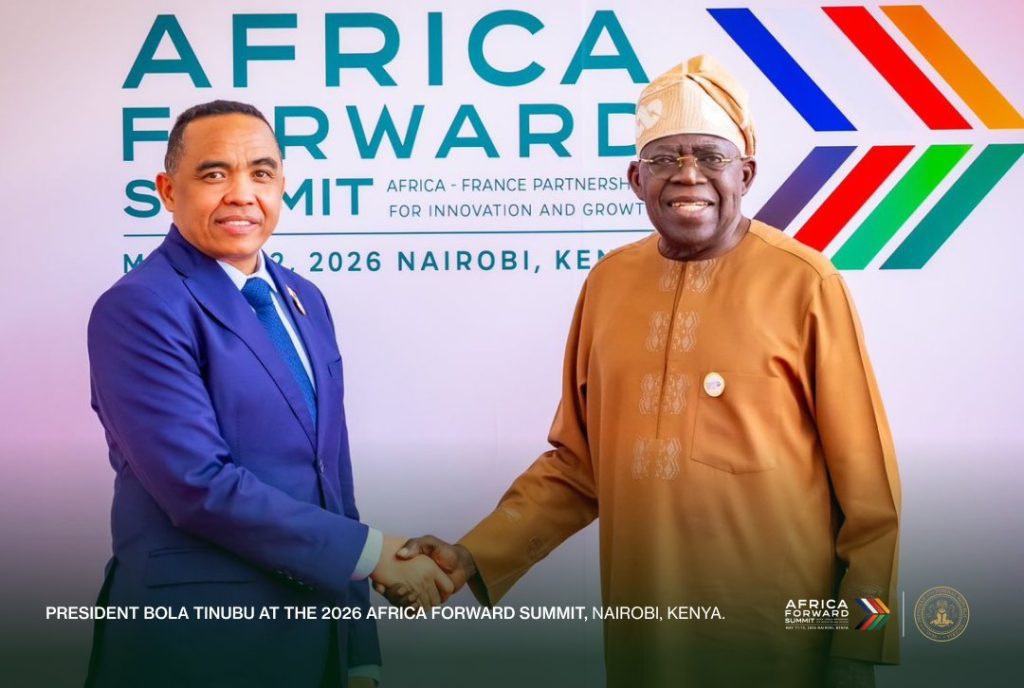
Images from @NGRPresident on X
President Bola Ahmed Tinubu has placed Nigeria’s maritime future at the center of its economic and investment strategy. During the Africa Forward Summit 2026 in Nairobi, Kenya, he called for stronger ocean governance, regional security, and deeper cooperation across Africa’s blue economy landscape.
Although the summit focused broadly on Africa, Nigeria’s position stood out clearly as it linked maritime reform directly to investment stability and long-term economic growth. Consequently, ESG observers should increasingly pay attention to the direction of Nigeria’s maritime agenda.
At the summit, President Tinubu urged African states to move away from what he described as “sea blindness”. He advocated for embracing “ocean sovereignty” as a foundation for economic transformation instead.
For Nigeria, however, the message goes beyond political rhetoric. It reflects a structured attempt to align governance, security, and investment priorities within the maritime sector.
Security Reforms Drive Investment Narrative
Nigeria has faced years of maritime insecurity, particularly across the Gulf of Guinea, where piracy and illegal activities previously increased shipping costs and discouraged investment. However, the government now argues that this narrative is changing.
Through the Deep Blue Project, Nigeria has expanded its maritime surveillance and response capacity using intelligence systems, patrol vessels, and aerial monitoring platforms. As a result, authorities claim piracy incidents within Nigerian waters have been eliminated. While international maritime bodies have acknowledged a sharp decline in attacks across the region, sustaining these gains remains a key concern for stakeholders.
Still, Nigeria is actively positioning these improvements as evidence of reform and institutional strengthening. President Tinubu emphasized that secure sea lanes, predictable regulation, and functional institutions are essential conditions for attracting private capital into the blue economy. Therefore, maritime security is no longer treated as a standalone issue but as a core driver of economic competitiveness and investment readiness.
Governance to the Forefront
ESG frameworks assess environmental, social, and governance performance, and in Nigeria’s case, governance has become the most relevant pillar. Investors typically evaluate policy stability, regulatory clarity, institutional strength, and security risks before committing capital to infrastructure-heavy sectors such as ports, logistics, and shipping.
Because of this, Nigeria’s maritime strategy is beginning to align with global investment expectations. Additionally, stronger governance systems reduce risk exposure for investors operating across supply chains that depend heavily on maritime routes. Consequently, Nigeria is positioning itself not only as a national reformer but also as a potential regional coordinator for maritime intelligence sharing across the Gulf of Guinea.
The Federal Government has also emphasized its willingness to expand cooperation through shared maritime data systems. This approach aims to improve coordination between West African states in addressing cross-border maritime crime. However, effective implementation will depend on political alignment, institutional capacity, and sustained funding across participating countries.

Blue Economy Becomes Strategic Priority
At the same time, Nigeria’s blue economy agenda is gaining more attention as part of its broader economic strategy. The sector includes shipping, fisheries, marine tourism, offshore energy, port development, and coastal infrastructure. For years, however, insecurity and weak infrastructure limited growth across these areas. Nevertheless, Nigeria is now attempting to reposition the sector as a major driver of long-term economic expansion.
Read: Africa’s Ocean Economy Unlocks Powerful Sustainable Growth
The establishment of the Federal Ministry of Marine and Blue Economy reflects this shift in priorities. It signals a more structured institutional approach to ocean-based economic planning. In addition, the government has begun discussing climate-aligned port modernization and digital transformation within the maritime sector. These developments introduce an emerging environmental dimension to Nigeria’s maritime strategy, although concrete environmental targets remain limited at this stage.
For instance, clear policy frameworks around marine conservation, emissions reduction, and coastal ecosystem protection are still evolving. Therefore, while the governance component of ESG is strengthening, the environmental pillar is still in its early phase of development within Nigeria’s maritime ecosystem.
Economic Reforms Strengthen Investor Messaging
Beyond maritime reform, President Tinubu also used the summit to reinforce Nigeria’s broader economic investment narrative. He highlighted recent reforms such as subsidy removal, exchange rate adjustments, and financial sector recapitalization as part of efforts to restore macroeconomic stability and investor confidence. As a result, Nigeria is attempting to present itself as a reform-driven economy capable of attracting long-term capital.
However, challenges remain. Policy consistency, infrastructure deficits, and regulatory uncertainties continue to shape investor perceptions. Therefore, analysts argue that implementation will ultimately determine whether Nigeria’s maritime and economic reforms translate into sustained ESG credibility.
Regional Cooperation Becomes Essential
Regional cooperation also remains critical to the success of Nigeria’s maritime ambitions. Because maritime insecurity often crosses national borders, isolated efforts are unlikely to deliver long-term results. Nigeria’s president acknowledged this reality and called for stronger coordination across Gulf of Guinea nations. Nigeria’s proposal to share maritime intelligence infrastructure reflects this shift toward collective security and regional integration.
Progress With Implementation Risk
Ultimately, Nigeria’s maritime vision signals a gradual but significant attempt to connect governance reform, investment strategy, and regional leadership within a unified framework. While security improvements and institutional reforms are strengthening investor confidence, environmental and social components of ESG still require deeper development.
In conclusion, Nigeria’s ocean governance agenda under President Tinubu reflects a work in progress. The foundation for a stronger blue economy is being built, particularly through governance and security reforms. However, the real test will lie in consistent implementation, measurable environmental commitments, and sustained regional cooperation over time.
[give_form id="20698"]