From Gold to Zero: The Collapse of Nigeria’s Ginger Industry and the Questions Nobody Wants to Answer
 csrreporters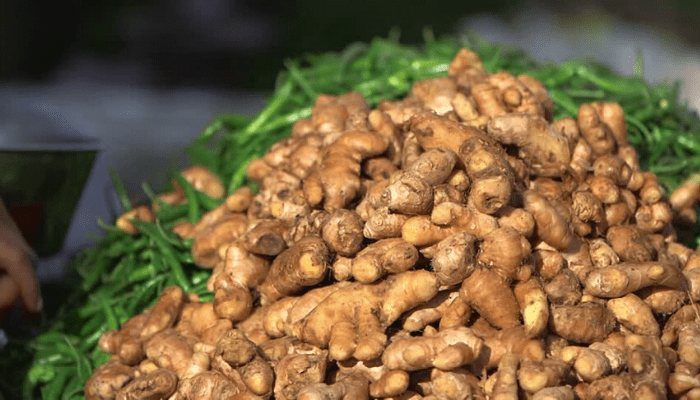
From Gold to Zero: The Collapse of Nigeria's Ginger Industry and the Questions Nobody Wants to Answer
Nigeria’s ginger exports collapsed from ₦26 billion to zero in three years. The official explanation — fungal blight — tells only part of the story. The harder questions concern what happened when grant-aided interventions arrived with replacement seeds, and whether Nigeria’s agricultural governance was asleep at the wheel as a critical export commodity was quietly devastated.
By CSR Reporters Editorial Team
Nigeria was once the world’s second-largest producer of ginger — a crop so prized for its oleoresin content, its tangy flavour, and its potency that it commanded a premium in global spice markets. At its peak, the industry was earning ₦26 billion in annual exports, underpinning tens of thousands of livelihoods across Kaduna, Nasarawa, Plateau, Gombe, and Bauchi states. Today, that figure is zero.
That is not a typo. According to Businessday Nigeria, Nigeria’s ginger export revenue had crashed to zero by the end of 2025, completing what is perhaps the most dramatic commodity collapse in the country’s recent agricultural history. The country that once supplied premium ginger to international buyers is now importing ginger from China.
The official explanation is well-documented: a fungal blight — specifically Proxipyricularia zingiberis, which causes rhizome rot and bacterial wilt — swept through Kaduna’s ginger farms in 2023, destroying over 90 percent of harvests in key communities such as Kachia, Kagarko, and Jaba. Farmers suffered an estimated ₦12 billion in losses in that single outbreak. Prices for a 50-kilogram bag of ginger surged from under ₦50,000 to ₦800,000 almost overnight. Ethiopia moved quickly to fill Nigeria’s vacated position in global export markets.
A crop that took decades to develop lost its global market position in fewer than 1,000 days. The question is not just what destroyed the ginger. The question is who was watching — and what arrived to replace it.
The federal government responded with a ₦1.6 billion recovery package through the National Agricultural Development Fund (NADFUND), and later a ₦6 billion facility in 2024. A Ginger Blight Epidemic Control Taskforce was inaugurated. Yet despite these interventions, exports hit zero. Production costs remain at over $10,000 per metric tonne — against a global average of $2,000–$3,000. Nigerian ginger cannot compete. Something far deeper than fungal disease broke this industry.
THE INTERVENTION PROBLEM
When disease devastates a crop, the immediate crisis is obvious — rotted rhizomes, bankrupt farmers, abandoned farms. But the second crisis, often hidden in plain sight, is what happens when outside actors rush in with solutions.
A thread circulating on X (formerly Twitter), authored by @onu_slim and picking up significant traction, drew attention to a dimension of this story that has been underreported in mainstream coverage. When Nigerian farmers lost their indigenous seed supply to the blight, grant-aided interventions arrived bearing replacement seeds. The claim — flagged publicly by an academic at Lagos Business School — is that some of those interventions may have involved genetically modified organisms (GMOs) that weakened indigenous crops and compromised soil health.
The account’s author was careful: ‘That is not a conspiracy theory because it is a documented academic concern.’ And that is precisely where this story demands sober analysis rather than either dismissal or hysteria.
In the public debate that has surrounded the ginger crisis, several competing narratives have taken hold: that foreign aid bodies deliberately introduced compromised or GMO seeds to create import dependency; that the government’s intervention seeds were poorly tested; that unregulated exports during the crisis depleted local seed stocks; and that the collapse of indigenous seed supply created the conditions for external actors — with or without malicious intent — to determine what replaces it.
Nigeria’s ginger crisis is not simply an agricultural disaster. It is a sovereignty question dressed in farming clothes.
It is important to be clear about what we know and what remains disputed. Agricultural scientists have noted that the primary driver of the ginger collapse — the fungal blight caused by Proxipyricularia zingiberis — is a real, documented pathogen that has devastated ginger crops globally, not only in Nigeria. The pathogen spreads rapidly through contaminated soil, water, and plant material. Climate conditions — specifically heavy rainfall in Kaduna around 2022–23 — likely provided optimal conditions for its spread.
What is equally documented is that the quality of replacement seeds matters enormously. Replanting from diseased stocks fuelled repeated outbreaks. Bulkier, imported rhizomes from China entered local markets and have been noted for reduced potency and aroma — not because of genetic modification per se, but because of different oleoresin profiles and disrupted local supply chains. The decline in ginger’s famous bite has been documented, with consumers and traders openly commenting on a product that no longer smells or performs as it once did.
THE GMO QUESTION: EVIDENCE OVER OUTRAGE
Nigeria’s relationship with genetically modified organisms is contested, politically charged, and — in the ginger case specifically — largely unresolved.
The House of Representatives announced a halt on the introduction of new GMOs in May 2024 and mandated an investigation into GMO approval processes. As of this writing, the findings of that investigation have not been made public. The National Biosafety Management Agency (NBMA) has faced repeated criticism for opacity in its approval processes and a failure to enable robust public consultation.
Against this backdrop, the question of whether any externally sourced replacement seeds introduced into ginger farming communities during the crisis were GMO-derived is not a fringe question. It is a governance question — one that the relevant agencies have so far failed to address with the transparency it deserves.
The broader concern is structural. Critics of GMO introduction in Nigerian agriculture have consistently raised the issue of seed sovereignty: when farmers lose their indigenous seed supply and accept replacement seeds from external sources — whether government-distributed or donor-funded — they can unknowingly enter seed dependency cycles. Patented seeds cannot be legally replanted. Farmers are required to purchase anew each season. The result, as advocacy groups have noted, is that smallholder farmers lose control over their most fundamental productive input.
In the ginger case, farmers in southern Kaduna had cultivated indigenous varieties over generations — varieties specifically adapted to local soil conditions, climate, and pest pressures. Those varieties, once lost, cannot simply be conjured back. If replacement seeds — whatever their origin or modification status — are not adapted to local conditions or carry weaker disease resistance, the cycle of collapse can repeat.
Seed sovereignty is not a technical debate. It is a question of who controls what a community can grow, and therefore what a community can earn and eat.
To be clear: CSR Reporters is not asserting that the ginger collapse was caused by deliberate GMO sabotage. That claim, as agricultural analysts have noted, is not yet supported by verified evidence. What we are asserting is that the absence of evidence is itself a governance failure. Where are the toxicology assessments of distributed seeds? Where is the independent audit of donor-funded agricultural interventions during the crisis period? Where are the published results of the National Assembly’s investigation into GMO approvals? These are not conspiracy questions. They are accountability questions.
THE CORPORATE AND INSTITUTIONAL ACCOUNTABILITY GAP
Nigeria’s ginger collapse did not happen in a vacuum. It happened in an environment characterised by chronic underinvestment in agricultural research, the absence of a functioning national ginger seed bank, inadequate disease surveillance infrastructure, and a broken extension services system that left farmers without early warning or timely guidance when the blight first appeared.
The National Ginger Association of Nigeria (NGAN) raised alarm repeatedly. Farmer representatives appealed to the Minister of Agriculture and Food Security. The response — ₦1.6 billion for farmers who had lost ₦12 billion in a single outbreak, followed by a ₦6 billion facility — was too little, too late, and arguably structured to fund recovery without addressing root cause.
The corporate sector, which benefits from stable ginger supply chains — whether in food processing, pharmaceuticals, or export commodity trading — has been conspicuously quiet. There is no record of any major Nigerian corporate actor partnering with farming communities in Kaduna for seed bank establishment, disease-resistant variety development, or value chain stabilisation. Nigeria’s private sector ESG conversation has not yet matured to the point where agricultural value chain resilience is seen as a corporate responsibility imperative, even when corporate supply chains depend directly on those value chains.
This is a gap CSR Reporters intends to examine further. Responsible business in Africa cannot be limited to urban CSR initiatives and sustainability reports. It must extend to the soil — to the farming communities whose productivity underpins food security and export earnings, and whose vulnerability represents one of the continent’s most urgent, and most neglected, sustainability challenges.
WHAT ACCOUNTABILITY DEMANDS
The Nigerian ginger crisis demands accountability at multiple levels simultaneously:
- From government: Full disclosure of the types, sources, and modification status of all seeds distributed to ginger farmers during crisis interventions. Publication of the House of Representatives GMO investigation findings. Independent audit of the ₦6 billion NADFUND facility — who received it, what it funded, and what outcomes it produced.
- From donor and grant agencies: Transparency on what seeds and inputs were provided, their origin, their testing record, and their terms of distribution. Agricultural aid that creates dependency is not aid — it is leverage.
- From the NBMA: Urgent public communication on whether any GMO varieties were approved for use in ginger farming during the crisis response period, and what risk assessments were conducted.
- From the private sector: Corporate actors in food, beverage, pharmaceuticals, and agribusiness that source Nigerian agricultural commodities must acknowledge supply chain vulnerability as a material ESG risk and invest accordingly — in seed banks, research partnerships, and farmer support infrastructure.
- From researchers and academic institutions: Publish the findings. The Lagos Business School academic cited in circulation deserves to have their full analysis in the public domain. Concerns raised in classrooms and conference rooms but not in peer-reviewed or publicly accessible form are concerns that can be ignored. Make the evidence available.
THE BIGGER PICTURE
Nigeria’s ginger story is not unique. It is a preview. Across the continent, indigenous agricultural systems are encountering external interventions — some well-intentioned, some commercial, some both — at precisely the moment when climate stress, disease pressure, and economic fragility make farmers most vulnerable to dependency. The ginger crop that once earned Nigeria ₦26 billion annually and gave the country a globally recognised agricultural identity did not simply wilt. It was also replaced.
Who replaced it, with what, and on whose terms: those are the questions that accountability journalism exists to ask. CSR Reporters will continue to follow this story.
About CSR Reporters
CSR Reporters is Africa’s independent accountability and sustainability intelligence platform. We report, measure, and build responsible business — closing the gap between corporate promise and ground reality across ESG, social impact, and ethical leadership. Our work spans editorial publishing, impact intelligence, ESG advisory, executive convenings, and the SISA Awards. We partner with corporates, investors, and institutions committed to long-term, verifiable impact.
www.csrreporters.com | Where Responsibility Is Reported, Impact is Measured, and Trust is Built
[give_form id="20698"]