Tinubu at 3: The Stock Market Is Rising. So Is Hunger – What That Tells Us About Nigeria’s Development Model
 ECHE MUNONYE
Tinubu at 3: The Stock Market Is Rising. So Is Hunger - What That Tells Us About Nigeria's Development Model
Three years into President Bola Tinubu’s administration, Nigeria’s capital markets are telling a story that the presidency is eager to celebrate. The NGX All-Share Index closed 2025 at 155,613 points — a 51.2 per cent gain in a single year, building on the 37.7 per cent rally of the year before. Market capitalisation crossed N99 trillion. Trading turnover doubled to a record N11.23 trillion. Analysts were calling it the ‘Tinubu Boom.’ One market executive described it as a year when ‘all sectors of the market fired on all cylinders.’
The numbers are real. The rally is real. And they deserve serious attention — not because they prove that Nigeria is thriving, but precisely because they exist alongside a reality that no index tracks: over 30 million Nigerians facing acute food insecurity at any given moment, 84 million living below the poverty line, and a country that ranked 115th out of 123 nations on the 2025 Global Hunger Index with a hunger score classified as serious.
When a market soars and a people hunger simultaneously, the honest question is not which number is more real. Both are real. The honest question is structural: what kind of development model produces this particular combination, and who does it serve?
When a market soars and a people hunger simultaneously, the honest question is not which number is more real. The honest question is: what kind of development model produces this, and who does it serve?
THE RALLY IS NOT A MIRAGE — BUT IT IS NARROW
To be precise about the stock market gains is to be honest about their limits. The NGX rally has been driven by identifiable factors: the CBN’s banking sector recapitalisation exercise, which pushed banks to raise capital publicly and triggered a flood of new retail accounts; renewed foreign portfolio inflows, which hit a four-year high in 2025; and the Naira’s managed float, which made Nigerian equities cheap and attractive to foreign investors in dollar terms.
Each of these drivers is real. None of them is a proxy for the welfare of ordinary Nigerians. The CBN’s own data shows that over 2.2 million new retail accounts were opened on the NGX platform in 2025. That is notable progress. But even with that growth, fewer than three per cent of Nigerians participate in the capital market. A rally in which 97 per cent of the population has no direct stake is, by definition, a narrow rally — however spectacular its percentage gains.
The companies leading the gains — Dangote Cement, BUA Foods, Zenith Bank, GTB — are Nigeria’s commanding heights. Their shareholders are disproportionately institutional investors, high-net-worth individuals, and foreign portfolio managers. When their share prices rise, the wealth created flows to a fraction of the population. That is not a criticism of those companies; it is simply an observation about how wealth transmission works in a market with shallow retail participation and deep inequality.
A rally in which 97 per cent of the population has no direct stake is, by definition, a narrow rally — however spectacular its percentage gains.
THE HUNGER IS NOT A STATISTIC — IT IS A SYSTEM FAILURE
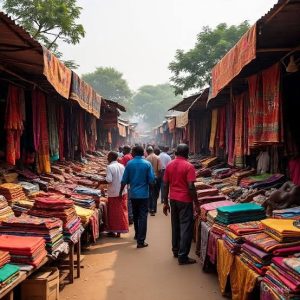
Across the same period in which Nigerian equities gained more than 50 per cent, the food crisis deepened by every available measure. The Federal Ministry of Budget and Economic Planning reported that 31.8 million Nigerians suffered acute food insecurity in 2024 — a figure that represented 6.9 million more people than the year prior, a single-year increase of stunning proportions. The FAO projected that 30.6 million would face acute food and nutrition insecurity in the June-to-August 2025 lean season alone.
Food inflation reached 40.7 per cent — its highest level in 25 years. Two out of three Nigerian households reported being unable to afford healthy or nutritious food. Among children under five, UNICEF found that one in three experienced severe food poverty, making them 50 per cent more likely to face wasting. Three million children were suffering from severe acute malnutrition in the first quarter of 2025, up from 2.6 million the year before.
These are not numbers from a country on an upward trajectory at the level that matters most — the ability of its citizens to eat. And the causes are partly policy-driven. The removal of the petrol subsidy in May 2023 — however economically defensible in the long run — triggered a cascade of cost increases that hit food transportation, storage, and retail prices with immediate and devastating effect. Naira devaluation, while attracting foreign investors to the stock market, simultaneously raised the cost of imported food and agricultural inputs for ordinary Nigerians.
The same reform package that made Nigeria attractive to portfolio investors made daily survival harder for Nigeria’s working poor. That is not an accident of fate. It is a documented consequence of how the reforms were designed and sequenced.
THE CSR AND ESG DIMENSIONS THAT ARE BEING IGNORED
This divergence carries specific implications for the corporate responsibility and sustainability space that CSR Reporters exists to interrogate.
First, ESG ratings and investor confidence metrics are increasingly being used to signal that Nigeria is open and reform-minded. The NGX’s strong foreign inflows, the governance improvements in listed companies, and the capital market’s expansion are legitimate ESG-adjacent achievements. But ESG frameworks that measure market performance without measuring the social externalities of macroeconomic reform are incomplete frameworks. They reward the signal without interrogating the cost.
Second, Nigeria’s largest listed companies — food manufacturers, cement producers, consumer goods giants — are operating in a country where their own customer base is being hollowed out by hunger and poverty. BUA Foods’ share price rose. But 31 million Nigerians cannot afford BUA Foods’ products. Dangote Cement’s market capitalisation is celebrated. But the communities around its plants continue to document unmet infrastructure and livelihood commitments. The stock price is not a social report card.
Third, the corporate sector has been largely silent on hunger as a national emergency. The CSR interventions that Nigerian corporates report — scholarship schemes, hospital donations, tree-planting campaigns — are not calibrated to the scale of a food crisis affecting nearly a third of the population. There is an accountability gap between the wealth being created at the commanding heights of the economy and the social investment that wealth is generating in the communities that make that economy possible.
The stock price is not a social report card. There is an accountability gap between the wealth being created at the commanding heights of the economy and the social investment it generates.
THE DEVELOPMENT MODEL QUESTION
At its core, the divergence between the NGX rally and the hunger crisis exposes a fundamental question about Nigeria’s development model: is economic growth being structured to trickle down, or to concentrate upward?
The evidence of the past three years suggests concentration. Market capitalisation has grown by tens of trillions of naira. Food insecurity has grown by millions of people. GDP has expanded in nominal terms. Real purchasing power for most Nigerians has contracted. Foreign investors are entering the market at scale. Domestic poverty is at a multi-decade high by World Bank measures, with 59 per cent of the population — 129 million people — living in poverty.
None of this makes the Tinubu reforms categorically wrong. Subsidy removal was a fiscal necessity. Naira liberalisation was long overdue. Banking recapitalisation strengthens financial system resilience. The case for the reforms can be made, and has been made. But the case for the reforms does not require pretending that the transition costs are not being borne almost entirely by those least able to bear them.
A three-year assessment that leads with the NGX index without leading equally with the hunger index is not an assessment — it is a press release. And accountability journalism in Nigeria’s development space cannot afford to be a press release.
WHAT RESPONSIBLE LEADERSHIP WOULD LOOK LIKE
There are things that could be done, and that responsible leadership — political and corporate — should be pressed to do.
On the policy side: the social investment mechanisms that were meant to cushion the impact of subsidy removal remain underfunded, poorly targeted, and in some cases structurally ineffective. The National Social Investment Programme, the Conditional Cash Transfer scheme — both require independent impact verification, not government self-reporting. Food security deserves a dedicated accountability framework with quarterly public reporting, not a footnote in budget presentations.
On the corporate side: companies benefiting from the NGX rally — banks flush with recapitalisation capital, consumer goods companies whose valuations have surged — have an ethical obligation to ensure that their CSR commitments are calibrated to the moment. A food manufacturer posting record profits in a hunger crisis is not required to be charitable. It is required to be honest. And ‘honest’ means publishing impact data that is independently verified, not internally curated.
On the investor side: foreign portfolio investors celebrating Nigeria’s market performance while ignoring the social context of that performance are taking a fragile bet. Markets that rest on a consumer base being steadily impoverished do not grow indefinitely. The social instability risks — already visible in food riots, stampedes, and crime trends — are ESG risks, even if they are not yet priced as such.
A three-year assessment that leads with the NGX index without leading equally with the hunger index is not an assessment. It is a press release.
CONCLUSION: TWO TRUTHS, ONE COUNTRY
Nigeria at Tinubu’s third year holds two truths simultaneously. Its capital markets are among Africa’s best performers. Its people are among the continent’s most food-insecure. Both of these things are true. Both of these things are Nigeria.
The test of responsible governance — and responsible corporate citizenship — is not whether both truths exist. They will always coexist in an economy as complex and as unequal as Nigeria’s. The test is whether those with power, capital, and access feel any obligation to close the gap between them.
Right now, the gap is not closing. It is widening. The stock market is rising. So is hunger. And until the development model changes — until growth is structurally designed to reach the 30 million, the 84 million, the 129 million — no amount of index points will answer the only question that history ultimately asks of any administration: what did you do for the people who needed you most?
CSR Reporters will continue to ask that question. On behalf of those for whom no index rises.
ABOUT CSR REPORTERS
CSR Reporters is an independent accountability and sustainability intelligence platform operating across Nigeria and Africa. We work with organisations to:
› Conduct community needs assessments before, during, and after corporate interventions
› Track and independently verify social impact against stated CSR commitments
› Document ground-level realities that internal reporting often misses
› Produce transparent, evidence-based reports for investors, boards, and the public
› Build accountability frameworks grounded in the principle that responsible business must be earned from day one
Responsible business is not a communications strategy. It is a commitment to people and communities — independently measured, publicly reported.
[give_form id="20698"]