HBM Nigeria Calls for Urgent Climate Action and Sustainable Infrastructure Investment at NESt 2026
 admin
admin 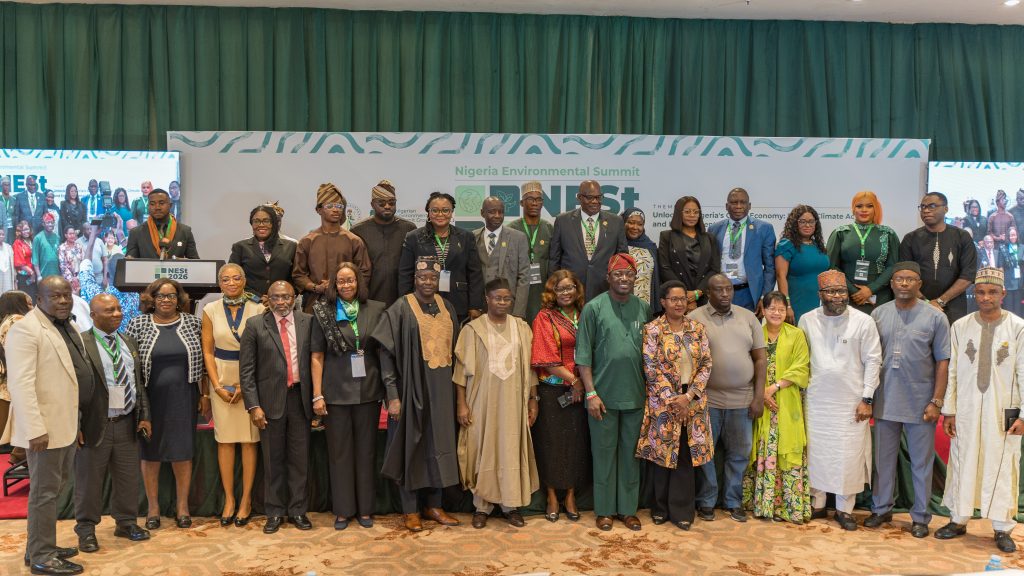
HBM Nigeria Calls for Urgent Climate Action and Sustainable Infrastructure Investment at NESt 2026
HBM Nigeria Plc has called for accelerated climate action, sustainable infrastructure development, and stronger public-private collaboration to unlock Nigeria’s growing green economy opportunities.
The company made the call during the 2026 Nigeria Environmental Summit (NESt 2026), held on June 17 and 18 at the Abuja Continental Hotel, Abuja, under the theme: “Unlocking Nigeria’s Green Economy: Driving Climate Action and Environmental Governance.”
The summit convened government officials, investors, development institutions, private sector executives, academics, civil society organisations, and international partners to discuss climate governance, green finance, environmental sustainability, and investment opportunities within Nigeria’s emerging green economy.
Formerly known as Lafarge Africa Plc, HBM Nigeria Plc — now a member of the Huaxin Building Materials Group — used the platform to advocate for practical climate-focused investments, circular construction systems, and resilient infrastructure development capable of supporting Nigeria’s rapidly growing urban population.
Speaking at the summit, Gbemiga Owolabi, Director, Organisation & Human Resources at HBM Nigeria Plc, said Nigeria’s green transition should be viewed not only as an environmental necessity but also as a major economic growth opportunity.
According to him, Nigeria’s pathway to sustainable development will require stronger collaboration among government institutions, the private sector, academia, civil society, and development finance partners.
“We congratulate the organisers of the Nigeria Environmental Summit for convening this timely platform,” Owolabi said.
“As Nigeria pursues sustainable economic growth, the transition to a green economy presents a unique opportunity to drive development while addressing climate change. Economic progress and environmental stewardship are not competing priorities; they are mutually reinforcing.”
He added that climate-smart investments and sustainable industrial practices could help Nigeria create jobs, improve economic resilience, attract investment, and secure long-term prosperity.
The summit focused heavily on unlocking climate finance opportunities and strengthening environmental governance systems, with participants discussing strategies capable of unlocking more than $5 billion in potential green investment pipelines across the country.
HBM Nigeria Pushes Circular Construction and Climate-Resilient Infrastructure
Also speaking during the summit, Emmanuel Ilaboya, Country Head, Aggregates and Concrete at HBM Nigeria Plc, warned that rapid urbanisation, population growth, climate-related flooding, and increasing housing demand are placing enormous pressure on Nigeria’s infrastructure systems.
Ilaboya stressed the need for future infrastructure projects to prioritise resilience, durability, efficiency, and sustainability.
“Population growth, urbanisation, climate change impacts and rising demand for improved living standards are all happening simultaneously, and this is putting pressure on how we build and what we build for the future,” he said.
He further advocated a shift from Nigeria’s traditional linear construction approach toward a circular construction model where materials are reused and recycled rather than discarded as waste.
According to him, failure to prioritise recycling and sustainable material management could worsen environmental degradation and increase long-term resource pressures.
Ilaboya also highlighted the economic potential of carbon finance within Nigeria’s construction and infrastructure sectors, noting that verified emissions reductions from sustainable construction projects could create additional revenue opportunities for governments, developers, and communities.
Safety and Human-Centred Infrastructure Remain Critical
Meanwhile, Rachel Ezembakwe, Director, Health, Safety and Environment at HBM Nigeria Plc, emphasised that sustainability conversations must not overlook worker safety and human well-being.
She noted that infrastructure development should place equal emphasis on design efficiency, occupational safety, and end-user welfare.
According to Ezembakwe, sustainable cities cannot be built at the expense of human lives or unsafe working conditions.
The summit also featured calls for stronger implementation of climate policies and expanded investment in green finance instruments.
In his opening remarks, Edwin Edeh urged stakeholders to move beyond policy conversations toward concrete implementation, particularly in the areas of climate-smart infrastructure, environmental governance, and sustainable financing.
Similarly, Balarabe Abbas Lawal, Nigeria’s Minister of Environment, called for accelerated investments in carbon markets, blended finance structures, and public-private partnerships to support Nigeria’s climate transition agenda.
Nigeria’s Green Economy Push Gains Momentum
NESt 2026 comes amid growing pressure on Nigeria to strengthen climate resilience, reduce environmental vulnerabilities, and position itself competitively within the global green economy transition.
With increasing flooding, infrastructure deficits, rapid urban expansion, and rising climate financing opportunities across Africa, sustainability experts say collaboration between government and industry will play a critical role in determining how successfully Nigeria navigates its low-carbon transition.
For HBM Nigeria Plc, the summit provided an opportunity to reinforce its positioning around sustainable building solutions, climate-conscious infrastructure development, and environmental stewardship within Nigeria’s construction and industrial sectors.
[give_form id="20698"]