Nigeria’s Fibre Surge Expands Infrastructure, Yet Unequal Access Fuels Divide
 ONYINYECHI NWAIGBA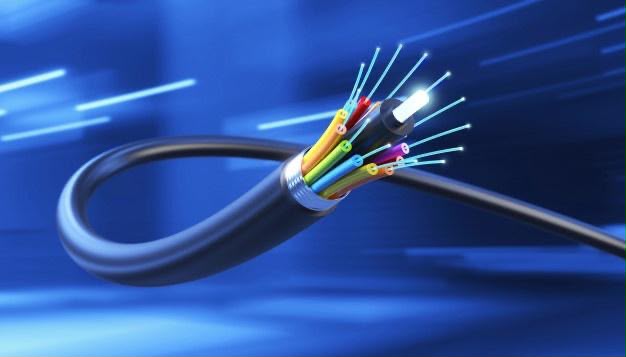
As Nigeria accelerates its digital transformation agenda, one reality continues to stand out: access to high speed internet infrastructure remains uneven across the country.
Recent data on fibre optic deployment shows that Lagos and the Federal Capital Territory (FCT), Abuja, account for approximately 18 percent of Nigeria’s fibre network, reflecting the concentration of digital infrastructure in the nation’s largest commercial and administrative centres. While this demonstrates progress in expanding broadband connectivity, it also raises important questions about how the benefits of digital infrastructure are being distributed across the country.
For millions of Nigerians living outside major urban centres, reliable internet access remains limited. The disparity goes beyond technology. It affects education, healthcare, entrepreneurship, financial inclusion, employment opportunities and participation in the digital economy.
As governments, telecommunications companies and development partners invest billions of naira in broadband expansion, stakeholders are increasingly asking whether Nigeria’s digital future is being built for everyone or only for a few.
Digital Infrastructure Is More Than Internet Access
Fibre optic networks form the backbone of today’s digital economy. They enable faster internet speeds, improve network reliability and support technologies that power businesses, hospitals, schools, financial institutions and government services.
However, the importance of fibre infrastructure extends beyond faster downloads or smoother video streaming.
Communities with reliable broadband are often better positioned to attract investment, create jobs, improve educational outcomes and expand access to digital healthcare services. Small businesses can reach larger markets, students gain access to online learning platforms, farmers receive real time market information, and entrepreneurs participate in global digital commerce.
In many ways, fibre connectivity has become a development issue rather than simply a telecommunications issue.
This is why the United Nations continues to recognise access to information and communication technology as an important enabler for achieving several Sustainable Development Goals (SDGs), including quality education, decent work, industry and innovation, reduced inequalities and sustainable cities.
The Numbers Reveal an Uneven Landscape
The concentration of fibre infrastructure in Lagos and Abuja is not entirely surprising.
Both cities serve as Nigeria’s largest economic and administrative hubs. They host corporate headquarters, technology companies, financial institutions, government agencies and millions of internet users whose demand justifies significant infrastructure investments.
From a business perspective, telecom operators naturally prioritise areas where deployment costs can be recovered more quickly through higher customer density and stronger commercial activity.
However, while this investment strategy makes financial sense, it also highlights a growing imbalance.
Many rural communities and smaller cities continue to experience slow internet speeds, inconsistent connectivity and limited access to broadband infrastructure. Businesses operating in these locations often struggle to compete in an increasingly digital economy, while schools and healthcare facilities face additional barriers to adopting technology driven solutions.
The result is a widening digital divide between well connected urban centres and underserved communities.
The Social Cost of the Digital Divide
The consequences of unequal digital access extend far beyond internet connectivity.
For students, poor broadband limits participation in online education, digital research and virtual learning opportunities.
For healthcare providers, inadequate connectivity can slow access to telemedicine, digital patient records and remote consultations.
For entrepreneurs and small businesses, weak internet infrastructure restricts access to digital payments, e commerce platforms and online marketing opportunities that could expand their customer base.
Young people seeking remote work opportunities also face disadvantages when reliable internet is unavailable.
As artificial intelligence, cloud computing and digital services become central to economic growth, communities without adequate broadband risk falling even further behind.
Digital inequality is increasingly becoming an economic inequality.
Corporate Responsibility in Expanding Digital Access
Addressing Nigeria’s digital divide cannot rest solely on government intervention.
Telecommunications companies, technology firms, infrastructure providers and private investors all have important roles to play in promoting inclusive digital development.
Corporate responsibility in the digital age extends beyond expanding customer bases. It also involves ensuring that underserved communities are not excluded from opportunities created by technological advancement.
Some operators have invested in rural connectivity projects, digital literacy programmes and community technology initiatives. These efforts demonstrate how business growth and social impact can align when companies prioritise long term value creation.
Environmental, Social and Governance (ESG) principles increasingly encourage organisations to consider how infrastructure investments contribute to social inclusion rather than focusing exclusively on commercial returns.
Expanding fibre networks into underserved regions may require greater investment, but the long term social and economic benefits can outweigh the initial costs.
Government Policy Must Encourage Inclusive Deployment
Government policies remain critical in creating an enabling environment for nationwide broadband expansion. The Nigerian Communications Commission (NCC) has introduced initiatives aimed at increasing broadband penetration, but implementation remains uneven across different states.
Reducing right of way charges, simplifying approval processes, improving infrastructure security and encouraging public private partnerships can make fibre deployment more attractive in underserved regions.
Nigeria has already introduced policies aimed at increasing broadband penetration, but implementation remains uneven across different states.
Collaboration between federal and state governments will be essential to accelerate deployment while ensuring that infrastructure reaches communities beyond major cities.
Public investment in schools, healthcare facilities and innovation hubs can also stimulate demand for broadband services in areas where private sector investment has traditionally been slower.
Digital Inclusion Is Essential for Sustainable Development
Digital inclusion is increasingly recognised as a pillar of sustainable development.
Without equitable access to digital infrastructure, progress towards economic inclusion, quality education, healthcare innovation and financial empowerment becomes significantly more difficult.
For Nigeria to fully benefit from its growing digital economy, broadband expansion must reach communities regardless of geography.
This aligns with the broader objective of ensuring that no one is left behind, a principle that underpins the Sustainable Development Goals and many corporate sustainability strategies.
Investments in fibre infrastructure should therefore be viewed not only as telecommunications projects but also as investments in human capital, economic resilience and national competitiveness.
Related: Telecom ESG Scorecard: Data privacy, e-waste, digital inclusion
Building a Connected Nigeria Requires Shared Responsibility
Closing Nigeria’s digital divide will require coordinated action from government, private sector organisations, development partners and civil society.
Telecommunications companies must continue expanding infrastructure beyond commercially attractive markets.
Governments should strengthen policies that reduce deployment barriers while encouraging investment in underserved communities.
Development organisations can support digital literacy initiatives that ensure communities are prepared to maximise the opportunities broadband creates.
Educational institutions, technology companies and financial organisations also have roles to play in building digital ecosystems that empower individuals and businesses alike.
When connectivity reaches more communities, the benefits extend far beyond internet access. They create opportunities for innovation, employment, entrepreneurship and social mobility.
Conclusion
Nigeria’s growing fibre network reflects encouraging progress in the country’s digital transformation journey. Yet the concentration of infrastructure in Lagos and Abuja underscores a broader challenge that extends beyond technology.
The future of digital development should not be measured solely by kilometres of fibre laid or broadband subscriptions recorded. It should also be assessed by how many communities gain meaningful access to education, healthcare, employment opportunities and economic participation through improved connectivity.
As Nigeria pursues its ambition of becoming a leading digital economy, equitable infrastructure deployment must remain at the centre of national planning.
Because in the end, true digital transformation is not achieved when a few cities are connected. It is achieved when every community has a fair opportunity to participate in the digital future.
[give_form id="20698"]