SDFarms Is Making Impact, But We Can Do Much More with Institutional Support – Dr. Stella Iwuagwu
 CHUKS OLUIGBO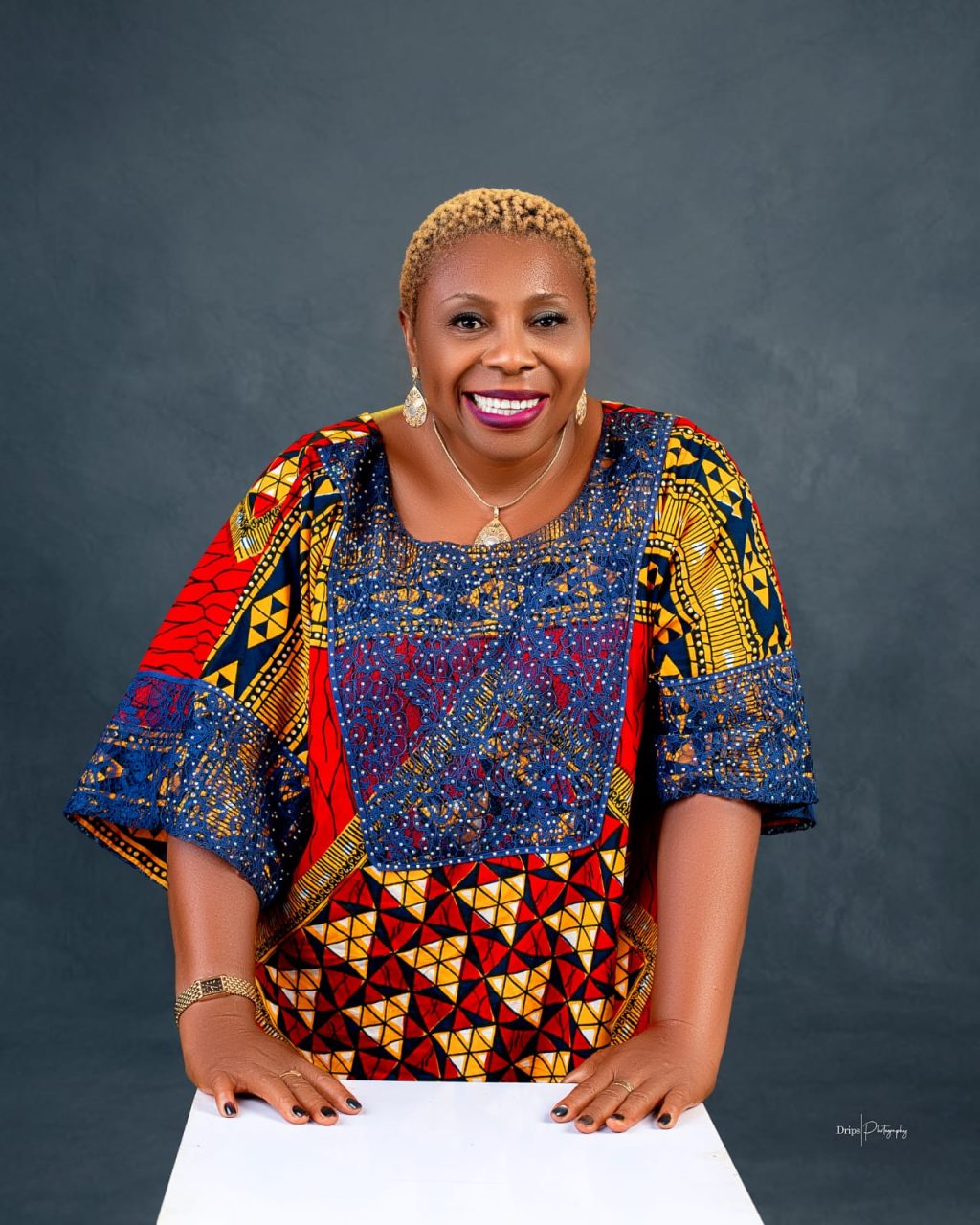
Dr. Stella Iwuagwu, Director, Sustainable Development Farms Limited
Sustainable Demonstration Farms Limited, an integrated organic learning farm located at Orozo, Abuja FCT, has been at the forefront of promoting backyard/urban gardening, edible landscaping, teaching people to grow their own food sustainably, offering training and other services to farmers, and processing and packaging its produce for the local and export markets.
The Director of the farm, Dr. Stella Iwuagwu, a public health expert, speaks to CHUKS OLUIGBO on how it all started, what has been achieved, and what lies ahead. Excerpts:
Sustainable Demonstration Farms seems to be addressing a number of the SDGs: zero hunger, zero poverty, good health and well-being, and sustainable environment. Was this what you deliberately set out to achieve? How did this come about?
I am a public health expert and have been in the area of public health advocacy for over 25 years. When I came back to Nigeria from the United States, I realised how worse things had got in the health sector. People were getting sicker every day. I started asking why. Then I realised that people were getting sick because they were not eating right and also not living in the right environment. Today we have an escalation of cancers and chronic conditions. A lot of our food has been chemicalised. We apply pesticides and herbicides to crops, but how long after applying these things is food safe for consumption? Then even after harvesting, to store the food, you see cases of chemicals. Either they are using chemicals in banana or they are using them in beans.
Then you also look at the environment, it is toxic. The soil is infected. Have you ever gone to see how we dispose of oils? Things that you can’t dispose of anyhow abroad, here everything is disposed of everywhere. The air is polluted. Vehicles, nobody checks emissions. So we are bombarded by toxins that also impact our health, like what we call oxidation and inflammation. These are the causes of the chronic diseases that our people are dealing with. How will doctors have time to attend to accident victims or emergency cases when they are overwhelmed every day by constant malaria, constant typhoid, constant cancer? You see young persons in their twenties or thirties and they are suffering from arthritis, kidney failure, liver failure, and all kinds of debilitating diseases. That was what I experienced. So I felt like if I could do something to improve people’s health at their homestead, at the family level, then I would be impacting the health system in a more sustainable way.
While I was thinking about that, I could not also eat the food in the market, so I started growing my own food in my small backyard. The goal was to grow my vegetables and herbs. I planted fruits, started a small fish pond, and started growing my own mushrooms. I had rabbits and snails, just at homestead level. It was not meant to be commercial. But the beauty of homestead farming is that you will never be able to finish what you grow. Storage becomes a problem, so you end up giving it out as gifts. I gave as gifts, and gradually people voluntarily started paying for it. We started earning money from it, whether it is coconuts or oranges, ugu, water leaves, green, and mushrooms. That was how Sustainable Demonstration Farms was born.
We were not only planting, we were also processing because another thing that is causing food insecurity is post-harvest loss. When people grow things and they do not know how to preserve or process them, we end up losing them. It also affects our nutrition. For example, even when you go to the market and buy pawpaw, oranges or any other fruit and take them home, there is no electricity so your fridge will not even work. You find out that the fruits are going bad. But if you plant those things and have them in your garden, you will eat and eat sustainably. You will harvest what you need per time and eat fresh. And then you don’t have to grow them with chemicals, you are confident about what you are eating, your health is improving.
That was my experience. I have a spinal cord injury and have been wheel chair-bound for a long time. When I came back from America, I was on 21 different medicines three times a day. But by eating a lot of the fresh healthy food, herbs, ginger, tumeric, lemon, mango leaves, moringa leaves – everything that nature could give me – miracle started happening. I started throwing away my medicines. I weaned myself off 18 out of the 21 medicines I was on then. I lost so much weight, my health improved tremendously. And when you are in nature, when you are surrounded by trees and plants, the air you breathe is cleaner. My air was detoxified, my food was healthy, and I was supplying my body everything it needed to heal itself. So, that food is indeed medicine was not a cliche for me. That was the concept behind the farm. I then made it a sustainable project where we teach people how to grow these things. I call it a demonstration farm. It’s not a big farm, just on about six plots of land, but within those six plots we have space to grow mushrooms, rabbits, snails. We even have cows, goats, sheep, pigs. Everything has its own little space. And it is integrated. We call it zero waste integrated organic farm because there is no waste in the farm. We crush the snail shells and put in the soil or in the food of the animals to supply calcium. Egg shells have use. Every leaf. Even potato peels, cassava peels, all peels, you dare not throw them away in my house. They either go into feeding the animals or into composting. We even gather waste from other people and use in the farm. We use rabbit urine as fertilser or as pesticide. You come to my pig pen, you’ll sit there and eat because it’s so clean there is no smell. My chicken pen, no smell. My fish pond, no smell. We are applying real science.
There is a lot of research going on in our universities. People are answering professors, writing big papers, but none of these researches is coming out as product or knowledge that can help our farmers and our people to sustain their health, food, and the environment. So we call this Sustainable Demonstration Farms on purpose because we are talking about sustainability. We don’t throw sachet water bags away, we use them as our seedling bags. We teach young people how they can contribute. There is opportunity for learning for everybody. We go to schools, donate seedlings and plant fruit trees. The schools most of us went to had orchards. As a poor kid growing up, it was on my way to school that I would get udara, mango or other fruits to eat, but we rarely see that now even in the village. School compounds are there, so I’m taking this education to the schools to plant the trees and show them how to nurture it and encourage them to eat healthy. And also look at the environment, teach them about climate change and how they can use those things.
We are shaking multiple birds with one stone – someone said we don’t kill birds anymore. You plant a fruit tree, it helps with the soil, it helps purify the air, it mitigates sound. Kids can learn more because they are getting more oxygen. They can get food. Schools can even sell the fruits and use the money to buy textbooks or some of the supplies they need. We have a project called money grows on trees because, indeed, money grows on trees. You plant one pawpaw and in nine months you have at least a bunch of 100 pawpaw fruits. You plant plantain or banana, in one year you have a bunch of plantain or banana and more seedlings are coming up. I call it the gift that keeps giving. I go to churches and I tell pastors that when the bible said feed my flock, it is not only bible food. Jesus fed the flock. What is the church doing to feed the flock? Every day people throng into churches looking for miracles. They are hungry, but then we even make them sow seed and take the little that they have. Let them sow the real seed in the ground so they can yield. For me the biggest miracle is in agriculture. You put a tiny seed in the ground and, boom, it multiplies in a short time. In Abuja where I live, I have helped in landscaping the catholic churches that I attend. If you go there now the palm trees, the mangoes, the sour sops and all the things I planted are doing well. It’s not every day they say, oh, today it’s the youth that will feed the priest. Let’s plant what the priest will eat and let him eat from the orchard of God. Let somebody who’s hungry come to church and let the church be able to give them paw paw or coconut to eat. Even abroad here, some days you go to church and they give you potatoes. People bring their excess harvest and give to those that don’t have. I have been able to talk to some of my friends and customers. That is my campaign, edible landscaping. We call it mgbala in Igbo land.
One of the things that triggered this annoyance was that I went to the village and we wanted to cook, but you can’t find oha or ugu. If they don’t go to the market they can’t cook anything. What has happened to our culture? That’s not how we were raised. Every family had a garden. Today, big men that have money, and even poor people, everybody is planting flowers that they can’t eat. Why do you want to plant royal palm when you can plant coconut? Why plant masquerade tree when you can plant udara? Look at udara, it is going extinct. In my place in Abuja, I live on the farm. We have ukwa (breadfruit), udara, ube (pear), everything is there. God has given us abundance. Abroad it is only six months of the year that you can plant, but back home we can plant round the year especially if you have water in the dry season. Why are we not taking advantage of that? You see schools bare, empty. And children are hungry. Why can we not bring back school farm?
One man gave me money to landscape our villages. We put palms, udara, mangoes, the things that we used to have, in all the walkways and roadways. We can also have the same concept in the cities. People are worried that others may go and harvest the fruits. Yes, let them harvest, let them eat. It is still economic empowerment. Plant more, we have the space. Beyond just planting for food, planting for medicine too. When people are able to eat well, they will be healthy. And there are a lot of medicinal plants. Every day we are spending money treating malaria. There are plants with strong smell – like lemon grass, scent leaf, lavendar, oregano – that when you plant them around your house you don’t have business with mosquito. We should plant those things in our hospitals and mosquitoes won’t even come inside the ward. Some people go to hospital and return with diseases that they did not carry there.
For me, if we can be more deliberate, if we can be more conscientious, we can plant medicinal plants and trees. If you know the health benefits of dogonyaro alone, from the leaves to the fruit, the bark and the roots! The same thing with moringa. We are busy looking for medicines from India, China and other places. Meanwhile, God has given us our own but we are not harnessing it.
So I am not doing agriculture only for food, I am also doing it for medicines. That’s the reason I started the farm, that’s the drive, the passion behind it, and to the glory of God we are achieving result but not fast enough. We can do more.
If you were to measure Sustainable Demonstration Farms’ impact so far, what would you consider the biggest impact?
Our biggest impact is awareness. A lot of people are planting because of us, because of our education. They are planting because they also have quality seedlings and seeds, as well as guidance. I know people who have cut down their fancy trees and replaced them with fruit trees. That’s a huge impact. We are also having impact in training. Our farm is a location for SIWES or industrial attachment. We have trained many students of colleges of agriculture. When they come, we untrain and retrain them. They come with a lot of bad notions. At year three, year four, many of them have not learnt anything about the concepts that we are teaching them, basic things like pollination, grafting.
Has there also been institutional adoption of these concepts? Are you aware of any organisation that has started practising them?
Yes. There are some that have even started demonstration farms. There was a time Industrial Trust Fund visited our farm. After that they announced in the newspapers that they were setting up demonstration farms across board. Some local governments have approached us to support them in setting up demonstration farms. We have approached governments, but you know in Nigeria governments are very slow in adopting, but we keep pushing. The Ministry of Science and Technology brought in people and trained them in our farm so that they too would go and adopt the same model. We have had some churches come to the farm to do training. But I really wish the institutional adoption could be faster. I have approached schools, particularly government schools, but the feedback has been slow. We had to work with the secondary school board to get their permission to plant fruit trees in schools and it was like pulling a tooth. The bureaucracy was so bad and I was like, ‘You know, you guys are acting like there is something I am gaining from this. I would think that you guys would even bring money and support what we are doing.’ But I know that’s what they do, so I am not going to be discouraged.
But we could get more support. I would like to see more voluntary organisations like Rotary come on board. In my village, one of the associations worked with me to landscape the primary school they were adopting. I am looking forward to having more people adopt schools and help us to landscape the schools and use the opportunity to get the kids excited about agriculture. There are so many things kids can learn about agriculture that are useful. I had an IT student who was studying Agric Extension. He said, ‘Oh, I did JAMB and they gave me Agric Extension’. He had no clue what it was all about, what they do, and how important their role is. By the time I broke it down, he became very passionate about his future and the lives he was going to impact after graduation.
So I am just hoping we have more institutional support. I have approached banks and companies to take it up as CSR and support the work we are doing in schools but the response has not been positive so far. Maybe by the time they hear a little bit more what we are doing, they would know how serious we are.
I read one of your interviews where you said, ‘What we are eating is killing us, and what we are not eating is also killing us.’ How is that so?
Well, what are we eating? We are eating food that is poisoned by chemicals, pesticides and herbicides, and sometimes excessive use of fertilisers. We are eating food that is stored with chemicals. They use sniper to store beans, won’t that be killing people? All the chemicals they use to ripen bananas, that is what we are eating and it is killing us. And when you are eating excessive carbohydrates or excessive protein, it is also killing you.
Then the things we are not eating. When we are not eating fruits and vegetables, getting the micro-nutrients – calcium, potassium, Vitamins A, B, C, D, E, K – all those nutrients that are in carrots, cucumber, grapes, oranges, those things that we are not eating often, that deficiency is also disrupting our health and making it difficult for our immune system to protect us. So those two are killing us.
How is your documentation? For example, you mentioned something about Industrial Training Fund coming to learn from you and saying they were setting up demonstration farms. So, is there like a paper work? Is there a way to find out that this happened so that when you are telling the story, you can say this happened because they came to meet us?
As a matter of fact, that was a very interesting thing. They came to the farm, several visits actually. We had documentation. They signed their name. And they were supposed to support our work and partner with us. I didn’t hear from them again. They didn’t come back to us. They didn’t ask to collaborate with us like they promised. Next I saw it in the newspaper that they were setting up demonstration farms. It is the Nigerian way. I cannot tell you categorically that it was because they visited our farm that they set up demonstration farms. I have not seen a demonstration farm that they set up. Honestly, I don’t know. As a matter of fact, I am going to reach out to them again and see. I will keep knocking until someone opens a door that is sustainable.
I am a person with disability, I am on a wheelchair. I approached the National Commission for Disability and said, let’s train persons with disability on some of what I am doing so that becomes like a vocational thing. I submitted a proposal. We went back and forth. They showed so much interest and I was so excited. I even started investing money to make the farm a little bit more accessible, but eventually they didn’t come up with the money.
I have approached the Extension Services to see if they can partner with us so we can create a programme where we train retirees. There is no department in the Ministry of Agriculture that I have not gone to for partnership. As a matter of fact, the Federal Department of Agriculture about five years ago gave us some equipment at subsidised rates but, sadly, that was one of the most wasted money I have ever spent in my life. A lot of those equipment were substandard and useless. I ended up not being able to do anything with them.
We also got seedlings at subsidised rates through the Department of Horticulture and ploughed that into some of our school projects. Because we package a lot of our products for export, the Nigerian Export Promotion Council supported us with N6.5 million. We were able to use that to buy packaging materials, improved our packaging, and got a machine that is helping us. But that was about five years ago or thereabouts.
I also went to NIRSAL looking for a N2 million loan to buy tea-bagging machine but I never got it. I approached the Department of Rural Development, also part of the Ministry of Agriculture, because the road leading to our farm was very bad. They were supposed to help repair the road and put streetlights. To the glory of God, they were able to put streetlights from the junction to the farm and even inside the farm. But we didn’t get the road.
We have also received some cages and some birds from the Animal Department. One of my colleagues was sponsored to go to Rwanda to be trained on a special Chinese grass that is very good for training livestock and production of mushrooms and even for erosion control.
The Department of Animal Husbandry, when they learnt that we were using farm waste to feed our rabbits, they were very impressed, so they donated a farm waste crusher which is still in the farm. We use it to crush a lot of waste that we use both in feeding our animals and in composting. We find a way to use every waste in our farm and having that farm waste crusher has been a blessing.
I am saying this so that you know that we also got some support and are appreciative. These love what we are doing but in many of these places the bureaucracy takes long. They could do a lot more. We need a lot more institutional support.
It has been difficult to get a loan. Even when you get a loan, the rate is very high. The Bank of Agriculture is almost non-existent. We have approached the Bank of Industry but it has not been easy to meet their conditions. We will keep knocking and keep looking out for opportunities. The challenges are big, but the opportunities are bigger.
[give_form id="20698"]