admin
admin 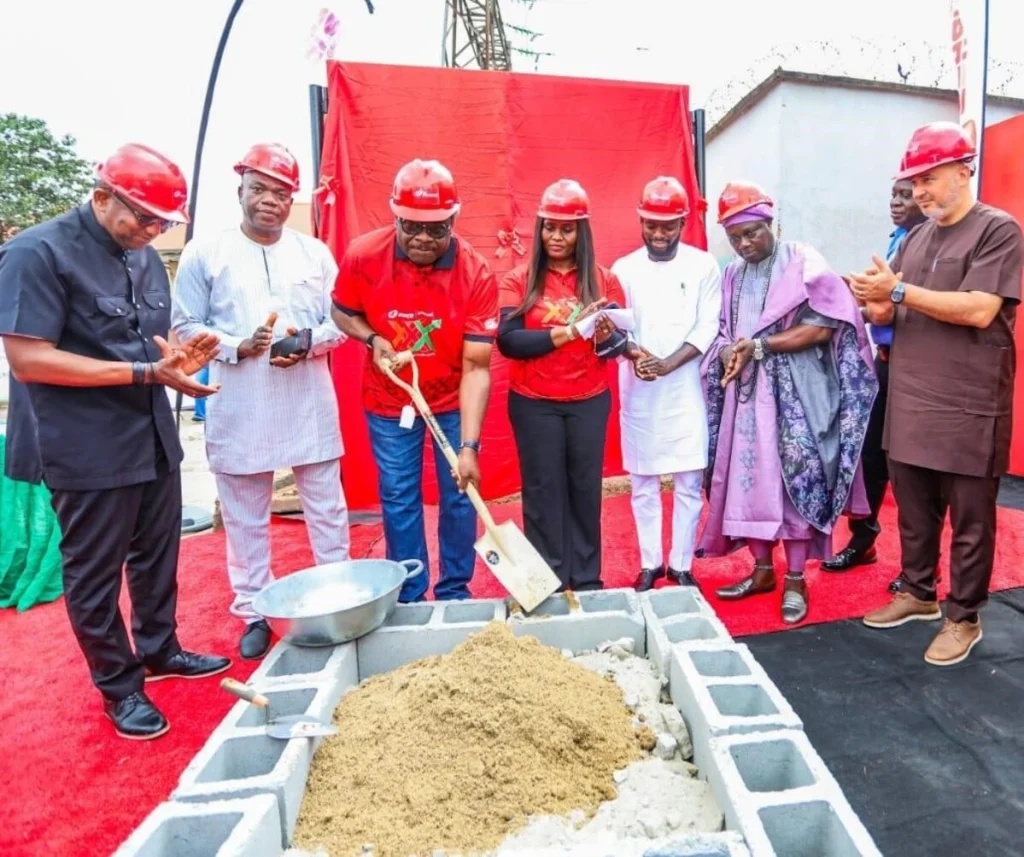
*Caption* L-R, Anthony Youdeowei, Managing Director, Sahara Power Enterprise Group; Olajide Kumapayi, Chief Operating Officer, Ikeja Electric; Kola Adesina, Group Managing Director, Sahara Power Enterprise Group; Bunmi Fafiyebi, Project Manager, Sahara Power Enterprise Group; Hon Abdul-Ganiyu Vinod Obasa, Executive Chairman, Agege Local Government; HRM. Oba Egbeyemi Latif Oladimeji, Ologba of Ogbaland and Mark Oni-Okeke, Managing Director Cummins West Africa Ltd. during the groundbreaking ceremony of 12MW Independent Power Plant at Ogba, Lagos on Thursday , 27 August, 2026.
For businesses operating in Nigeria, electricity is rarely just another operating expense.
It can determine whether a factory runs for eight hours or four. It can influence the price of products, the cost of services and whether a small business can afford to stay open after sunset.
For households, unreliable electricity comes with another cost: the constant search for alternatives.
Generators, petrol, diesel, batteries and other backup solutions have become part of the everyday energy equation for many Nigerians.
This is why private investment in electricity infrastructure deserves to be examined not only as a business story, but also through the lens of social and economic impact.
Sahara Power Enterprise Group has commenced construction of a $12 million, 12-megawatt Independent Power Plant (IPP) at the Ogba Undertaking of Ikeja Electric in Lagos. The gas-fired plant, comprising six 2MW units, is scheduled for completion in the first quarter of 2027.
The facility is expected to serve industrial clusters, businesses, residential communities and public institutions across Ogba, Acme Road, Wemco Road and surrounding areas.
On the surface, it is another addition to Nigeria’s growing portfolio of private power projects.
But the bigger question is what reliable electricity can unlock for the people and businesses around it.
When Electricity Becomes Economic Infrastructure
Power is often discussed as an infrastructure problem.
But for businesses, it is also a productivity problem.
A manufacturer cannot operate efficiently when electricity supply is unpredictable. A retailer loses productive hours when power interruptions force operations to stop. A small business that depends on refrigeration, machinery or digital equipment can face losses every time electricity becomes unavailable.
The alternative is often self-generation.
And self-generation comes with its own costs.
Fuel, maintenance, generator replacement and repairs can consume money that businesses would otherwise invest in employees, equipment, expansion or innovation.
This is particularly significant for small and medium-sized businesses, which generally have less financial capacity to absorb rising energy costs.
The Ogba IPP is therefore potentially more than a 12MW addition to Lagos’ electricity infrastructure.
If it delivers the reliable and cost-effective electricity promised, it could help businesses spend less time and money managing power uncertainty and more time producing, trading and growing.
That is where an energy investment begins to become a development story.
The SME Impact Could Be Significant
Ogba, Acme Road and Wemco Road are important commercial and industrial areas.
The new plant is expected to provide electricity to manufacturers, SMEs, retailers, residential communities and public institutions within its coverage area.
For a small business, the benefit of reliable power is not necessarily dramatic in one day.
It can be incremental.
A cold-room operator may reduce losses from spoiled products.
A salon may operate more consistently.
A workshop may spend less on diesel.
A manufacturer may reduce downtime.
A retailer may keep equipment running for longer.
Individually, these may appear like small gains.
Collectively, however, they can influence productivity, operating costs and business survival.
And that is why reliable electricity should be viewed as an enabler of economic inclusion.
A business that can predict its energy costs has a better chance of planning.
A business that can plan has a better chance of investing.
And a business that invests can potentially employ more people and contribute more value to its community.
From Corporate Investment to Shared Value
Sahara Power says the project is intended to strengthen electricity reliability and support economic growth, while Ikeja Electric has described it as a strategic investment that can provide a more dependable and cost-effective electricity source to businesses and communities in the designated areas.
Those are important ambitions.
But from a CSR perspective, the question should go beyond what the project is expected to achieve.
The real test will be what it actually changes.
Will businesses reduce their dependence on generators?
Will operating costs fall?
Will electricity reliability improve measurably?
Will businesses expand because they can plan around more predictable power?
Will new enterprises emerge?
Will employment increase?
Will residents experience better quality of life?
These are the outcomes that can turn an infrastructure project into measurable social impact.
The $12 million investment is the input.
The electricity generated is the immediate output.
The economic and social improvements that follow are the impact.
That distinction matters.
The Community Should Not Be an Afterthought
There is also a community dimension to the project.
The traditional ruler of Ogbaland and the Agege Local Government leadership have welcomed the development, with local officials linking improved electricity supply to business growth, investment and employment opportunities.
That support is significant because infrastructure projects do not exist in isolation from the communities where they are located.
A responsible project should consider the people living and working around it throughout its lifecycle.
That means looking beyond the electricity itself.
Will local people benefit from employment opportunities during construction and operations?
Will local businesses be able to participate in the supply chain?
Are there clear channels through which residents can raise concerns?
How will safety and environmental issues be managed?
And as the plant becomes operational, will the surrounding community be able to see measurable benefits?
Community impact should not begin and end with a groundbreaking ceremony.
Gas Raises an Important ESG Question
There is, however, another side to this story.
The plant is gas-fired.
Natural gas can play an important role in improving electricity reliability and supporting Nigeria’s energy system, particularly as the country attempts to reduce dependence on more expensive and often highly polluting diesel and petrol-powered generators.
But gas remains a fossil fuel.
That means the project should not automatically be presented as a clean-energy solution.
Its ESG significance is more nuanced.
On one hand, replacing inefficient small-scale self-generation with a more centralised and potentially more efficient gas-powered facility could offer environmental and economic advantages.
On the other, Nigeria’s long-term energy strategy must continue moving towards lower-carbon sources and greater renewable-energy deployment.
That creates an important question for private power developers:
How does today’s investment in gas infrastructure fit into tomorrow’s cleaner energy system?
The answer matters because infrastructure built today can shape energy choices for decades.
For Nigeria, gas may serve as part of the transition.
But transition should remain the operative word.
Reliability Must Be Measured, Not Promised
One of the most important claims surrounding the Ogba plant is reliability.
That is also the claim that should be easiest to test.
Once the plant becomes operational, stakeholders should be able to ask simple questions.
How many hours of reliable supply are customers receiving?
How frequently are interruptions occurring?
How much generator use has been displaced?
Are businesses reporting lower energy costs?
Has productivity improved?
Are customers receiving the cost savings associated with more efficient power generation?
These indicators would tell a much more meaningful story than the plant’s capacity alone.
A 12MW plant is an important investment.
But megawatts do not automatically translate into impact.
The value of those megawatts depends on how reliably they reach customers, what they cost and what customers are able to do with the electricity.
Private Capital Has a Bigger Role to Play
The Ogba project also points to a wider shift in Nigeria’s electricity sector.
Government cannot be expected to finance every piece of infrastructure required to close the country’s power gap.
Private capital will inevitably be part of the solution.
That creates an opportunity for businesses to view energy investment through a shared-value lens.
Power companies can generate commercial returns while supporting productive economic activity.
Banks can finance energy infrastructure and help businesses transition to more efficient power sources.
Technology companies can improve energy management.
Manufacturers can invest in distributed energy solutions.
And communities can become partners rather than passive recipients.
This is where ESG becomes more than reporting language.
The “S” in ESG is reflected in whether people and businesses gain meaningful access to essential infrastructure.
The “E” requires consideration of how that infrastructure affects emissions and the broader energy transition.
And the “G” comes into play through regulation, transparency, pricing, accountability and how stakeholders are engaged.
The strongest projects have to address all three.
The Bigger Question: Who Benefits?
Perhaps the most important question surrounding private investment in electricity is deceptively simple:
Who benefits?
If reliable power only reaches large commercial customers, the social impact is limited.
If it helps SMEs stay productive, allows manufacturers to reduce costly self-generation and improves services for public institutions, the benefits become wider.
If communities also gain jobs, local procurement opportunities and improved quality of life, the impact becomes deeper.
And if those benefits can be measured over time, the investment becomes a stronger example of how infrastructure and corporate responsibility can intersect.
That is the standard worth applying to the Ogba project.
Not simply: How much was invested?
But: What changed because of the investment?
From Megawatts to Meaningful Impact
Nigeria’s power challenge has lasted long enough for Nigerians to become familiar with ambitious announcements.
What the country needs increasingly are projects that can demonstrate tangible results.
Sahara Power’s $12 million investment is significant because reliable electricity has implications far beyond the power sector.
For the businesses around Ogba, Acme Road and Wemco Road, better electricity could mean lower operating pressure, reduced dependence on generators and more predictable production.
For communities, it could support economic activity and improve access to reliable power.
For the wider economy, it could demonstrate the role private infrastructure investment can play in addressing a problem that has constrained productivity for years.
But the real story will begin when construction ends.
When the plant comes online in 2027, stakeholders should be looking beyond the commissioning ceremony and asking whether the promised benefits are materialising.
Are businesses saving money?
Are generators being used less?
Are jobs being created?
Is electricity more reliable?
Are communities benefiting?
And is the gas-fired project contributing to a transition that ultimately leads Nigeria towards a more sustainable energy mix?
The answers will determine whether this is simply a $12 million power project or an example of private capital creating measurable economic and community value.
Because in Nigeria’s electricity story, the real measure of success is not how many megawatts are announced.
It is what those megawatts make possible.
[give_form id="20698"]