


 GLORYANN OSANG
For many young Nigerians, starting a business is often the easiest part. Keeping it alive, managing its finances, finding customers and eventually turning it into a sustainable enterprise can be considerably harder.
It is this gap between having a business idea and building a business capable of surviving that the PanAfrican Capital Foundation (PAC Foundation) is seeking to address through its Raising Young Entrepreneurs (RYE) initiative.
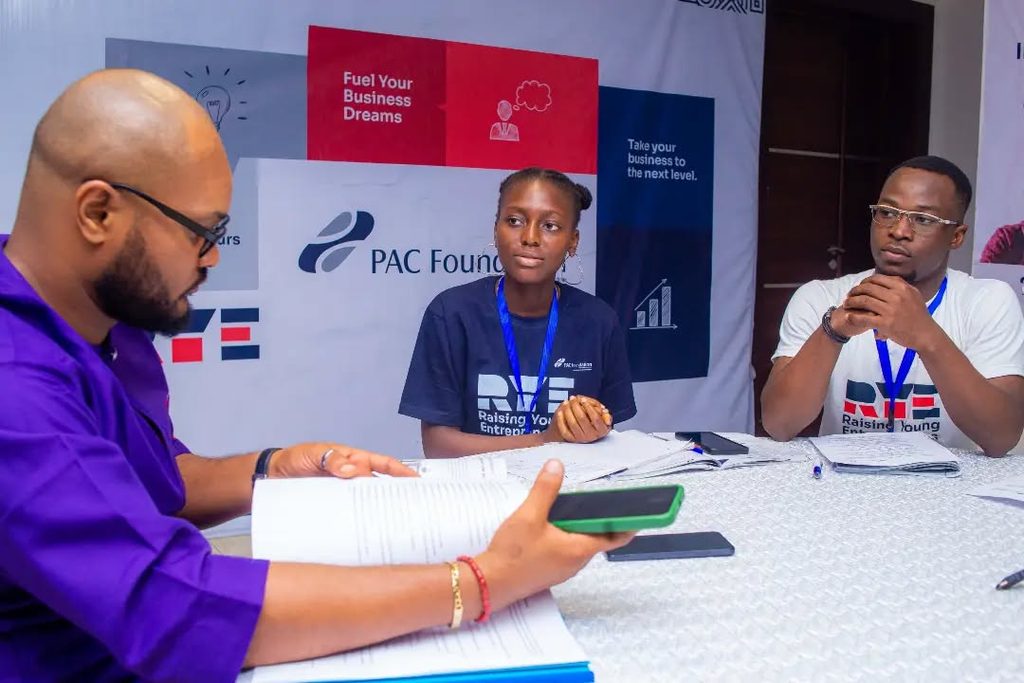
The Foundation recently concluded the second edition of its RYE Boot Camp, bringing together 36 young entrepreneurs in Lagos for two days of practical training, mentorship and networking designed to strengthen their capacity to build viable and sustainable businesses.
Held on August 28 and 29, 2026, the programme moved beyond conventional entrepreneurship talks, exposing participants to some of the practical challenges that determine whether a young enterprise can survive in Nigeria’s competitive business environment.
Moving Beyond the Business Idea
A promising idea does not automatically become a successful business. For emerging entrepreneurs, weaknesses in financial management, pricing, branding, legal compliance and market positioning can quickly turn a potentially viable venture into a struggling one.
The RYE Boot Camp tackled these areas through masterclasses, workshops, fireside conversations and practical sessions led by entrepreneurs and industry professionals.
Participants were trained on developing an entrepreneurial mindset, identifying business opportunities, managing business finances, pricing and costing, building brands, marketing, navigating legal and regulatory requirements and preparing to pitch their businesses to potential investors.
The emphasis on these practical skills is particularly important for Nigeria’s growing community of young business owners, many of whom operate with limited access to formal business support, mentorship and professional networks.
Building Businesses That Can Last
The programme reflects a broader shift in how youth empowerment is increasingly being approached within Nigeria’s corporate social responsibility space.
Rather than focusing solely on providing financial assistance, the RYE model seeks to equip young people with knowledge and capabilities that can continue to benefit them after the programme ends. That distinction matters.
A grant can provide temporary relief, but the ability to understand cash flow, price products properly, comply with regulations, build a credible brand and communicate a business proposition can determine whether an enterprise survives beyond its early stages.
By concentrating on these capabilities, the initiative positions entrepreneurship as a pathway to longer-term economic participation rather than simply a short-term employment alternative.
The Private Sector’s Role
TGI Group served as the sponsoring partner for the latest RYE cohort, with representatives of the company participating directly in the programme. The partnership demonstrates how collaboration between foundations and businesses can create platforms where young entrepreneurs gain not only financial or material support but also access to corporate experience and professional networks.
For participants, exposure to established businesses can provide a perspective that is difficult to acquire from textbooks or online courses alone. It can also open doors to relationships that may eventually translate into partnerships, mentorship or market opportunities.
PAC Foundation Executive Secretary Omolola Ojo said the partnership reflects a shared commitment to youth empowerment, entrepreneurship development and sustainable economic growth.
From Training to Economic Impact
The ultimate value of programmes such as RYE will, however, be determined beyond the classroom. The real test will be whether participants apply the knowledge gained to strengthen their businesses, increase revenues, create employment and develop solutions to problems within their communities.
That longer-term impact is particularly important in an economy where young people constitute a significant part of the working-age population and where many livelihoods depend on small and growing businesses.
When young entrepreneurs acquire the capacity to build stronger enterprises, the potential impact extends beyond individual beneficiaries.
A business that survives can employ other young people. A business that grows can create new supply chains. A business that solves a local problem can generate value within its community. In that sense, entrepreneurship development can become a multiplier for social and economic impact.
Creating a Pipeline of Young Business Leaders
The RYE initiative also forms part of PAC Foundation’s broader focus on economic empowerment and youth development. Its continued investment in entrepreneurship suggests an approach that seeks to build a pipeline of young Nigerians capable of participating meaningfully in the country’s private sector and innovation ecosystem.
But sustaining that impact will require continued support beyond the boot camp. Access to finance, mentorship, markets, technology and professional networks remains critical to helping young enterprises move from early-stage operations to sustainable growth.
The 36 entrepreneurs who participated in the latest cohort therefore leave with more than lessons from a two-day programme. They leave with new connections, business knowledge and a stronger understanding of what it takes to turn an idea into an enterprise capable of creating value.
For Nigeria, where the future of economic growth is closely tied to the ability of young people to create and sustain livelihoods, interventions that strengthen entrepreneurial capacity could become increasingly important.
The challenge now is to ensure that the momentum created in the training room continues in the marketplace. Because the real measure of youth empowerment is not simply how many young people receive training.
What does meaningful youth empowerment look like in practice? Follow CSR Reporters for more stories and insights on the initiatives shaping economic inclusion, entrepreneurship and sustainable development in Nigeria.
[give_form id="20698"]


1 thought on “Foundation Puts Youth Enterprise at the Centre of Nigeria’s Economic Inclusion Push”