Why Nigeria’s Fishery Sector Is Looking to Women and Young People for Its Next Chapter
 ONYINYECHI NWAIGBA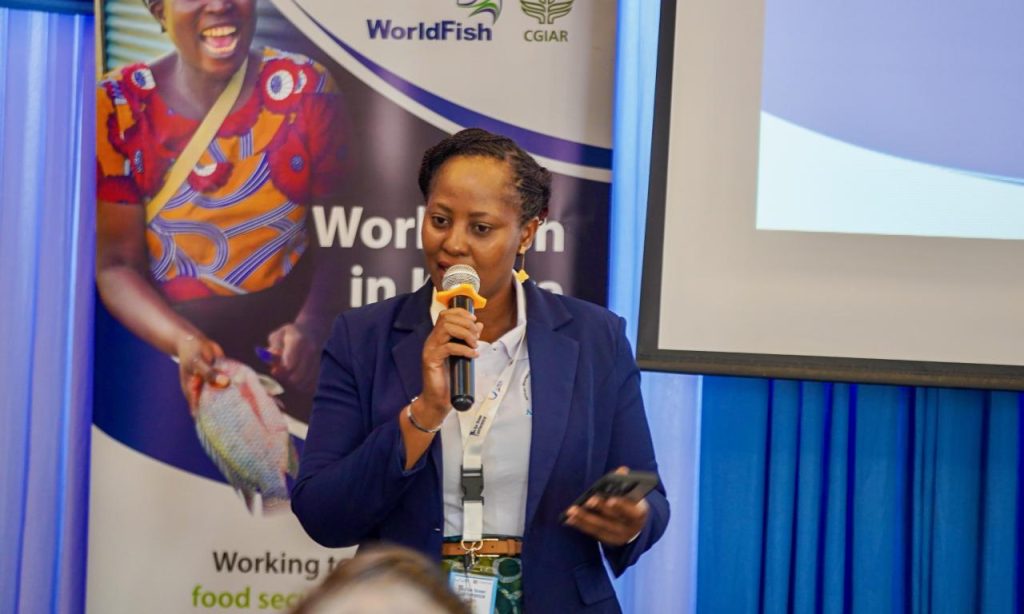
Nigeria’s fishery and aquaculture sector could become a bigger source of jobs for women and young people if some of the barriers holding back the industry can be addressed.
That is the focus of a new initiative by WorldFish, in partnership with TradeMark Africa and the Mastercard Foundation, which is targeting 25,000 women and youth across Nigeria and Tanzania.
The project is designed to strengthen the competitiveness of the fishery and aquaculture sector while creating and diversifying employment opportunities across the aquatic food value chain.
In Nigeria, the intervention will cover Lagos, Ogun, Ondo, Cross River, Akwa Ibom and Delta states.
But the project is not simply about putting more people into fish farming.
It is looking at some of the challenges that make it difficult for people already working in the sector to earn more, operate efficiently or build sustainable businesses.
Why the Fishery Sector Matters
Fish is an important part of food systems and livelihoods across Nigeria.
Beyond the person catching fish, an entire network of people is involved in getting aquatic food from water to consumers. This includes fish farmers, processors, traders, transporters, input suppliers and other businesses supporting the value chain.
Women, in particular, play important roles in post-harvest activities such as processing and trading.
WorldFish has noted that women account for almost half of workers in fisheries globally, with their share reaching up to 60 per cent in Africa when post-harvest aquatic food activities are considered. Yet their contributions are often poorly captured in data and policy decisions.
That creates a problem.
When the people doing important work across a value chain are not adequately represented in planning and investment decisions, the interventions designed for that sector may not address the realities they face.
The new project is therefore placing women and young people closer to the centre of its job-creation strategy.
Four Areas Could Drive New Opportunities
According to WorldFish Nigeria Country Representative Dr Charles Iyangbe, the initiative will focus on four major areas.
The first is innovation in the fish-feed sector.
Feed is one of the biggest expenses for fish farmers. At the stakeholder workshop in Ibadan, the Director of Fisheries and Aquaculture at the Ministry of Marine and Blue Economy, Wellington Omoragbon, said feed can account for more than 75 per cent of fish farmers’ operational costs.
That means reducing feed costs could have a direct effect on the economics of fish farming.
The second area is climate-smart aquaculture.
As environmental conditions change, fish farmers and other aquatic food producers need approaches that can help them manage climate-related risks while maintaining production.
The third is digitalisation and access to finance.
Digital tools can support access to information, markets and financial services, while better access to finance can help entrepreneurs invest in equipment, inputs and business expansion.
The fourth is reducing post-harvest losses and strengthening the value chain.
This is particularly relevant because fish can lose value between the point of harvest and the point of sale due to inadequate handling, storage, processing and transportation.
Addressing those losses does not only protect food. It can also protect income.
The Opportunity Beyond Fish Farming
One of the most interesting aspects of the project is that its employment focus goes beyond simply increasing the number of fish farmers.
A stronger aquatic food sector requires people with different skills and businesses.
There are opportunities in feed production and distribution, fish processing, cold storage, transportation, digital services, marketing, finance and other supporting activities.
For young people who may not want to become fish farmers themselves, a growing value chain could therefore create alternative entry points.
This matters because youth participation in fisheries and aquaculture has been studied as a major development issue in countries including Nigeria and Tanzania. WorldFish research has identified both opportunities and barriers affecting young people’s participation across fisheries, aquaculture and related value chains.
The challenge is making those opportunities accessible.
Women Need More Than Visibility
For women, the issue is also more complicated than simply getting more women into the sector.
Women are already active in many parts of aquatic food systems, particularly processing and trading. The challenge is often their access to resources, finance, technology, markets and decision-making spaces.
WorldFish’s recent work in Africa has highlighted how women in aquatic food value chains can face limited access to improved technologies, storage facilities, processing equipment, markets and business skills. These constraints can contribute to post-harvest losses and lower earnings.
In Nigeria, WorldFish has also previously explored ways to expand women’s participation in aquaculture. Its work on integrated multi-trophic aquaculture, for example, has looked at opportunities closer to shore that could allow women to participate in aquatic economic activities beyond traditional fishing roles.
This means that creating opportunities for women may require more than training.
It can involve improving access to finance, equipment, markets, technology and information at the same time.
Climate Change Is Part of the Conversation
The initiative is also arriving at a time when sustainability and climate resilience are becoming increasingly important to the future of aquatic food systems.
WorldFish has been working on climate-smart aquaculture in Nigeria, including a new project launched in September 2026 with the Australian Centre for International Agricultural Research and national partners. That initiative is focused on helping small-scale producers, hatcheries and other value-chain actors adopt climate-smart aquaculture solutions.
Its wider Asia-Africa BlueTech Superhighway project also focuses on developing sustainable and resilient aquatic food systems while improving livelihoods, particularly for women and youth. The project operates across Nigeria, Tanzania, Kenya, Mozambique and Bangladesh.
The new 25,000-person initiative therefore fits into a wider conversation about making fisheries more productive while ensuring that the people who depend on them can adapt to changing conditions.
The Next Step Is Turning the Plan Into Opportunity
The 25,000 target is significant, but the project is currently at the stage of stakeholder engagement and program design.
The Ibadan workshop brought together government agencies, financial institutions, research organizations, private-sector representatives and farmers’ groups to discuss the challenges that should shape the intervention.
That consultation stage is important because the barriers facing someone farming fish in Lagos may not be exactly the same as those facing a fish processor in Cross River or a trader in Delta.
For the project to deliver meaningful results, the solutions will need to reflect those differences.
There is also a broader question of what success will look like.
Creating opportunities is one thing. Making sure those opportunities lead to sustainable incomes, stronger businesses and more resilient communities is another.
If the project can address some of the industry’s biggest constraints while opening pathways for women and young people to participate across the value chain, its impact could extend beyond the 25,000 people it targets.
Nigeria’s aquatic food sector is already supporting livelihoods and feeding communities.
The opportunity now is to strengthen the system around it from the feed that goes into fish farms to the technology used by producers, the financing available to entrepreneurs and the way fish is processed, stored and moved to consumers.
For women and young people, that could mean seeing the fishery sector not simply as an existing livelihood, but as a wider space for skills, enterprise and employment.
And for Nigeria’s blue economy, the question is becoming clearer: how can the sector grow in a way that creates more value while ensuring the people working within it are able to share in that growth?
[give_form id="20698"]