ROSEMARY IMOBHIO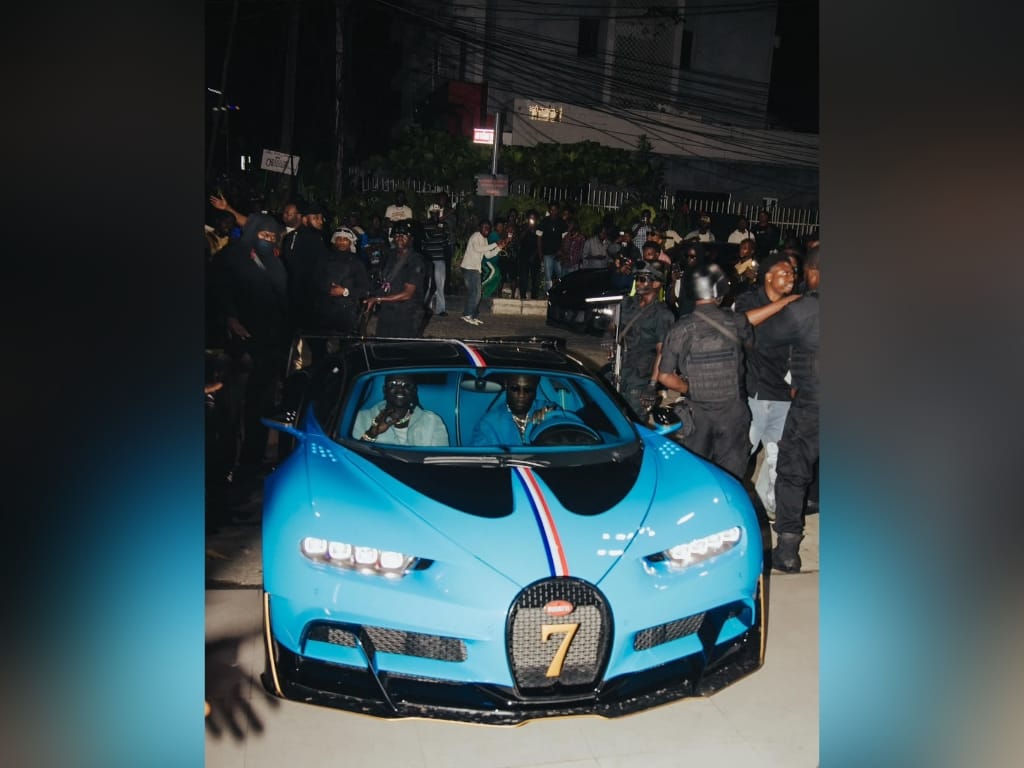
Burna Boy’s Bugatti has become the latest celebrity spectacle to capture attention online. However, the reaction to the luxury car says more about Nigeria’s relationship with fame, wealth and aspiration than it does about the vehicle itself.
A video circulating on social media showed Grammy-winning Nigerian musician Damini Ogulu, popularly known as Burna Boy, driving his customised Bugatti Chiron VXX through Lagos in the early hours of monday morning.
The footage, reportedly captured around 6:30 a.m., showed several people running alongside the vehicle as it moved through the city. The unusual scene quickly attracted attention online, partly because of the car itself.
Burna Boy recently took delivery of the one-of-one customised Bugatti, created by Dubai-based luxury vehicle customisation company Venuum. Several Nigerian publications have reported that the vehicle is worth about ₦9 billion, although the actual amount paid for the car has not been independently confirmed.
The spectacle, however, raises a more interesting question than the price of a luxury vehicle: why can a celebrity’s possession generate such intense public debate?
The Power of Celebrity Success
There is nothing inherently unusual about people stopping to admire an extraordinary car. A Bugatti is rare by design, and Burna Boy is one of Nigeria’s most internationally recognised entertainers. His global music career has made him a prominent example of how Nigeria’s creative talent can reach audiences far beyond the country.
The reaction to the car therefore cannot be separated from the wider influence of celebrity culture. For millions of young Nigerians, musicians, athletes, actors, influencers and entrepreneurs are increasingly visible representations of success. Their lifestyles can become part of the way people imagine what is possible.
That influence is not necessarily negative. In fact, Nigeria’s growing creative economy demonstrates that entertainment can be more than a source of cultural expression. It can also create businesses, employment and opportunities across a wide value chain.
Read Also: Beyond the Stage: Guinness Nigeria Invests in Creative Economy
The Nigerian government has identified the creative sector as an important contributor to economic growth and employment. In August 2026, the Federal Ministry of Information and National Orientation reported that the sector contributes roughly 2.3 per cent of GDP and is targeted to create two million jobs by 2030.
The Nigerian Investment Promotion Commission also identifies music, film, fashion, live entertainment, digital content, gaming and other creative activities as parts of the country’s expanding creative economy.
When Wealth Becomes a Public Symbol
The early-morning Bugatti footage is striking because the vehicle represents a level of wealth that is far removed from the financial reality experienced by most Nigerians. It also reveals the extraordinary symbolic power attached to celebrity wealth. A luxury car can become more than a means of transportation when the person driving it already carries significant cultural influence.
For a young person watching from the roadside, the Bugatti may represent a version of success that feels distant but highly visible. For the wider public, it can also become a reminder of the economic gap between those at the top of highly successful industries and those still trying to find their place within the economy. Neither interpretation requires the owner of the vehicle to justify his wealth.
Burna Boy earned his success through a global music career, and how he spends his personal wealth remains a personal decision. The more relevant question for the CSR conversation is what successful figures do with the influence and economic opportunities created around their brands.
Influence Can Extend Beyond the Spotlight
Celebrity responsibility does not mean entertainers should be expected to solve problems that belong to governments, businesses and institutions. It does, however, recognise that individuals with enormous public platforms can influence conversations, behaviours and opportunities.
Burna Boy’s record also shows that his public image is not limited to luxury and entertainment. The REACH Nigeria Foundation’s 2024 impact report identified Burna Boy and the SpaceShip Collective among its partners and supporters. The report said their support contributed to the renovation of Cheshire Home, a facility serving people with disabilities, while the foundation’s wider programmes reached vulnerable communities.
In 2024, The Guardian also reported that the foundation had reached more than 12,000 people through its programmes, including food distribution, nutrition initiatives and community support. It also credited Burna Boy and his SpaceShip Collective with supporting the Cheshire Home renovation. That partnership continued into 2025, when The REACH Foundation carried out another outreach to residents of Cheshire Homes with support from Burna Boy and his family.
These examples matter because they complicate the conversation around the Bugatti. The public sees the car because it is highly visible. Social investments, however, often receive considerably less attention.
That difference raises an important question for celebrity-led impact. How can public figures use the same visibility that attracts attention to luxury and entertainment to draw attention to social causes, skills development, employment and community needs?
From Celebrity Wealth to Economic Opportunity
The creative economy provides one possible answer. A successful musician does not operate in isolation. Behind a major music career are producers, songwriters, instrumentalists, dancers, stylists, photographers, videographers, sound engineers, event organisers, managers, marketers, lawyers, technology companies and other professionals. As the industry grows, success at the top can create opportunities throughout that ecosystem.
Nigeria’s government has increasingly positioned the creative sector as a potential source of employment and economic diversification. The Federal Government’s Creative and Tourism Infrastructure Corporation, for example, was designed to attract investment into creative infrastructure and support the sector’s capacity to generate jobs.
That means the more useful conversation about celebrity wealth may not be whether a musician owns a ₦9 billion car. It may be whether the enormous commercial and cultural influence generated by Nigeria’s entertainment industry can translate into more sustainable opportunities for the people working within and around it.
This could take different forms. Talent development programmes, apprenticeships, investments in creative businesses, scholarships, community projects and support for emerging artists are examples of ways wealth and influence can contribute to wider opportunity.
Not every celebrity needs to pursue the same model. However, the growing scale of the creative economy makes the relationship between private success and public impact increasingly relevant.
The Bigger Conversation Behind the Bugatti
Burna Boy’s Bugatti will probably remain a symbol of extraordinary personal success. The people who gathered around it will also remain part of the viral moment that made the story interesting. But the significance of the incident does not have to end with the car.
Nigeria is simultaneously a country of remarkable creative success and significant economic challenges. Its musicians are filling international arenas while young people continue to search for sustainable livelihoods.
Its entertainment industry is becoming an increasingly important economic sector while investment gaps remain across the creative value chain. Those realities can exist at the same time.
The Bugatti therefore offers a useful entry point into a broader conversation about what celebrity success means in Nigeria. The issue is not whether Burna Boy should own an expensive car. It is whether a country producing globally influential creative talent can build an ecosystem where that success creates more opportunities for the next generation.
That is where celebrity, wealth and corporate social responsibility begin to intersect. The most meaningful measure of influence may ultimately extend beyond what a successful individual can afford to buy and toward what their success makes possible for others.
Stay with CSR Reporters for more stories on the people, businesses and ideas shaping Africa’s impact landscape.
[give_form id="20698"]