ONYINYECHI NWAIGBA
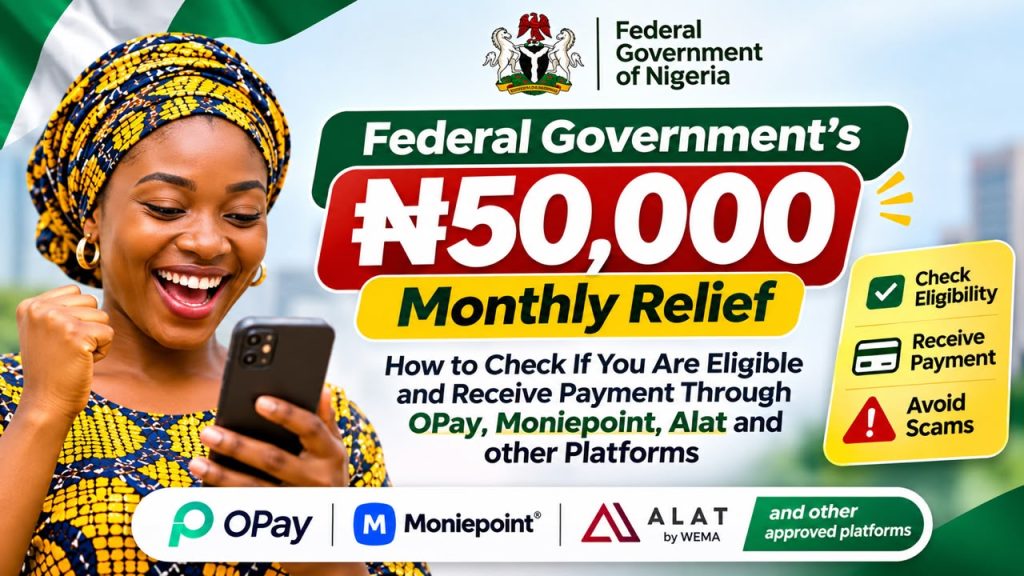
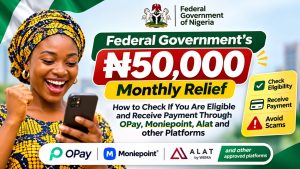
The Federal Government has commenced its National Emergency Relief and Stabilization Intervention (NERSI), offering ₦50,000 in cash support to selected poor and vulnerable households. Beneficiaries are being contacted through approved financial service providers, but with no public application form available, Nigerians need to understand how selection works, how to check their status and how to avoid fraudulent payment offers.
As the rising cost of food, transportation, healthcare and other essential goods continues to place pressure on Nigerian households, the Federal Government has introduced another cash assistance programme aimed at providing immediate financial relief to vulnerable citizens.
The intervention, known as the National Emergency Relief and Stabilization Intervention (NERSI), was announced on October 30, 2026, by the Federal Ministry of Humanitarian Affairs and Poverty Reduction.
Under the programme, selected beneficiaries will receive ₦50,000 in financial support to help meet essential household needs and manage the pressure of rising living costs.
The government is working with licensed financial service providers to distribute the funds directly into beneficiaries’ mobile wallets. These include ALAT by Wema Bank, MoMo PSB, NairaGram, OPay and Moniepoint, according to the official programme website.
Unlike conventional grant programmes that require applicants to complete forms and submit proposals, NERSI uses existing government identity and social protection records to identify eligible households.
This means Nigerians cannot simply fill in an online application form or register with an agent to secure the payment.
For people hoping to benefit, understanding how the programme works is important, particularly as fraudulent messages and unofficial registration links can create opportunities for financial scams.
What Is the NERSI ₦50,000 Relief Programme?
The National Emergency Relief and Stabilization Intervention is a Federal Government cash transfer initiative designed to provide immediate financial assistance to poor and vulnerable Nigerian households.
The programme is being implemented by the Federal Ministry of Humanitarian Affairs and Poverty Reduction as part of the government’s wider social protection efforts.
According to the government, the intervention responds to the pressure households face from rising food prices and the cost of essential goods and services.
The ₦50,000 support is intended to help selected beneficiaries meet basic needs and provide some financial relief during difficult economic conditions.
The money is provided as a grant, not a loan. Beneficiaries are not expected to repay the amount.
The programme is designed to reach households across Nigeria’s six geopolitical zones, with payments being released in phases.
This means that not every selected beneficiary will necessarily receive a notification at the same time.
Who Is Eligible for the ₦50,000 Relief?
The programme is intended for poor and vulnerable households across Nigeria.
According to the official NERSI portal, beneficiaries are selected using information from the National Social Register and verified national identity records. The information is screened to identify households that meet the programme’s vulnerability criteria.
Selection is not based on ethnicity, religion or political affiliation. The government says beneficiaries are drawn from all six geopolitical zones based on need.
However, the government has not published a general public application form or a comprehensive individual income threshold that Nigerians can use to determine eligibility on their own.
Being unemployed, having a low income or experiencing financial difficulties does not automatically guarantee selection.
The programme relies on existing verified records, meaning an individual may be eligible in principle but not included in the current payment batch.
Can Nigerians Apply for the ₦50,000 Support?
No. There is currently no public application or registration process for NERSI.
The government has stated that beneficiaries are selected directly from verified identity records and the National Social Register.
This means:
- You do not need to fill out a separate online registration form.
- You do not need to pay anyone to add your name to the beneficiary list.
- You do not need to visit a government office to secure selection.
- No agent or third party can guarantee that you will receive the money.
Selected beneficiaries are contacted directly through their designated financial service providers.
If someone claims to have a special registration link or offers to secure the ₦50,000 payment in exchange for money, the offer should be treated as suspicious.
How to Check If You Have Been Selected
According to the official NERSI website, beneficiaries will receive an SMS from their designated payment provider notifying them of their selection and explaining how to accept the support.
The government portal also provides USSD options that allow beneficiaries to check their status without needing a smartphone or internet connection.
The five providers and their published USSD codes are:
- ALAT by Wema Bank: Dial
*945*23#. - MoMo PSB: Dial
*671*0#. - NairaGram: Dial
*726*00#. - OPay: Dial
*955*20#. - Moniepoint: Dial
*5573*27#.
Select the eligibility-check option in the menu and follow the instructions.
These codes should be used in line with the payment provider identified in your official notification. The government portal is the appropriate place to confirm the current instructions.
Where you have been selected, you will receive further instructions on how to accept the support and activate the mobile wallet through which the payment will be received.
If you are not selected, the system may display a message indicating that you are not currently on the beneficiary list.
This does not necessarily mean you have been permanently excluded. The programme is being implemented in phases, and not every household is included in each batch.
How Will Beneficiaries Receive the Money?
Once selected, beneficiaries are expected to receive an SMS from their assigned financial service provider requesting their consent to participate.
According to the official programme guidelines, beneficiaries must accept the support before payment is made.
After consent is given, a mobile wallet is opened and linked to the beneficiary’s phone number and verified identity details. The ₦50,000 is then credited to the wallet, and a confirmation message is sent.
Beneficiaries can access the money through the available withdrawal and transfer options provided by their financial service provider.
The USSD process is designed to work on basic mobile phones, meaning beneficiaries do not necessarily need a smartphone or mobile data to accept the support.
The programme is also free to access. There is no participation or payment-release fee. However, a point-of-sale agent may charge the usual withdrawal fee when a beneficiary chooses to cash out.
Is the ₦50,000 Paid Monthly or Once?
This is an important detail Nigerians should pay attention to because the publicly available programme information is not completely consistent.
In his October 30 announcement, the Minister of Humanitarian Affairs and Poverty Reduction, Dr Bernard Doro, described the ₦50,000 support as a monthly payment to eligible beneficiaries.
However, Moniepoint’s published NERSI frequently asked questions describe the support as a one-time ₦50,000 grant and state that any additional or recurring payments would be announced separately.
The official NERSI website confirms the ₦50,000 payment but does not clearly specify a recurring payment schedule in its current FAQ.
Until the Ministry issues a clear, consistent clarification across its programme information and payment-provider guidance, Nigerians should not assume that receiving ₦50,000 automatically guarantees another payment the following month.
Beneficiaries should rely on official government announcements for updates about payment frequency and future disbursements.
How to Avoid NERSI Payment Scams
The announcement of government financial support can attract fraudsters who take advantage of people seeking assistance.
Some may circulate fake registration links, impersonate government officials or claim they can secure payment for individuals who are willing to pay a processing fee.
The Federal Government has warned that NERSI is free and that beneficiaries do not need to pay anyone to be selected or receive their money.
To protect yourself:
- Do not pay registration, processing or activation fees to anyone claiming to facilitate your payment.
- Never share your PIN, one-time password (OTP) or banking password with anyone.
- Do not click suspicious links claiming to provide instant NERSI registration.
- Do not share personal banking information with unofficial agents.
- Verify suspicious messages through the official NERSI website or helpline.
The government says genuine programme notifications will come from the approved payment providers and will ask beneficiaries to provide consent or follow the relevant USSD instructions.
Anyone uncertain about a message or payment request can contact the official NERSI helpline on 0700-022-2222.
What the Relief Programme Means for Vulnerable Households
Cash transfer programmes can provide important short-term support for households facing economic hardship.
For families struggling to afford food, transportation, healthcare and other essentials, direct financial assistance can help cover immediate expenses.
Unlike some development interventions that require beneficiaries to complete training or participate in business programmes, cash assistance allows selected households to decide how best to use the support based on their most urgent needs.
However, the actual impact will depend on how effectively the programme identifies vulnerable households, distributes the money and ensures that beneficiaries receive the full amount without unnecessary deductions.
The government will also need to demonstrate that the selection process is transparent and that people who genuinely require support are not excluded because of gaps or inaccuracies in existing records.
Monitoring the number of households reached, payment completion rates, complaints and the effectiveness of the targeting system will be important in determining whether the intervention is achieving its objectives.
Beyond the ₦50,000 Payment: Why Accountability Matters
The NERSI intervention provides an opportunity for the Federal Government to strengthen its social protection response to rising living costs.
But the success of the programme should not be measured simply by the announcement of a ₦50,000 payment.
It should be measured by whether the money reaches the people it is intended to support, whether payments are made transparently and whether the intervention provides meaningful relief to vulnerable households.
Clear communication about eligibility, payment schedules and the selection process will also be essential.
For Nigerians, the most important thing to understand is that NERSI is not an open grant application. Beneficiaries are selected through existing government records and notified directly through approved payment providers.
Anyone seeking to check their status should use the official channels rather than relying on links circulating on WhatsApp or offers from individuals claiming to have access to the beneficiary list.
Ultimately, social protection programmes are most effective when they combine reliable financial assistance with transparent selection, accessible complaint channels and strong accountability.
The ₦50,000 intervention may provide immediate relief to selected households, but public trust will depend on how fairly and consistently the programme is implemented.
[give_form id="20698"]