
 ONYINYECHI NWAIGBA
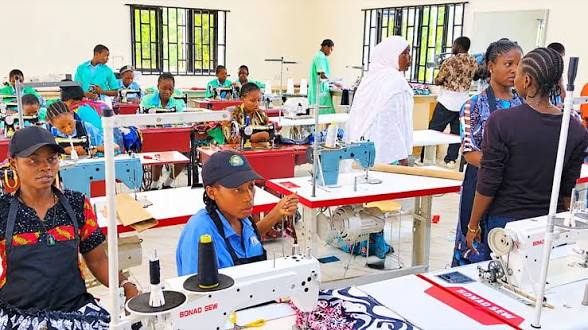
The Federal Government is expanding technical and vocational skills training as part of efforts to tackle youth unemployment, with more than 1,500 participants enrolled in a six-month programme at the Federal Technical College, Orozo, Abuja. While the wider IDEAS and TVET initiative targets 250,000 young Nigerians nationwide, its long-term success will depend on whether participants can turn their skills into employment, sustainable businesses and reliable sources of income.
For many young Nigerians, finding a job after completing their education has become an increasingly difficult experience. Even with academic qualifications, access to decent employment remains a challenge, particularly for those without specialised technical skills or the resources to establish their own businesses.
At the same time, several industries continue to require skilled workers who can provide practical services, operate equipment, maintain infrastructure and support production.
This creates an important gap between the skills available in the labor market and the capabilities businesses need.
The Federal Government is seeking to address part of this challenge through its Innovation Development and Effectiveness in the Acquisition of Skills (IDEAS) project and Technical and Vocational Education and Training (TVET) initiative.
At the Federal Technical College, Orozo, Abuja, young Nigerians are receiving hands-on training in different vocational fields, including automobile mechanics, auto electrical repairs, garment making, leather works, GSM repairs, catering and information and communication technology.
The initiative is designed to equip participants with practical competencies that can improve their chances of securing employment or establishing businesses.
According to the Federal Government, the wider programme targets 250,000 young Nigerians nationwide, with 3,000 beneficiaries allocated to the Abuja zone over six months.
However, the development raises a bigger question about the country’s approach to youth empowerment: beyond enrolling young people in training programmes, how effectively can vocational education translate into sustainable livelihoods?
Moving Beyond Academic Qualifications
For decades, academic qualifications have been viewed as one of the most important pathways to economic opportunity in Nigeria.
However, the realities of the labor market have made it increasingly important for young people to acquire skills that can be applied directly within different industries.
Technical and vocational education provides an alternative pathway by focusing on practical knowledge and the ability to perform specific tasks.
A trained automobile technician, for example, can work in an established workshop, provide independent repair services or eventually establish an automotive business.
Similarly, someone trained in garment production can secure employment within the fashion industry, provide tailoring services or develop a clothing brand.
These opportunities demonstrate that vocational skills can support both employment and entrepreneurship.
The IDEAS and TVET initiative reflects this approach by placing practical training at the centre of its delivery model.
Speaking during a visit to the Federal Technical College, Orozo, the institution’s Principal, Dr Stella Uhuegbu, explained that the college had prioritized practical instruction to ensure participants acquired the competencies needed to function independently after completing their training.
The approach is important because completing a course should mean more than receiving a certificate. Participants should be able to demonstrate what they have learned and apply those skills in real working environments.
The Skills Young Nigerians Are Learning
The training at the Federal Technical College, Orozo, covers several vocational areas with potential applications across Nigeria’s economy.
These include:
Automobile mechanics and auto electrical repairs: Participants develop skills in vehicle maintenance, mechanical repairs, electrical systems and troubleshooting. These capabilities are relevant to automotive workshops, transport businesses and independent service providers.
Auto spray painting: This provides opportunities within vehicle maintenance, bodywork and automobile finishing businesses.
Garment making and leather works: Participants acquire practical skills that can support employment and entrepreneurship within Nigeria’s fashion, clothing and leather industries.
GSM repairs: Mobile phone repair skills can provide opportunities for young people to establish small service businesses or work with existing repair outlets.
Catering: Training in food preparation and catering can support employment in restaurants, hospitality businesses and independent food enterprises.
Information and communication technology: Digital skills can provide opportunities across different industries, particularly as businesses increasingly depend on technology to manage their operations.
The diversity of these training areas is significant because youth employment challenges cannot be addressed through a single industry.
Nigeria needs skilled workers across manufacturing, construction, automotive services, hospitality, fashion, technology and other productive sectors.
Providing access to different vocational pathways can help young people explore opportunities beyond conventional office-based employment.
What the IDEAS and TVET Programme Is Designed to Achieve
The IDEAS project is a World Bank-supported initiative implemented through the Federal Ministry of Education to improve Nigeria’s technical and vocational education system.
Its broader objective is to strengthen the country’s capacity to produce workers with skills relevant to both formal and informal sectors of the economy.
The project focuses on improving technical training institutions, strengthening the capabilities of instructors, increasing industry participation and improving the quality of skills development.
The wider TVET initiative complements these efforts by expanding access to practical vocational training for young Nigerians.
According to the programme’s implementation framework, training is intended to respond to labor market needs rather than simply offering courses without considering employment opportunities.
This is particularly important for Nigeria, where businesses often struggle to find workers with the technical capabilities required for specific roles.
For vocational training to produce meaningful economic benefits, the skills being taught must remain relevant to actual industry demand.
Training someone in a particular trade is only the first step. There must also be businesses that need those services, customers willing to pay for them and opportunities for graduates to build sustainable careers.
From Training to Income: The Importance of Post-Training Support
One of the biggest challenges facing vocational training programmes is what happens after participants complete their courses.
A young person may acquire practical skills in electrical installation, tailoring or automobile repairs but still struggle to establish a business because they cannot afford the necessary tools, equipment or workspace.
Others may complete training without having access to employers, customers or professional networks that could help them secure their first opportunities.
This is why post-training support is just as important as the training itself.
Under the IDEAS and TVET programme, the Federal Government has outlined plans to provide participants with a monthly training allowance of ₦30,000 during the six-month programme, alongside starter packs to help beneficiaries apply their skills after graduation.
According to the programme’s National Project Monitoring Officer, the starter packs are intended to help participants establish businesses and begin earning income.
The support is also linked to participants’ commitment and attendance during training.
These measures recognition that acquiring skills does not automatically remove the financial barriers that prevent young people from putting those skills to use.
However, the effectiveness of the programme will depend on whether the promised tools and support reach beneficiaries and whether the resources provided are sufficient for them to begin productive work.
For example, someone trained in garment production may need a sewing machine, materials and access to customers, while an automobile technician may require specialised equipment and a suitable workspace.
Providing relevant starter packs can help reduce these barriers and shorten the distance between training and economic participation.
Small Businesses Could Benefit From a More Skilled Workforce
Vocational training also has implications for Nigerian small and medium-sized businesses.
Many SMEs depend on skilled technicians, artisans and service providers to operate efficiently.
A manufacturing business may require machine operators and maintenance technicians, while a fashion enterprise needs garment makers and production assistants.
Similarly, restaurants, hospitality businesses, automobile workshops and technology service providers depend on workers with practical capabilities.
When more young people acquire relevant technical skills, businesses may have access to a wider pool of trained workers.
This can help reduce recruitment challenges, improve service delivery and support business expansion.
There is also an opportunity for graduates to become suppliers of specialised services to established companies.
A trained electrician, for example, could provide maintenance services to small businesses, while a skilled leather worker could supply products to fashion retailers.
These relationships can create economic opportunities beyond direct employment.
However, stronger connections between training centers and businesses will be necessary to ensure that the skills being taught reflect actual industry requirements.
Private-sector participation in curriculum development, internships, apprenticeships and employment placement could help bridge the gap between training and the workplace.
Why Women and Disadvantaged Young People Must Be Included
Access to vocational education is particularly important for young people who face financial, social or geographical barriers to formal employment and higher education.
For women, vocational skills can create opportunities to participate in industries where they have historically faced limited representation.
Training in technology, automobile services, electrical installation, manufacturing and other technical fields can help broaden their employment options.
Similarly, young people from low-income households may benefit from programmes that provide tuition-free training, allowances and access to practical equipment.
The IDEAS project also identifies disadvantaged young people, women and persons with disabilities as important groups for inclusion in its wider skills development framework.
Ensuring that these groups can access training opportunities is important for making youth empowerment programmes more inclusive.
However, inclusion should extend beyond enrollment figures.
Training facilities must be accessible, learning environments should be supportive and participants should have equal opportunities to secure employment or establish businesses after graduation.
Measuring Success Beyond the Number of Trainees
The Federal Government’s target of training 250,000 young Nigerians represents a significant commitment to skills development.
However, the number of people enrolled in a programme does not necessarily reveal how many will eventually secure employment or become economically independent.
For a programme of this scale, measuring outcomes is essential.
The government should be able to demonstrate:
- How many participants successfully complete their training.
- How many obtain recognized vocational qualifications.
- How many secure employment within three to six months of graduation.
- How many establish businesses or become self-employed.
- Whether graduates are earning sustainable incomes from their acquired skills.
- How many receive their promised starter packs and other post-training support.
- Whether women and disadvantaged groups have meaningful access to opportunities.
The IDEAS project itself recognizes the importance of employment outcomes. Its programme framework includes monitoring whether graduates secure income through employment or self-employment after completing their training.
This is an important distinction because the real value of vocational education lies in its ability to improve people’s economic circumstances.
A training programme may record thousands of participants, but its broader developmental impact will depend on what those participants are able to achieve afterwards.
The Challenge of Creating Jobs for Skilled Graduates
Even when young people acquire relevant skills, they still need access to an economy capable of absorbing their services.
Nigeria’s small businesses continue to face challenges such as high operating costs, limited access to finance, unreliable electricity and expensive equipment.
These conditions can make it difficult for entrepreneurs to establish businesses, even when they possess the technical knowledge required.
For graduates seeking employment, the availability of decent jobs and opportunities for professional development also matters.
This means vocational training must be accompanied by broader efforts to improve the business environment, strengthen local industries and support enterprise development.
Access to affordable financing could help graduates purchase equipment and establish small businesses.
Business development support could help them understand pricing, customer acquisition, financial management and other requirements of running an enterprise.
Partnerships with employers could also provide opportunities for internships, apprenticeships and direct recruitment.
Without these connections, there is a risk that young people will complete training only to encounter the same economic barriers that existed before they enrolled.
Turning Skills Development Into Sustainable Livelihoods
Nigeria’s investment in technical and vocational education reflects an important recognition that economic development requires more than academic qualifications.
The country needs people who can build, repair, manufacture, produce, maintain and provide essential services across different industries.
The IDEAS and TVET initiative could help strengthen this workforce by expanding access to practical training and supporting young people as they develop marketable skills.
However, its success will depend on more than the number of training centers established or participants enrolled.
It will require consistent funding, quality instruction, relevant equipment, private-sector participation and effective support after graduation.
Most importantly, young people must have realistic opportunities to turn their acquired skills into income.
For the Federal Government, the next important step is ensuring that the transition from training to employment or entrepreneurship is properly supported and measured.
For Nigeria’s young people, vocational education can provide another route towards economic independence, but that route must lead somewhere.
Ultimately, the success of a skills development programme should not be determined by how many certificates it distributes, but by how many people are able to build sustainable livelihoods from what they have learned.
[give_form id="20698"]