

 csrreporters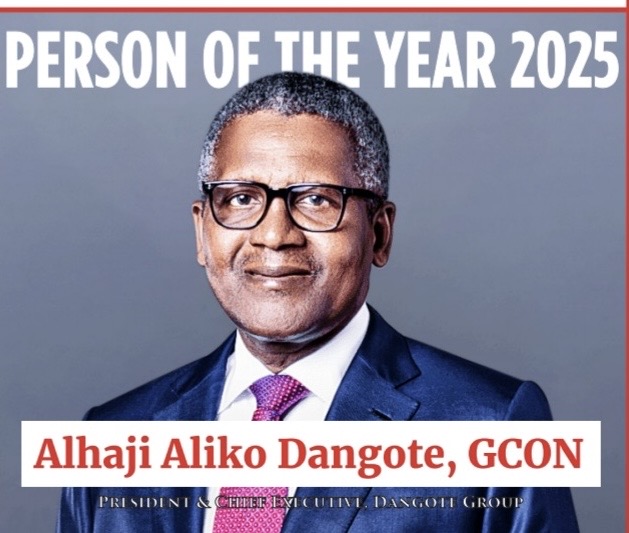
Aliko Dangote at 69 Building Beyond Self, Shaping a Continent
At 69, Aliko Dangote is not simply a figure to be celebrated for longevity or financial success. His story invites a deeper reflection—one that goes beyond wealth and into the substance of what has been built, sustained, and quietly institutionalised over time.
Across Nigeria and much of Africa, there was a period when industrial development struggled to find firm footing. Economies leaned heavily on imports, and local production—particularly at scale—was often seen as difficult, if not impractical. In that environment, it was easier to participate in trade than to commit to building. Yet, through Dangote Group, Dangote chose a more demanding path. He invested in production, in infrastructure, and in long-term capacity, often in sectors that form the backbone of economic independence—cement, sugar, fertiliser, and refining.
That decision, taken years ago, has had consequences that extend far beyond corporate balance sheets. It has contributed to reducing dependence on imports, stabilising key supply chains, and demonstrating—through practice rather than rhetoric—that African-led industrialisation is both possible and necessary. The factories that now operate across different regions are not just industrial assets; they are part of a broader economic architecture that supports jobs, stimulates local enterprise, and strengthens national resilience.
However, the true weight of this contribution is not always captured in the headline numbers. It is reflected in the quieter, less visible layers of impact. It can be seen in the small and medium-sized businesses that have grown within these industrial ecosystems, in the thousands of individuals whose livelihoods are directly or indirectly tied to these operations, and in the gradual shift in perception about what can be built locally. These are outcomes that rarely feature prominently in formal reports, yet they remain central to understanding the full scope of influence.
Beyond industry, Dangote’s engagement with social impact adds another dimension to his legacy. Through the Dangote Foundation, interventions have been directed toward areas that remain critical to human development—health, nutrition, education, and humanitarian response. While the scale of these efforts is significant, what stands out more is the approach. There is a deliberate focus on addressing real needs, often without the level of visibility that typically accompanies large-scale philanthropy. This measured approach suggests an understanding that impact is not defined solely by how widely it is seen, but by how meaningfully it is felt.
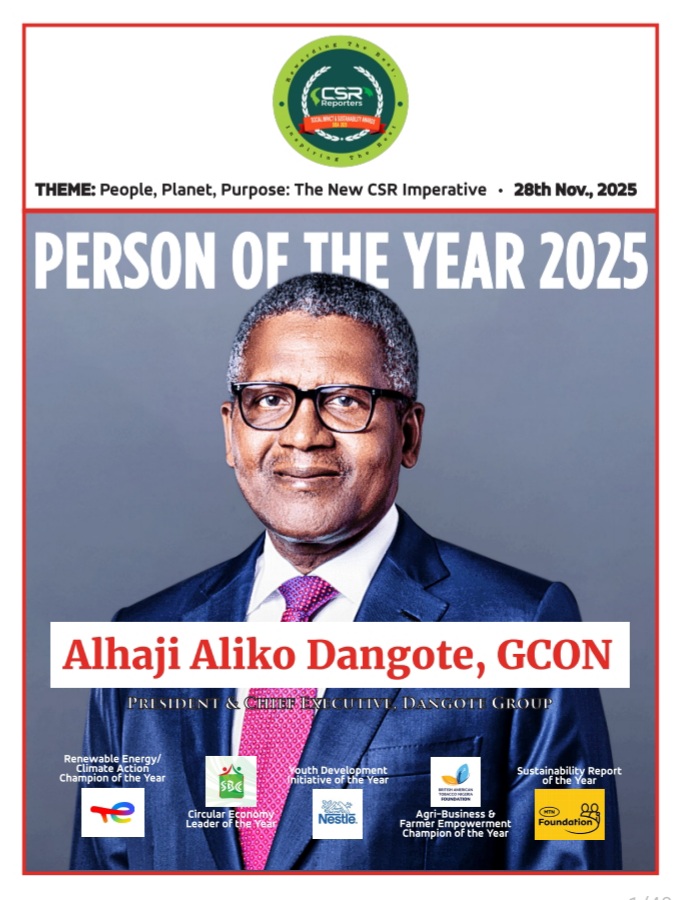
It is within this broader context of sustained economic and social contribution that recognition becomes meaningful. In 2025, CSR REPORTERS conferred on Dangote the Social Impact and Sustainability Awards (SISA) Person of the Year, not as a ceremonial gesture, but as a reflection of measurable, long-term influence across both industry and society. The recognition was anchored not just on the scale of his enterprise, but on the depth of his contribution to economic resilience, job creation, and social investment—elements that continue to shape Nigeria’s development trajectory.
Those who have encountered Dangote in more personal or professional settings often speak of qualities that are not easily documented—an attentiveness to issues, a willingness to support when necessary, and a certain steadiness in decision-making. These attributes, though less visible than factories or financial results, shape the nature of his engagement and influence how his impact is experienced by others.
His footprint, of course, extends beyond Nigeria. Across parts of Africa, investments linked to Dangote have contributed to expanding industrial capacity and strengthening regional supply chains. At a time when conversations around African economic integration are gaining momentum, this kind of cross-border industrial presence aligns with a broader vision of a continent that is more self-reliant and economically interconnected.
From a CSR and ESG perspective, Dangote’s journey sits at an interesting intersection. It reflects the convergence of enterprise, responsibility, and long-term thinking. Yet, it also raises an important consideration. As Africa’s sustainability landscape continues to evolve, the work of individuals and institutions operating at this level must not only be acknowledged but also properly documented, assessed, and understood. Impact of this scale carries implications not just for legacy, but for how future systems are designed and evaluated.
Reaching 69, therefore, is less about marking time and more about recognising continuity. The structures that have been built continue to function. The systems that have been put in place continue to support economic activity. And the broader idea—that Africa can build, sustain, and scale its own industrial capacity—continues to gain ground.
In the end, what stands out is not just what has been achieved, but what has been set in motion. Because legacy, in its most meaningful sense, is not defined by recognition, but by endurance—by the extent to which what has been built continues to create value, long after the moment of creation has passed.
At CSR REPORTERS, where the focus remains on credible impact and accountable leadership, this is perhaps the most relevant lens through which to view Aliko Dangote at 69—not simply as a successful industrialist, but as a builder of systems whose effects will continue to shape conversations around enterprise, responsibility, and development in Africa for years to come.
[give_form id="20698"]