


 csrreporters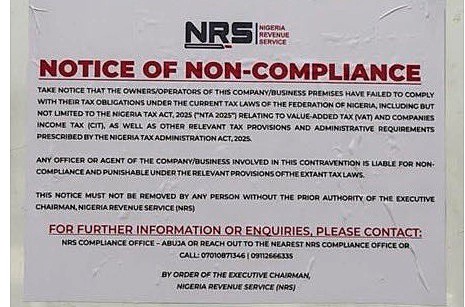
Corporate Tax Integrity, A Central Test of Responsible Business Leadership
Nigeria’s corporate sector faces growing scrutiny as regulators tighten enforcement against companies that fail to meet their tax obligations. The development follows recent action by the Federal Inland Revenue Service against offices of OPay in Lagos and Abuja over alleged violations involving Value Added Tax and Companies Income Tax.
While investigations continue, the episode has sparked a wider debate about corporate responsibility and governance in Nigeria’s fast-growing economy. For many policy makers and industry observers, the issue goes beyond enforcement. Instead, it highlights the deeper relationship between responsible business conduct and societal well-being.
Companies that benefit from a country’s economic system but avoid tax obligations risk weakening the very structures that support their growth. Consequently, tax compliance has become a defining measure of corporate accountability.
Policy or Context
Tax revenue remains central to national development. Governments depend on it to fund infrastructure, healthcare, education, and public services that sustain economic activity.
Therefore, corporate tax compliance now sits at the heart of modern Environmental, Social, and Governance standards. Investors increasingly view transparent tax behaviour as a key indicator of governance quality and long-term sustainability.
Nigeria has gradually strengthened oversight in this area. The Federal Inland Revenue Service has expanded enforcement actions while urging companies to align with national tax laws and reporting standards.
At the same time, regulators around the world are increasing scrutiny of multinational technology firms and digital platforms. Consequently, compliance expectations continue to evolve across global markets.
Within Nigeria’s expanding digital payments ecosystem, the recent action involving OPay has renewed questions about how international platforms operate within the country’s financial landscape.
Key Developments
Reports indicate that enforcement notices were placed on the sealed premises in Lagos and Abuja. Although the investigation remains ongoing, the incident has reinforced an important principle within corporate governance discussions. When businesses profit from a national economy, tax compliance forms a basic obligation.
Organizations that deliberately evade taxes do more than breach fiscal rules. They also weaken public systems that support economic stability, infrastructure development, and social welfare.
However, several Nigerian companies have taken a different path by prioritising transparency and consistent tax contributions.
One example frequently cited by regulators is the Dangote Group, led by industrialist Aliko Dangote. The conglomerate continues to rank among Nigeria’s largest corporate taxpayers.
The group reported tax remittances exceeding N402 billion in 2024 across subsidiaries such as Dangote Cement and NASCON Allied Industries. Officials have often noted that these contributions play a significant role in supporting public revenue.

CSR and ESG Implications
Corporate tax behaviour increasingly shapes ESG assessments worldwide. Investors, regulators, and civil society groups now treat aggressive tax avoidance as a governance risk.
Responsible tax practices, by contrast, signal that a company recognises its role within a broader social and economic ecosystem. Consequently, firms that demonstrate transparency in tax payments often strengthen investor confidence and stakeholder trust.
The example of the Dangote Group reflects this principle. Over the years, the conglomerate has linked its growth strategy to broader national development goals.
Beyond its tax contributions, the group has invested heavily in domestic industrial capacity. The launch of the Dangote Refinery created new momentum in Nigeria’s energy sector while expanding local refining capability.
Furthermore, the refinery recently announced reductions in the prices of petrol and diesel. The move aims to ease pressure on consumers during periods of global market volatility and rising energy costs.
Such actions illustrate a broader philosophy within responsible business leadership. Profit remains essential. However, long-term success increasingly depends on how companies balance commercial growth with societal impact.
Read More: Dangote Vision 2030 Driving Africa’s Growth
Conclusion
Nigeria’s tightening focus on tax compliance signals a wider shift toward stronger corporate governance. Regulators now expect businesses to demonstrate measurable accountability rather than rely on voluntary commitments alone.
For companies operating in Nigeria, the message is becoming clearer. Participation in a national economic system brings responsibilities alongside opportunity.
Organizations that evade tax obligations risk eroding public trust and weakening the institutions that sustain economic growth. Conversely, companies that uphold transparency and contribute fairly help strengthen the foundations of sustainable development.
As Nigeria deepens its alignment with global ESG standards, corporate tax integrity will remain a central test of responsible business leadership.
[give_form id="20698"]