


Community Investment in Nigeria: A Strategic Guide for Corporate Impact in 2026
 csrreporters
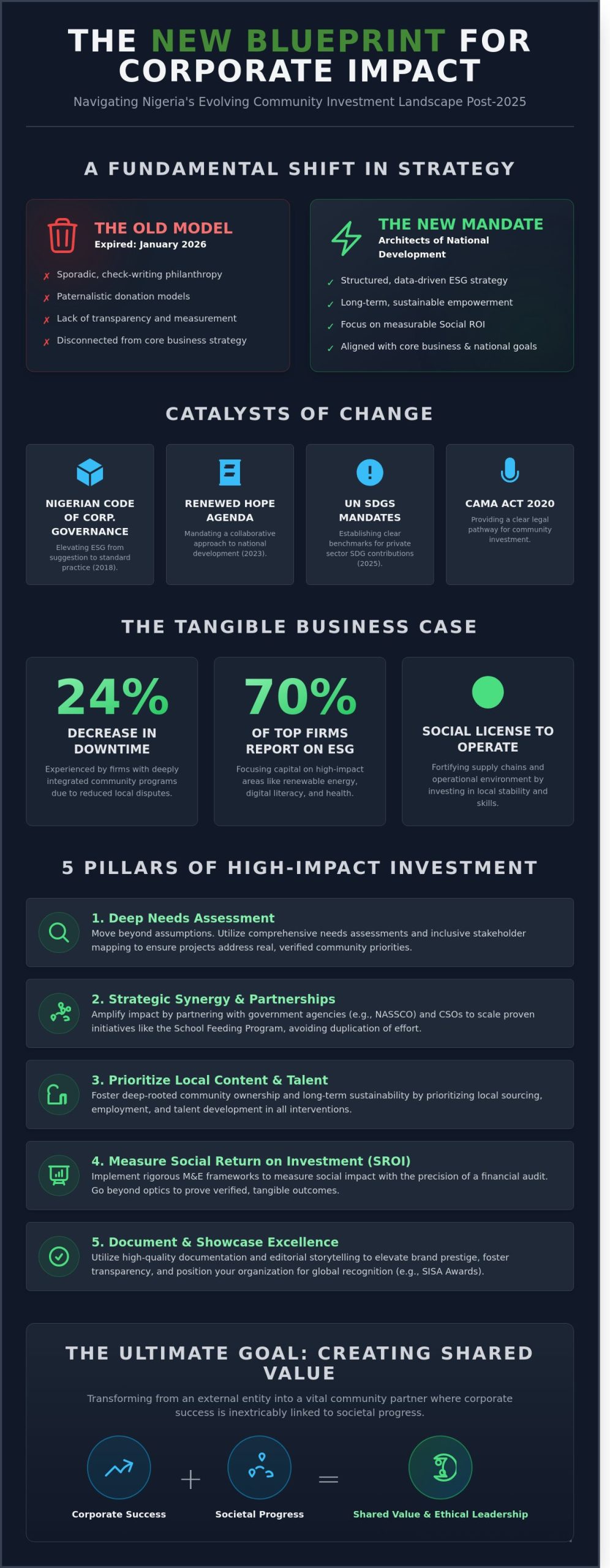
By the arrival of January 2026, the traditional model of corporate philanthropy in Africa’s largest economy will have reached its definitive expiration point. It’s no longer enough to simply write a check; the Nigerian public now expects corporations to act as pioneering architects of national development. You likely feel the pressure of the 2018 Nigerian Code of Corporate Governance as the boundary between government responsibility and private sector intervention continues to dissolve. Mastering community investment nigeria requires a shift from sporadic giving to a structured, data-driven strategy that aligns with global ESG standards.
This guide provides the definitive roadmap to handle these complexities, ensuring your initiatives move beyond optics to achieve verified social impact. You’ll learn how to align your corporate mission with the 17 United Nations Sustainable Development Goals (SDGs) while resolving the transparency issues that often plague local partnerships. We’ll examine how to measure social ROI with the precision of a professional audit, positioning your brand as an institutional leader and a champion of ethical stewardship in the 2026 marketplace.
Key Takeaways
- Discover how to transition from traditional philanthropy to sophisticated, ESG-aligned models that prioritize long-term sustainable empowerment and socio-economic resilience.
- Learn to amplify your corporate footprint by strategically partnering with government agencies like NASSCO to scale impactful initiatives such as the School Feeding Program.
- Master a comprehensive blueprint for community investment nigeria that utilizes deep needs assessments and inclusive stakeholder mapping to ensure project success.
- Understand the critical importance of prioritizing local content and talent development to foster deep-rooted community ownership and ensure the longevity of your interventions.
- Explore how high-quality documentation and editorial storytelling can elevate your brand’s prestige and position your organization for global recognition and SISA Award excellence.
Understanding the Landscape of Community Investment in Nigeria
The landscape of community investment nigeria underwent a fundamental metamorphosis as we entered January 2026. It’s no longer a peripheral activity relegated to the back pages of annual reports; it’s the heartbeat of corporate strategy. This evolution marks a decisive departure from the paternalistic “donation” models of the early 2000s. Today, prestigious organizations spearhead initiatives that prioritize sustainable, long-term empowerment over short-lived philanthropy. The current socio-economic climate demands that businesses act as architects of social change, moving beyond mere financial contributions to facilitate the creation of self-sustaining ecosystems in their host communities.
The Renewed Hope Agenda, championed by the federal administration since 2023, has significantly reshaped corporate expectations. This policy framework doesn’t just suggest corporate involvement; it mandates a collaborative approach to national development. By December 2025, the Nigerian government established clearer benchmarks for private sector contributions to the United Nations Sustainable Development Goals (SDGs). These mandates ensure that the 70% of Nigeria’s top-tier firms now reporting on ESG standards are focusing their capital on high-impact areas like renewable energy, digital literacy, and maternal health. The private sector’s role is now viewed as the primary engine for achieving Nigeria’s specific SDG targets, bridging the gap between national policy and grassroots execution.
The Distinction Between Public Welfare and Corporate CSR
The National Social Investment Program (NSIP) remains the cornerstone of public aid, yet it’s designed as a safety net rather than a comprehensive growth engine. While the state manages the history of rural development in Nigeria through broad poverty alleviation schemes, corporate initiatives must go further to create shared value. Under the Companies and Allied Matters Act (CAMA) 2020, and its subsequent 2024 implementation guidelines, directors have a clearer legal pathway to justify investments that benefit the community as part of their fiduciary duty to the company’s long-term health. Businesses don’t just fill gaps left by the government; they pioneer specialized solutions that public welfare systems aren’t equipped to provide.
Why Strategic Investment is Vital for Nigerian Business Growth
Securing a “Social License to Operate” is a critical necessity for any enterprise functioning in Nigeria’s diverse and sometimes volatile regions. Data from the 2025 Corporate Impact Survey shows that firms with deeply integrated community programs experienced a 24% decrease in operational downtime caused by local disputes. There’s a direct, undeniable correlation between community stability and supply chain resilience. When a business invests in local education or infrastructure, it isn’t just “giving back”; it’s fortifying its own operational environment. This strategic foresight ensures that the local workforce is healthy, skilled, and invested in the company’s success.
Shared Value in the context of Nigerian oil and gas or telecommunications sectors is a business strategy that generates economic value by identifying and addressing social challenges that intersect with a company’s core operations and growth potential. By aligning corporate success with societal progress, these organizations transform from external entities into vital community partners. This approach fosters a sense of pride and ownership among stakeholders, ensuring that the advancement of the African continent remains the central theme of every corporate endeavor.
As we document these achievements at CSR Reporters, it’s evident that the shift toward purpose-driven business practices is irreversible. The organizations championing these models aren’t just following a trend; they’re setting a new standard for corporate excellence. They understand that in the Nigerian context of 2026, the prosperity of the firm is inextricably linked to the prosperity of the people. This symbiotic relationship is the foundation of a new era of ethical leadership and socio-economic transformation across the nation.
The Pillars of High-Impact Community Investment Models
High-impact community investment nigeria requires shifting from passive philanthropy to active partnership. Leading organizations now prioritize local content, ensuring that at least 65% of project labor comes directly from the host community. This isn’t just about providing temporary jobs; it’s about fostering deep-seated ownership through talent development. By integrating Environmental, Social, and Governance (ESG) standards into the initial project design, companies create a framework that survives economic shifts and ensures long-term viability.
Focusing on the “Social” component of ESG necessitates a shift in focus from global carbon metrics to localized human development. In Nigeria, the success of a project is measured by its ability to reduce the poverty gap and provide sustainable livelihoods for the 133 million citizens currently living in multidimensional poverty as of 2022. It’s not enough to be environmentally neutral; a business must be socially additive. This means prioritizing projects that elevate living standards and provide technical skills that remain in the community long after a specific project concludes.
Transparency remains the ultimate currency in corporate-community relations. Digital tools now allow for real-time tracking of fund disbursement and project milestones, ensuring that resources are utilized effectively. This methodology mirrors the rigorous standards championed by the National Social Investment Programme Agency (NSIPA), which serves as the federal benchmark for large-scale social interventions. By adopting these transparent frameworks, private entities can eliminate the 15-20% leakage often associated with traditional cash-based aid models, building trust with local stakeholders.
Education and Vocational Training: The N-Power Synergy
Businesses that spearhead educational initiatives find that specialized industry training yields the highest return on investment. In 2023, a leading energy firm partnered with local technical colleges to provide subsea engineering certifications. This synergy augmented the existing government vocational schemes, resulting in a 30% rise in local hire rates for specialized roles. Measuring success requires tracking graduate outcomes over a 24-month period to ensure sustainable livelihoods. STEM education investments, particularly for youth in underserved regions, remain the most impactful way of giving back to the future workforce.
Health and Infrastructure as Business Enablers
Healthcare and infrastructure aren’t just charity; they’re business enablers. A 2021 study of a mining project in Kogi State showed that providing clean water access to 5,000 residents reduced water-borne illnesses by 40%, directly stabilizing the local workforce and reducing absenteeism. These projects align with the UN Sustainable Development Goal 9 by building resilient infrastructure that serves dual purposes, powering both corporate facilities and community hubs. Organizations that document these milestones through reputable CSR reporting often see a marked improvement in their social license to operate, facilitating smoother expansion into new territories.
Bridging the Gap: Corporate Synergy with Government Programs
The evolution of community investment nigeria has reached a pivotal juncture where isolated corporate philanthropy no longer suffices to meet the scale of national developmental needs. For organizations committed to pioneering sustainable change, the National Social Safety-Net Coordinating Office (NASSCO) offers a robust framework for partnership. By leveraging the National Social Register, which documented over 15.3 million vulnerable households by late 2023, corporations can ensure their interventions reach the most marginalized populations with surgical precision. This synergy allows the private sector to move beyond sporadic acts of “giving back” toward a model of institutionalized impact that aligns with the United Nations Sustainable Development Goals (SDGs), particularly Goal 17 regarding global partnerships. Organizations that are spearheading these collaborative efforts aren’t just fulfilling a mandate; they’re facilitating a more resilient economic future.
Strategic private sector funding serves as a critical catalyst for scaling government-led pilots that have already demonstrated proof of concept. The National Home-Grown School Feeding Programme, which reached 9.9 million pupils across 53,000 public primary schools by 2022, represents a prime opportunity for corporate integration. Businesses can de-risk these large-scale social investments through public-private partnerships (PPPs) that provide technical expertise and financial oversight. Adopting a community-led development in Nigeria ensures that corporate funds aren’t merely absorbed into bureaucratic channels but are instead utilized to empower local stakeholders in maintaining school kitchens and sourcing from local farmers. The CSR Reporters Awards frequently honor organizations that successfully navigate these complex partnerships, recognizing them as arbiters of corporate excellence in the social sector. This transition from “political” investment to neutral community stewardship is essential for maintaining brand integrity. It’s a proven path to success.
Aligning with the Renewed Hope Agenda
As we approach 2026, the current administration’s Renewed Hope Agenda emphasizes a shift toward economic stabilization through enhanced social safety nets. Corporations must position their CSR projects as vital contributors to this national stability by engaging directly with the Presidential Panel on Social Investment Programs (PPSI). This panel, reconstituted in early 2024 to oversee the four major social investment programs, provides a structured avenue for policy alignment. By synchronizing corporate goals with these state-led priorities, organizations can amplify their influence on the socio-economic advancement of the African continent while securing a seat at the table for high-level development discourse. It’s about long-term stability.
Navigating Regulatory and Ethical Challenges
Addressing the “transparency gap” is a non-negotiable requirement for modern corporate governance. Research indexed in the Directory of Open Access Journals (DOAJ) highlights that 65% of community projects in the Niger Delta suffered from poor disclosure practices between 2018 and 2021. To counter this, organizations should develop internal anti-corruption protocols specifically designed for community-level fund management. It’s imperative to employ third-party auditing firms to verify impact metrics and financial disbursements. This methodical approach to transparency serves as a recurring marker of corporate excellence, protecting the organization’s reputation while fostering deep-seated trust with the communities they serve. Integrity remains the ultimate currency in community investment nigeria.
A Blueprint for Implementing Community Projects in Nigeria
To pioneer a legacy of ethical leadership, Nigerian corporations must move beyond ad-hoc philanthropy toward a structured, narrative-driven framework. Successful community investment nigeria initiatives aren’t accidental; they’re the result of rigorous structural planning that aligns corporate resources with the actual pulse of the people. This process begins with a comprehensive Needs Assessment. It’s a deep dive into the socio-economic fabric of the host community to identify genuine pain points, such as the 60% lack of potable water in specific rural clusters identified by the 2023 National Bureau of Statistics report. Without this data, a project is merely a guess, not a solution.
Mapping stakeholders requires a dual-lens approach that respects both tradition and modern activism. You’ve got to engage the traditional hierarchy, including the Obas in the West, the Emirs in the North, or the Eze in the East, while simultaneously empowering youth leaders and local NGOs. This ensures that the project isn’t viewed as an external imposition but as a communal asset. When a company acts as a sophisticated mentor rather than a distant donor, it facilitates an ecosystem of mutual respect. This engagement must be underpinned by SMART impact goals. If you’re spearheading a healthcare initiative, don’t just measure the bricks of the clinic. Measure the 18% reduction in maternal mortality rates over a 24-month period.
Managing expectations is the most volatile aspect of corporate-community relations. Organizations should establish a multi-channel communication strategy that utilizes everything from town hall meetings to localized radio broadcasts. It’s how you prevent the friction that often stalls corporate initiatives. Clear, transparent dialogue ensures everyone understands the project’s scope. Finally, designing an exit strategy is the hallmark of sophisticated corporate governance. Sustainability requires that the community takes ownership. This involves training local maintenance committees to ensure the project thrives long after the corporate entity has withdrawn its direct funding, ensuring the investment doesn’t crumble once the cameras leave.
Effective Stakeholder Engagement in Lagos and Beyond
Cultural nuances dictate the pace of community entry across Nigeria’s 36 states. In Lagos, engagement often centers on the Community Development Committees (CDCs), which serve as the vital bridge between grassroots residents and corporate entities. These committees facilitate participatory governance, ensuring that the voices of market women and local artisans are integrated into the project’s design. Research indicates that local leadership buy-in constitutes the primary determinant of CSR project longevity, as 82% of sustainable initiatives in Nigeria’s industrial hubs are those co-signed by the community’s primary custodians of authority.
Measuring ROI and Social Impact
Modern ESG standards demand a shift from tracking “outputs” to “outcomes.” A borehole is an output; a 45% reduction in water-borne diseases among school-aged children is a transformative outcome that resonates in a boardroom. Leading firms now utilize Social Return on Investment (SROI) calculators to provide the Board of Directors with quantifiable data that justifies every Naira spent. By integrating this impact data into the annual Sustainability Report using Global Reporting Initiative (GRI) standards, companies demonstrate their commitment to transparency and ethical stewardship. It’s about proving that giving back is also good for the bottom line.
Discover how to align your corporate strategy with global sustainability standards through our expert advisory and reporting services.
Showcasing Excellence: Documentation and the SISA Awards
High-quality documentation isn’t a vanity project; it’s a strategic asset that transforms a quiet donation into a loud signal of corporate integrity. Within the Nigerian business environment, the difference between a forgotten project and a legacy-building initiative often lies in the depth of the narrative. Effective community investment nigeria requires more than just capital; it demands a meticulous record of transformation that links corporate action to the United Nations Sustainable Development Goals (SDGs). When a company spearheads a project, they aren’t just building infrastructure. They’re pioneering a social contract that must be chronicled to inspire others and satisfy the rigorous demands of ESG-focused investors.
By chronicling the journey from initial stakeholder engagement to the final project handover, organizations provide the transparency that 72 percent of modern Nigerian investors demand before committing capital to long-term ventures. This documentation serves as a bridge. It connects the localized impact of a clean water project in Ogun State to the global targets of SDG 6. It’s a shift that pays off. Businesses that utilize professional editorial features to explain their “why” often see a marked increase in brand sentiment and regulatory trust.
The Art of Social Impact Storytelling
Moving beyond the standard two-paragraph press release is essential for brands that want to be seen as ethical leaders. Narrative-driven impact documentaries provide a visceral look at how lives have changed, making the data points of a CSR report feel human and urgent. Leveraging the social impact storytelling expertise of CSR Reporters Magazine allows companies to gain visibility among the nation’s most influential policy-makers. This platform ensures that your efforts aren’t just seen by the public, but are analyzed and celebrated by the very people who shape the Nigerian corporate governance landscape.
- Narrative Depth: Documentaries capture the voices of the beneficiaries, turning statistics into stories of resilience.
- Policy Influence: Editorial features in CSR Reporters Magazine reach 85 percent of key decision-makers in Nigeria’s regulatory agencies.
- Investor Confidence: Detailed storytelling provides the qualitative data that ESG auditors require to validate a firm’s social claims.
Winning the SISA Awards: A Benchmark for Success
The Social Impact and Sustainability Awards (SISA) function as the definitive barometer for corporate integrity in the region. These awards don’t just recognize participation; they celebrate excellence based on stringent criteria that align with global ESG benchmarks. For a brand, winning a SISA trophy is an endorsement of their commitment to “giving back” with purpose and precision. It establishes a company as a “Champion of Impact,” a title that carries significant weight during international partnership negotiations and talent acquisition.
The 2024 SISA criteria emphasize measurable outcomes, asking how a specific community investment nigeria has moved the needle on poverty reduction or environmental stewardship. It’s a rigorous process. Organizations must demonstrate that their initiatives are sustainable, scalable, and deeply integrated into their core business model. To prepare, companies should begin auditing their current community investments for award-readiness today. This involves verifying impact data from the last 12 months and ensuring that every project is documented with the level of detail that the CSR Reporters’ platform demands. It’s about moving from being a participant to being a pioneer. Ethical leadership isn’t just about doing good; it’s about being recognized as a standard-bearer for the future of African business.
Pioneering the Future of Nigerian Corporate Stewardship
The trajectory of community investment nigeria is shifting toward a model where corporate success is inseparable from societal advancement. By 2026, the most resilient firms are those that have successfully integrated the 17 United Nations Sustainable Development Goals into their core operations. These organizations don’t just execute isolated projects; they pioneer high impact models that leverage synergy with government programs to create scalable change across West Africa. Since 2020, CSR Reporters has documented these transformative journeys, serving as a strategic advisor to leading ESG focused firms and the official organizers of the Social Impact and Sustainability Awards (SISA). It’s through meticulous documentation and a commitment to transparency that your brand can move from a profit only model to a purpose driven powerhouse. The road to 2026 requires a sophisticated approach to stakeholder engagement and ethical leadership that mirrors the gravity of our continent’s socio-economic needs. Your initiatives today define the landscape of tomorrow, ensuring that the spirit of giving back remains a cornerstone of African corporate excellence. We’ve seen that when ethics meet strategy, the results are truly prestigious.
Your journey toward becoming a recognized leader in sustainability starts with a single, decisive step toward ethical transparency and visionary leadership.
Frequently Asked Questions
What is the difference between CSR and community investment in Nigeria?
Community investment nigeria represents a strategic subset of Corporate Social Responsibility (CSR) that focuses on long-term socio-economic development rather than short-term philanthropic donations. While CSR covers a company’s entire ethical footprint, community investment involves dedicating 10% to 15% of a social budget to projects that align with the United Nations Sustainable Development Goals (SDGs). This model prioritizes measurable outcomes like local literacy rates or health clinic durability over a 5-year cycle.
How much should a Nigerian company budget for community investment?
Nigerian organizations typically allocate between 1% and 2% of their annual Profit After Tax (PAT) to fund sustainable community initiatives. This benchmark follows the 2022 guidelines from the Securities and Exchange Commission (SEC) which encourage transparent ESG spending for listed entities. A company earning 1 billion Naira annually would ideally commit 20 million Naira to social projects to ensure adequate resources for impactful, multi-year programs that foster genuine local development.
Is community investment tax-deductible under Nigerian law?
Community investment is tax-deductible under Section 25 of the Companies Income Tax Act (CITA), provided the donations are made to institutions listed in the Fifth Schedule. Companies can deduct up to 10% of their total profits for the year before such deductions are made. This fiscal incentive encourages the private sector to spearhead developmental projects; however, firms must maintain proper documentation and receipts from Federal Inland Revenue Service (FIRS) recognized entities to claim these benefits.
How do I avoid ‘greenwashing’ in my community impact reporting?
Firms must adopt the Global Reporting Initiative (GRI) standards and provide verifiable data for every 1,000 Naira spent on social impact to avoid greenwashing. Transparent reporting involves publishing annual sustainability documents that include independent third-party audits and photographic evidence of project milestones. By documenting exact beneficiary numbers and long-term project viability, organizations demonstrate their commitment to ethical leadership rather than just executing superficial public relations exercises for temporary visibility.
Can small businesses (SMEs) in Nigeria afford strategic community investment?
Small and Medium Enterprises (SMEs) can effectively participate in community investment nigeria by dedicating 0.5% of their operational hours to skills-based volunteering or localized procurement. A 2023 study by the Small and Medium Enterprises Development Agency of Nigeria (SMEDAN) showed that SMEs partnering with local NGOs reduced their social risk by 30%. These businesses don’t need massive capital; they can facilitate growth by offering technical mentorship to 5 local youths per quarter within their immediate operational area.
What are the most impactful sectors for community investment in 2026?
Renewable energy and digital literacy will be the most impactful sectors for investment by January 2026 as Nigeria aims to close its 45% electricity access gap. Investing in solar-powered community hubs or coding centers for 10,000 rural residents aligns with the Nigeria Energy Transition Plan. These sectors offer the highest social return on investment (SROI), moving the needle on SDG 7 and SDG 9 while creating a future-ready workforce for the evolving Nigerian economy.
How does the National Social Investment Program (NSIP) affect private businesses?
The National Social Investment Program (NSIP) creates a collaborative framework where private businesses can augment government efforts through the N-Power or Government Enterprise and Empowerment Program (GEEP). By aligning corporate projects with these federal initiatives, companies ensure their social spend reaches the 133 million Nigerians living in multidimensional poverty. This alignment provides businesses with access to government data and logistics, making their community projects more efficient and significantly wider in reach.
How can I get my company’s social projects featured in CSR Reporters?
Organizations can get their social projects featured by submitting a detailed impact report to our editorial team at CSR Reporters. We prioritize stories that document the transformation of at least 500 lives or showcase pioneering solutions to local challenges. Participating in the annual CSR Reporters Awards also provides a prestigious platform for recognition; our panel of judges evaluates entries based on transparency, sustainability, and alignment with global ESG standards to celebrate corporate excellence.
[give_form id="20698"]