


 csrreporters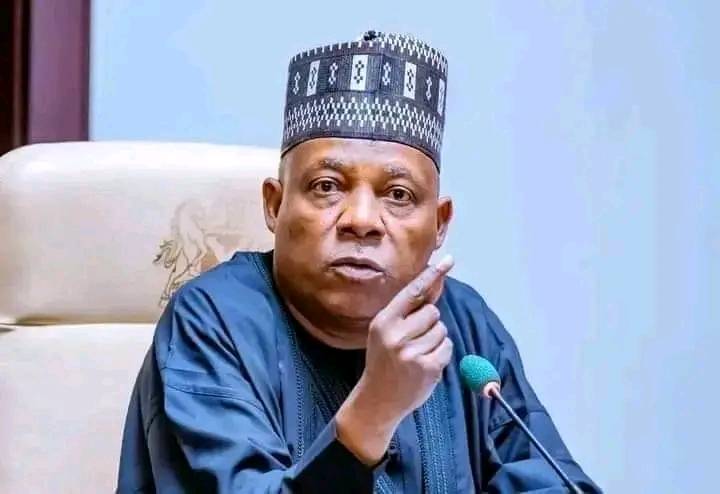
The Federal Government and state governors have jointly endorsed the Renewed Hope Ward Development Programme—a bold grassroots initiative aimed at creating jobs, improving food security, and reducing poverty in all 8,809 political wards across the country.
Unveiled by Vice President Kashim Shettima during the latest National Economic Council (NEC) meeting, the initiative will target 1,000 economically active persons per ward, sparking small-scale economic activity at the community level.
Speaking to journalists after the NEC session, Minister of Budget and Economic Planning, Atiku Bagudu, confirmed that President Bola Tinubu personally attended the meeting and commended the governors for embracing the plan. He described it as a “historic next step” in advancing the administration’s economic reforms.
“Now that macroeconomic stability has been achieved, the goal is to drive development directly to the grassroots,” Bagudu stated. “This will generate employment, reduce poverty, and enhance food security nationwide.”
The programme is set to be jointly funded by the federal, state, and local governments, leveraging increased revenue from the Federation Account. It will align with ongoing development efforts and draw inspiration from Chapter Two of Nigeria’s Constitution, which calls on all tiers of government to promote a dynamic, self-reliant economy.
Describing it as a “Federation project,” Bagudu announced that his ministry will serve as the programme’s secretariat. He also highlighted the IMF’s recent Article IV report, which applauded Nigeria’s reform path—particularly the removal of fuel subsidies, foreign exchange liberalization, and enhanced revenue collection—as key steps toward economic resilience.
“President Tinubu believes that investing in the talents and productivity of Nigerians at the ward level is essential,” Bagudu added. “This programme is how we translate reforms into real impact.”
Also speaking after the meeting, Imo State Governor Hope Uzodinma said the NEC unanimously supported the initiative, noting that it would bring the Renewed Hope Agenda closer to ordinary Nigerians.
“The president has introduced a way for the gains of reform to reach the common man on the street,” Uzodinma said. “With more revenue now flowing to federal and subnational governments, this is how we ensure the funds make a meaningful difference.”
Uzodinma also revealed that NEC deliberated on environmental impact assessments for major infrastructure projects like the Lagos-Calabar Coastal Road and Sokoto-Badagry Highway. A joint committee will soon be established to coordinate progress on these federal-state collaborations.
With NEC’s full support, the Ward Development Programme is expected to be a key pillar in delivering the Renewed Hope Agenda and unlocking Nigeria’s $1 trillion economy ambition—by building upward from the grassroots.
[give_form id="20698"]“The reform policies are taking shape,” Uzodinma concluded. “Now the emphasis is on making sure every Nigerian feels the result—right from their own community.”