


 csrreporters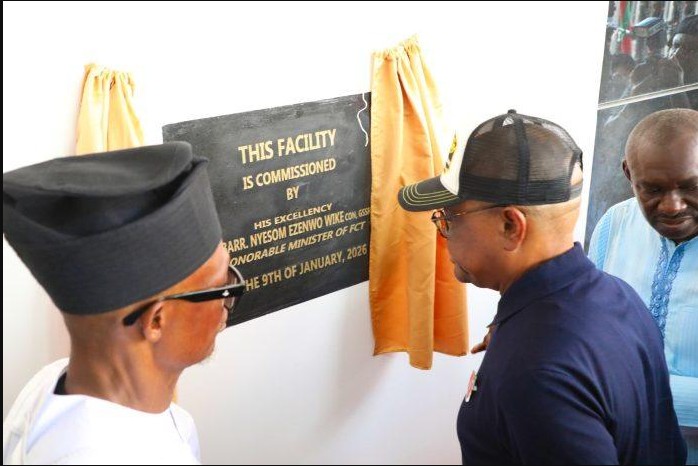
Giolee Global Resource Ltd: A second look at Wike’s inauguration of CSR efforts
Remarks by the Minister of the Federal Capital Territory, Mr. Nyesom Wike, during the inauguration of the corporate office of Giolee Global Resource Ltd in Port Harcourt, provide a compelling focal point for a deeper examination of the state of Corporate Social Responsibility and sustainability in Nigeria.
While on the surface, the event celebrated a local business achievement, the minister’s advocacy for “life-impacting CSR” and the company’s stated commitments reveal both the evolving promise and the persistent challenges of embedding genuine social and environmental stewardship within the fabric of indigenous enterprise.
CSR Reporters notes, Minister Wike’s call moves beyond the outdated notion of philanthropy as mere charity or public relations. His emphasis on “mutual benefits” and “building the needed trust” aligns with a more strategic, stakeholder-centric model of CSR.
This model recognizes that a company’s long-term success is inextricably linked to the health, stability, and prosperity of its host community. Giolee Global’s cited initiatives, providing a 500 KVA transformer, sponsoring the school fees of 50 students, and offering facilities for educational excursions and industrial training are tangible examples of this philosophy in action. These are not random acts of kindness but targeted investments in social infrastructure (electricity), human capital development (education), and future talent pipeline (training). Such initiatives directly address critical gaps in public service delivery, fostering goodwill and creating a more stable, skilled, and supportive operating environment for the company itself. This symbiotic relationship is the core of sustainable CSR.
However, a critical review must question the depth, scalability, and integration of these efforts. True, strategic CSR is not a series of isolated projects but is woven into the company’s core operations and governance. The test for Giolee Global, and companies it seeks to inspire, will be whether these community investments are part of a formal, transparent, and accountable CSR strategy developed in consultation with the community, or remain discretionary benevolence dependent on the founder’s goodwill. Furthermore, Wike’s lament that “there are so many companies that don’t care about corporate social responsibility” underscores a systemic issue: the voluntary nature of CSR in Nigeria. Without stronger regulatory frameworks or incentives that mandate or encourage substantive social investment, progress remains uneven and often tied to the personal ethics of individual business leaders.
The sustainability angle of this narrative is twofold: Environmental and Economic.
Giolee Global’s profile as a company “delivering world-class environmental solutions for sustainability” in the oil, gas, and petrochemical sectors places it at the heart of Nigeria’s most pressing sustainability paradox. The industries it serves are historically associated with significant environmental degradation. Therefore, the company’s commitment to “environmental consultancy and technical services” must be scrutinized through the lens of impact. Does its work genuinely advance environmental remediation, pollution prevention, and the transition to cleaner practices within its client industries? Or does it simply help clients maintain a regulatory license to operate? The company’s own sustainability credentials, its carbon footprint, waste management, and internal environmental policies are just as important as the services it sells. A genuine commitment to sustainability requires that its operational footprint in its new Port Harcourt office reflects the same “world-class” environmental standards it ad
Economically, the sustainability of this model is highlighted by both Wike and the company’s founder, Mr. Lesi Maol. Wike rightly commended the decision to build in Port Harcourt, noting its benefits for local employment and Rivers State’s Internally Generated Revenue (IGR). This represents a crucial form of place-based economic sustainability, reinvesting capital in the region from which wealth is often extracted. It counters the trend of corporate flight to Lagos and Abuja, helping to build local economies and reduce regional disparity. Maol’s gratitude for the Certificate of Ownership, handed over by Wike as governor, also points to a foundational element of sustainable business: legal legitimacy and access to finance. This simple administrative act facilitated the company’s ability to grow, invest, and now contribute back, demonstrating how effective, non-corrupt governance is a prerequisite for private-sector-led sustainable development.
Yet, this piece would be incomplete without acknowledging the inherent tensions. The minister, a political figure, is inaugurating a project and praising a benefactor of a community in a region where he once governed. This intertwining of political legacy, business growth, and community development is a nuanced reality of the Nigerian context. It raises questions about the objectivity of such endorsements and the potential for CSR to be conflated with political patronage. For CSR to be truly sustainable and impactful, it must be institutionalized within the company and demanded as a right by empowered communities, not merely bestowed as a gift under the gaze of political benefactors.
What to take away from this? It is clear.
The event in Port Harcourt serves as a microcosm of Nigeria’s CSR and sustainability journey. It showcases a positive shift towards strategic, community-embedded social investment and highlights the critical role of indigenous companies in fostering local economic sustainability. Minister Wike’s advocacy is a timely push in the right direction. However, the path forward requires moving from commendable examples to systemic change. This necessitates companies like Giolee Global integrating CSR and sustainability into their core business strategy with clear metrics and transparency, communities moving from beneficiaries to active stakeholders, and governments considering policies that make “life-impacting CSR” a standard business practice, not an exceptional virtue. Only then can the mutual benefits Wike envisions become a widespread engine for inclusive and sustainable development.
[give_form id="20698"]