csrreporters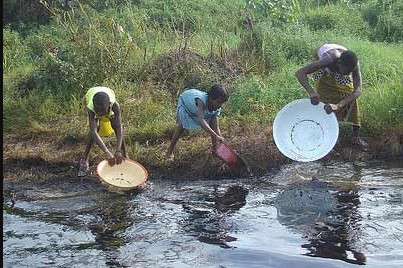
IOCs Must Honour Their Commitments to Host Communities
Nigeria’s oil-producing communities are once again growing restless not because of militancy or environmental disasters this time, but because the promises of the Petroleum Industry Act (PIA), particularly the Host Communities Development Trusts (HCDTs), are being betrayed by the very Indigenous Oil Companies (IOCs) who were expected to lead the charge for fairness and accountability.
Recall that when the PIA was signed into law in 2021, it was celebrated as the dawn of a new era, a law that would ensure oil-bearing communities finally get a tangible stake in the wealth flowing from their lands. For decades, these communities had endured pollution, neglect, and deprivation while their resources enriched others. The HCDT provision was designed to correct that imbalance by mandating all operating companies to contribute three per cent of their annual operating expenditure into a trust fund that directly finances development projects in their host areas.
The spirit of the law is clear: to put communities at the centre of decision-making and development. Each trust was to be managed by a Board of Trustees and a Management Committee, with local representation ensuring that the funds serve genuine community needs from education and healthcare to infrastructure and environmental restoration. But nearly four years later, this noble idea has suffered the same fate as many good Nigerian policies well-conceived on paper, poorly executed in practice.
The Senate Committee on Host Communities recently raised alarm over the widespread non-implementation of the trusts. At a function in Rivers State where TotalEnergies EP Nigeria Limited commissioned seven projects under its Obagi Oilfield HCDT, the Committee’s Chairman, Senator Benson Agadaga, applauded the company’s effort but condemned the nonchalance of several Indigenous operators who have failed to establish or properly fund their trusts. He directed the Nigeria Upstream Petroleum Regulatory Commission (NUPRC) to sanction all defaulters, declaring that no operator should profit from Nigerian oil fields while neglecting the very people who bear the burden of extraction.
Agadaga’s warning was timely. The Niger Delta’s peace, fragile as it is, rests heavily on trust and inclusion. Decades of exploitation and environmental degradation have left communities suspicious of both government and corporate intentions. The PIA was supposed to rebuild that trust through structured, transparent, and locally driven development. Yet, the reluctance of many Indigenous Oil Companies to comply threatens to reopen old wounds.
At the heart of this issue lies a fundamental contradiction. These Indigenous companies emerged as the new face of Nigerian oil, meant to replace the dominance of foreign multinationals with local ownership, sensitivity, and accountability. They are supposed to understand the communities better, to embody the Nigerian spirit of shared prosperity. Instead, some of them have replicated the same exploitative patterns once blamed on the foreign majors.
Host communities across Delta, Bayelsa, Rivers, and Akwa Ibom states have accused several Indigenous operators of running opaque operations, avoiding consultation, and failing to remit the mandatory 3 per cent contribution. Many of these firms, buoyed by political patronage or weak regulatory oversight, treat the HCDTs as a nuisance rather than a legal and moral duty. This kind of arrogance is dangerous.
Nigeria’s experience shows that neglecting host communities has dire consequences. The Niger Delta insurgency of the 2000s was born from decades of marginalisation and environmental neglect. The Ogoni crisis, which culminated in the execution of Ken Saro-Wiwa and his colleagues in 1995, remains an international symbol of environmental injustice. Even today, the oil slicks, gas flares, and poisoned rivers of Ogoniland stand as a permanent indictment of both corporate greed and state failure.
If these Indigenous operators truly see themselves as partners in progress, they must understand that sustainability is not optional, it is essential for their own survival. When communities feel excluded, oil flow becomes insecure. Pipelines are vandalised, facilities sabotaged, and social licence to operate evaporates. Peace and productivity in the oil belt depend not on military might but on mutual respect.
The PIA was a response to this reality. By legislating a clear structure for community benefits, it sought to transform CSR from tokenism into shared responsibility. Companies like Seplat Energy, Aiteo, Shoreline Natural Resources, and Eroton Exploration were expected to lead by example, given their deep local roots. Yet, even in states like Bayelsa and Delta, reports indicate that several Indigenous firms have either delayed or politicised the implementation of their HCDTs.
The National Chairman of Host Communities of Nigeria Producing Oil and Gas and Pipeline Impacted States (HOSTCOM), Chief Mike Emuh, has lamented this repeatedly. He argues that while a few firms, especially those with international partnerships, have made progress, many Indigenous operators “are still dragging their feet, frustrating the communities’ hope.” Emuh warns that these companies risk “turning a law of peace into a source of fresh crisis.” His warning deserves attention.
There are positive examples worth emulating. The TotalEnergies Obagi Oilfield HCDT recently delivered seven projects in Rivers State, including healthcare centres, agricultural empowerment initiatives, and education facilities, all identified and prioritised by the communities themselves. Similarly, Seplat Energy has maintained consistent community development programmes in Delta and Edo States, focusing on teacher training, school renovations, and scholarship schemes. These examples show that partnership works when intentions are genuine.
However, many others have failed to engage meaningfully. In some cases, the composition of the trust boards has been manipulated by company-appointed loyalists, undermining the entire idea of community ownership. In others, funds are poorly managed, and projects are abandoned halfway. These lapses betray both the law and the spirit of CSR.
The Nigerian government cannot continue to look the other way. The NUPRC must go beyond issuing circulars and warnings; it must begin publishing compliance lists, naming and shaming defaulting firms. The PIA grants the Commission power to enforce compliance, it must use it. Public disclosure is one of the most powerful tools of accountability. When communities know which companies are fulfilling their obligations and which are not, they can demand justice.
States, too, must avoid politicising the process. Governors have no business hijacking the trusts or deciding which community project gets funded. The HCDTs belong to the people, not to state governments or company executives. Politicisation will only erode confidence and fuel conflict.
Beyond enforcement, the deeper question is whether Indigenous Oil Companies understand what sustainability truly means. CSR in the oil sector is not about cash gifts, scholarships, or food donations during festive seasons. It is about building resilience, schools, hospitals, clean water systems, environmental restoration, and skills training that empower communities for generations. The people of the Niger Delta do not need handouts; they need justice.
Nigeria’s Indigenous operators often boast of being “Nigerian solutions for Nigerian problems.” That slogan will ring hollow if they continue to replicate the extractive patterns of the past. True indigenisation should mean deeper empathy, better governance, and more sustainable practices not just local names with foreign habits.
Environmental restoration remains one of the most neglected areas. Many communities around Egbema, Gbaramatu, Ibeno, and Brass continue to live amidst oil pollution with little or no remediation. The Hydrocarbon Pollution Remediation Project (HYPREP), initiated to clean up Ogoniland, has made painfully slow progress, while Indigenous firms operating in nearby fields appear unconcerned. This is unacceptable. Every operator must be made to implement environmental and social impact assessments with verifiable follow-up actions.
The moral logic is simple: communities that bear the burden of extraction must also share in its benefits. Anything less is exploitation. The HCDTs offer a fair and transparent mechanism for this, but only if companies honour their obligations in both letter and spirit.
For Nigeria, the stakes are high. Oil remains a major source of revenue, but its future is uncertain as the world moves toward renewable energy. If host communities remain alienated, the sector’s decline will only deepen national instability. However, if Indigenous Oil Companies embrace genuine sustainability, investing in education, technology, and green initiatives, they can become catalysts for inclusive growth beyond oil.
It is time for Indigenous operators to choose the path of integrity. They must see host communities not as obstacles but as partners; not as beneficiaries of charity but as co-owners of shared progress. Companies like Aiteo, Seplat, Heritage Oil, and others should take the lead, showing that Nigerian firms can do CSR differently, transparently, responsibly, and sustainably.
The government must enforce; the regulators must monitor; the media must report; and the people must hold these companies accountable. Anything short of that will render the PIA another failed reform, another missed opportunity to turn Nigeria’s oil wealth into a source of collective upliftment rather than division.
For more than six decades, oil has flowed from the creeks of the Niger Delta, but the people have drunk from poisoned streams. That history cannot be allowed to repeat itself under the watch of Indigenous Oil Companies. The PIA gave Nigeria a second chance at justice. The Indigenous operators must now prove they deserve the privilege of that responsibility.
If they fail, they will not just lose the trust of their host communities, they will lose their right to operate at all.