


 csrreporters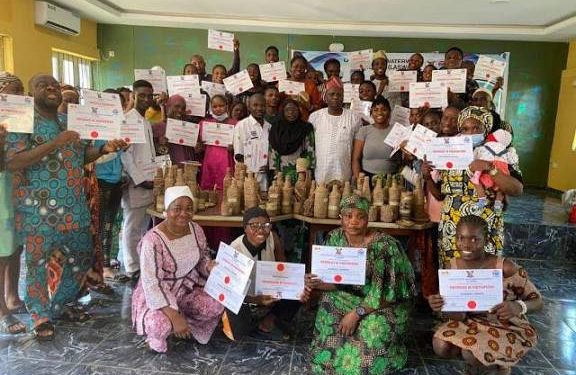
The Lagos State Waterways Authority (LASWA) has trained 50 women and young people in Eredo Local Council Development Area (LCDA), Epe, on how to convert water hyacinth into sustainable, income generating ventures, reinforcing the state’s commitment to environmental protection and inclusive economic growth.
The five day capacity building programme addressed the dual challenge of water hyacinth infestation in Lagos waterways and limited livelihood opportunities in riverine communities. Participants were equipped with practical skills to harvest, process, and recycle the invasive aquatic plant into commercially viable products.
Implemented in partnership with Mitimeth, a social enterprise specialising in eco-friendly innovations, the training combined hands-on demonstrations with sessions on safety practices, entrepreneurship, and sustainable environmental management. Beneficiaries learned how to transform an environmental nuisance into market ready products, creating opportunities for micro, small and medium-scale enterprise (MSME) development.
Speaking at the close of the programme, the Special Adviser to the Governor on Blue Economy, Mr. Oluwadamilola Emmanuel, reaffirmed LASWA’s dedication to initiatives that enhance waterway safety, protect aquatic ecosystems, and empower riverine communities. He noted that recycling water hyacinth aligns with Lagos State’s blue economy agenda, which prioritises sustainability, job creation, and inclusive growth.
Facilitators from Mitimeth provided personalised guidance, enabling participants to produce handcrafted items from recycled materials. Several trainees expressed interest in forming cooperatives and establishing micro-enterprises to commercialise their skills.
The Executive Chairman of Eredo LCDA, Hon. Monsuru Akinloye, commended LASWA for the initiative, describing it as a practical intervention that simultaneously reduces environmental degradation and promotes sustainable livelihoods for women and youths.
LASWA disclosed that more than 450 women and young people have benefitted from similar programmes across Lagos State, with plans underway to scale the initiative statewide as part of its broader environmental stewardship and sustainable economic development strategy.