


 csrreporters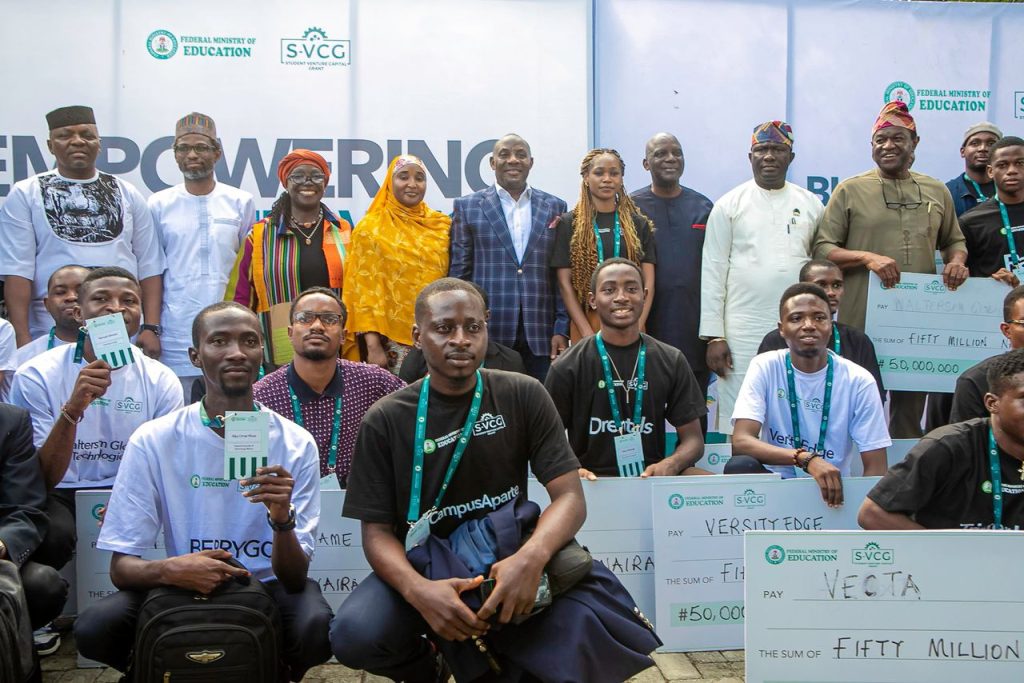
Nigeria’s innovation ecosystem recorded a notable milestone with the Federal Government’s disbursement of ₦2.2 billion to 45 student-led ventures. The funding followed a rigorous and competitive process under the 2026 Student Venture Capital Grant bootcamp. From over 30,000 applications submitted across 404 tertiary institutions, only a small group of finalists progressed to the final stage.
This development reflects a broader policy direction that positions tertiary institutions as hubs for innovation, entrepreneurship, and practical problem-solving. It also reinforces the growing role of public funding in shaping early-stage ventures, particularly those led by young people.
At the same time, the diversity of ideas emerging from the program highlights a shift in how innovation is being defined. Student ventures are no longer limited to theoretical projects. Instead, they increasingly address real-world challenges across healthcare, mobility, commerce, and energy.
Innovation Expands Beyond the Classroom
Student-led ventures supported through the initiative demonstrate how innovation can move quickly from concept to application. Many solutions focus on improving everyday experiences through technology and data-driven tools.
For instance, one category of solutions that won addresses access to healthcare. These platforms allow users to describe their symptoms or medication needs and receive instant guidance. They also connect users to nearby pharmacies where required medications are available. As a result, delays in accessing essential drugs can be reduced, especially in urban areas where availability varies.
For another, it was the development of digital navigation tools to improve movement within large institutional environments. These platforms provide interactive maps, real-time location tracking, and searchable directories of key facilities. Users can locate lecture halls, administrative offices, and service points with ease. Furthermore, community-driven updates help keep information accurate and relevant.
Such solutions demonstrate how student innovators are focusing on practical challenges. They also show how technology can simplify systems that are often overlooked but widely experienced.
Sustainability as a Core Design Principle
Alongside digital innovation, sustainability continues to shape the direction of many ventures. Some of the projects focus on renewable energy and resource efficiency. One of the winners was a student-built solar power system with an aim to address energy gaps in communities and institutions.
This aligns with Nigeria’s broader energy transition goals. It also responds to the persistent challenge of unreliable power supply. By providing alternative energy sources, such ventures contribute to both environmental sustainability and economic productivity.
In addition, sustainability appears in less obvious forms. Digital solutions that reduce unnecessary travel or improve resource allocation also contribute to environmental goals. For instance, platforms that help users locate services quickly can reduce fuel consumption and time wastage.
Therefore, sustainability is not limited to environmental projects alone. It is increasingly embedded in how solutions are designed and delivered.
Building Micro-Economies Within Campuses
Another of the winners built a localized digital marketplace. The focus was on enabling peer-to-peer commerce within campus communities. A platform like this will allow users to buy and sell products such as textbooks, fashion items, and event tickets.
Beyond transactions, it fosters collaboration and economic participation. Students can offer services, promote small businesses, and connect with others who share similar needs. As a result, there is contribution to the development of micro-economies within educational institutions.
Moreover, it reflects a broader shift toward community-driven innovation. Rather than targeting external markets immediately, many student ventures begin by solving problems within their immediate environment. This approach allows them to test ideas, gather feedback, and refine their models before scaling.

Youth Entrepreneurship and Economic Inclusion
The scale of participation in the grant program underscores the growing interest in entrepreneurship among Nigerian youth. Students are increasingly exploring business opportunities alongside their academic pursuits.
This trend has important implications for employment. By supporting student ventures, the government encourages self-employment and reduces dependence on traditional job markets. In addition, successful ventures have the potential to create jobs for others, thereby contributing to economic inclusion.
Furthermore, programs like the S-VCG bootcamp provide more than funding. Participants gain exposure to mentorship, technical support, and collaborative learning environments. These experiences help build essential skills such as critical thinking, financial planning, and adaptability.
As a result, even participants who do not receive funding still benefit from the process. They leave with improved ideas and a better understanding of how to navigate the entrepreneurial landscape.
The Need for Structured Impact Measurement
While the funding marks a significant step, the long-term value of such initiatives depends on measurable outcomes. Therefore, tracking and documenting impact becomes essential.
Firstly, impact measurement helps determine whether funded ventures achieve their intended goals. Metrics such as user adoption, revenue growth, and job creation provide insights into performance. For sustainability-focused projects, environmental indicators such as energy savings or waste reduction also become relevant.
Secondly, transparent reporting builds trust among stakeholders. Public funding requires accountability, and clear data helps demonstrate that resources are being used effectively. Without consistent tracking, it becomes difficult to assess the true value of these investments.
In addition, impact data can guide future decision-making. Policymakers can identify which sectors deliver the most value and adjust funding priorities accordingly. This approach ensures that resources are directed toward areas with the highest potential for impact.
Strengthening Data Culture in Early-Stage Ventures
Despite its importance, impact tracking remains a challenge for many early-stage ventures. Startups often prioritize product development and market entry over data collection. As a result, valuable insights may be lost.
To address this gap, support structures should include guidance on monitoring and evaluation. Simple frameworks can help founders track key indicators from the outset. Digital tools can also simplify the process by automating data collection and reporting.
Moreover, building a culture of accountability requires consistent engagement. Founders need to understand that impact measurement is not just a reporting requirement. It is a tool for growth and improvement.
At the same time, qualitative insights should complement quantitative data. User feedback, case studies, and testimonials provide context that numbers alone cannot capture. Together, these elements create a more complete picture of impact.
Collaboration as a Growth Enabler
The success of student ventures often depends on collaboration. Government agencies, educational institutions, and private sector partners each play a role in supporting innovation.
For instance, partnerships with technology providers can enhance product development. Collaboration with industry experts can improve market relevance. Meanwhile, institutional support ensures that students have access to the resources they need to experiment and build.
This interconnected approach strengthens the ecosystem. However, sustained coordination remains necessary to maintain momentum. Without it, promising ideas may struggle to transition from pilot stages to scalable solutions.
Sustaining Momentum in Nigeria’s Innovation Ecosystem
The recent grant initiative highlights a growing recognition of student-led innovation as a driver of national development. It also signals a shift toward more structured and impactful funding approaches.
However, sustaining this momentum will require consistency. Continued investment, effective monitoring, and strong support systems must work together. In addition, expanding access to underserved regions can further strengthen the ecosystem.
Ultimately, the intersection of innovation, sustainability, and youth entrepreneurship presents significant opportunities. Student ventures are demonstrating their ability to address real challenges while contributing to economic growth.
The next phase will depend on how well these efforts are tracked, supported, and scaled. If managed effectively, they can play a meaningful role in shaping Nigeria’s future economy.
[give_form id="20698"]