csrreporters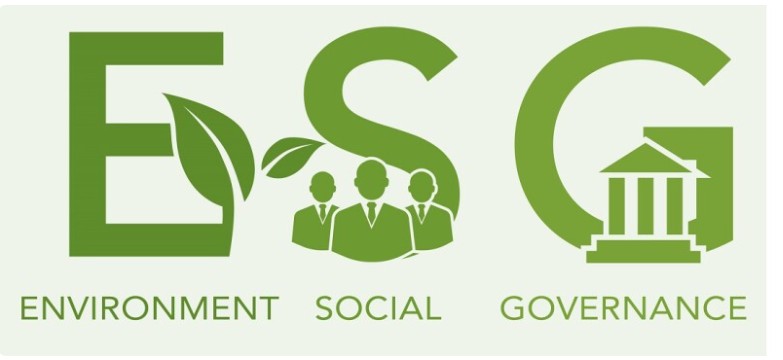
Mainstreaming ESG for Nigerian Businesses
For decades, Corporate Social Responsibility in Nigeria has been treated as an act of goodwill, a discretionary choice that businesses make when they feel generous or wish to polish their image.
The result has been a long list of donations, boreholes, orphanage visits, and publicized handovers of food items, all labeled as CSR. While such gestures carry immediate relief, they fall short of answering the deeper question of sustainability, accountability, and long-term impact. In today’s global business environment, the world has moved beyond the narrow idea of charity and embraced a broader framework that ties corporate performance to environmental, social, and governance (ESG) standards. Nigerian businesses can no longer afford to lag behind. Mainstreaming ESG is no longer a matter of choice; it is an existential requirement for companies that hope to remain relevant, competitive, and respected in the years ahead.
The distinction between CSR and ESG lies at the very heart of this evolution. CSR has often been seen as a peripheral function, something to showcase in glossy brochures or end-of-year reports. ESG, on the other hand, penetrates the core of a company’s operations. It demands that businesses interrogate how their activities affect the environment, how they treat employees and communities, and whether their governance structures reflect transparency, inclusivity, and accountability. Unlike CSR, ESG is not episodic; it is systemic. It shifts the conversation from “what we give back” to “how we do business.” And in making that shift, it places Nigerian companies on the same global table where investors, regulators, and consumers are increasingly judging enterprises not only by their profits but by their principles.
Globally, the appetite for ESG compliance is growing. Investors are directing capital to companies that demonstrate strong ESG commitments because they are seen as less risky, more resilient, and better aligned with the long-term interests of society. Consumers are gravitating toward brands that take environmental stewardship seriously, treat workers fairly, and stand up for ethical governance. Regulators are crafting policies that demand disclosures in sustainability reporting, and development finance institutions are making ESG frameworks prerequisites for funding. For Nigeria, a country that struggles to attract foreign direct investment and is desperate for private capital inflows, ignoring ESG could mean exclusion from the mainstream of global commerce.
Yet, the path toward mainstreaming ESG in Nigeria is fraught with challenges. Many companies still lack the understanding of what ESG truly entails. For some, it is simply the latest buzzword; for others, it is an abstract global construct disconnected from local realities. The challenge is compounded by limited capacity in ESG reporting, weak regulatory enforcement, and a business culture that prioritizes short-term gains over long-term sustainability. Small and medium-sized enterprises, which dominate Nigeria’s economic landscape, often see ESG as a burden rather than an opportunity, because they equate it with expensive reporting frameworks and foreign standards that are difficult to adapt. This perception must be dismantled if the Nigerian corporate sector is to move forward.
The good news is that ESG need not be seen as a foreign imposition. At its core, it builds on values that resonate deeply with Nigeria’s social and cultural fabric: stewardship of the land, fairness in human relations, respect for community, and the expectation that leaders should be accountable. The challenge lies in translating these values into measurable business practices that can be tracked, reported, and benchmarked against global best practice. Nigerian companies need practical guidance, context-driven tools, and a mindset shift that reimagines ESG as a source of value creation rather than a compliance headache.
Transitioning from CSR to ESG requires deliberate steps. First, businesses must integrate sustainability into their strategy, not as an afterthought but as a driver of decision-making. A company’s board must be educated and engaged on ESG matters, because governance sits at the center of the framework. Without leadership buy-in, ESG risks being reduced to another box-ticking exercise. Second, Nigerian companies must embrace disclosure. Transparency builds trust, and trust drives market confidence. This means aligning reporting structures with recognized frameworks such as the Global Reporting Initiative (GRI), the Sustainability Accounting Standards Board (SASB), or the UN Sustainable Development Goals (SDGs). Third, companies must invest in capacity building for their teams, so that sustainability officers, accountants, and managers understand not only the language of ESG but also how to collect, analyze, and report relevant data.
Real-life examples show why ESG matters. Globally, companies like Unilever have built competitive advantage by embedding sustainability in their business models. In South Africa, the adoption of ESG by leading banks has opened them to global capital markets that would otherwise have bypassed them. In Nigeria, companies in the financial sector that have embraced sustainability reporting, such as Access Bank and Stanbic IBTC, are already reaping reputational and investment benefits. These are not acts of charity; they are strategic moves that reinforce competitiveness and resilience. By contrast, companies that ignore ESG run reputational risks that can trigger boycotts, sanctions, or divestments. Greenwashing—making unsubstantiated claims about sustainability may win short-term applause but eventually backfires when scrutiny reveals the truth.
Importantly, mainstreaming ESG is not only about satisfying foreign investors or regulators. It is about aligning business with the urgent realities Nigeria faces: climate change that is shrinking farmlands and displacing communities, pollution that threatens human health, unemployment that drives social unrest, and governance failures that erode trust in institutions. Nigerian businesses operate within these realities, and their survival depends on how they adapt to them. Embedding ESG principles equips companies to anticipate risks, respond to crises, and contribute solutions to the very challenges that threaten their operating environment.
The role of industry associations, media platforms, and advocacy groups becomes crucial here. They can serve as interpreters of ESG, breaking down the jargon into local languages and practical tools that Nigerian managers can act upon. They can provide templates for reporting, highlight best practices, and expose greenwashing. Universities and professional bodies also have a duty to incorporate ESG into their training, so that the next generation of Nigerian business leaders see sustainability not as a favor to society but as the foundation of business success. Government, too, must move beyond rhetoric and create a regulatory ecosystem that incentivizes disclosure, rewards compliance, and penalizes negligence.
Ultimately, the journey from CSR to ESG is about mainstreaming impact. It is about ensuring that the energy invested in corporate giving is matched, if not surpassed, by the energy invested in transforming how companies operate day to day. Nigerians no longer need more boreholes without maintenance, or scholarships without job pathways. What the country needs are companies that take responsibility for their carbon footprint, design inclusive workplaces, support fair trade, protect human rights, and operate under governance systems that are transparent and ethical. Such companies are not only serving society; they are future-proofing themselves against the storms of economic uncertainty, environmental crisis, and social volatility.
The time has come for Nigerian businesses to embrace this shift with urgency. The global economy is moving fast, and capital is flowing toward sustainability. Those who fail to adapt risk irrelevance; those who embrace the transition stand to gain not only reputational capital but also competitive advantage and resilience.
Mainstreaming ESG is not about abandoning the culture of giving back but about embedding responsibility into the DNA of how companies operate. It is about moving from writing cheques to writing strategies, from charity to impact, from peripheral gestures to core commitments. Nigeria’s corporate sector has the potential to rise to this challenge and, in doing so, to secure its place not only in Africa’s economic future but in the global sustainability movement.