


 csrreporters
Stakeholders Meet to Advance Cassava Bioethanol Development
Nigeria is taking further steps to strengthen renewable energy and agricultural value chains through the development of cassava based bioethanol. Recently, stakeholders gathered in Nasarawa State for a capacity building workshop focused on the Cassava Bio-Ethanol Value Chain Development Project.
The workshop took place between March 11 and 12, 2026, and brought together representatives from government agencies, regulators, agricultural institutions, and farmer associations. Officials say the initiative aims to expand the production of fuel grade ethanol for blending with Premium Motor Spirit, commonly known as petrol.
In addition, the programme seeks to reduce Nigeria’s reliance on imported energy products while encouraging local industrial growth. As a result, policymakers view the project as part of broader efforts to strengthen Nigeria’s energy security and diversify the economy.
Reducing Energy Imports Through Local Biofuel Production
During the workshop, officials from the Federal Ministry of Budget and Economic Planning explained the economic reasoning behind the initiative. Nigeria continues to spend large amounts of foreign exchange on imported fuel products. Consequently, the government is exploring domestic alternatives that can ease pressure on the country’s foreign reserves.
One option involves blending locally produced ethanol with petrol. If implemented at scale, the approach could reduce fuel import costs while supporting the development of a domestic biofuel industry.
Officials also noted that the programme aligns with wider economic reforms designed to support currency stability and reduce external economic pressures. At the same time, it aims to encourage the growth of a localized bio circular economy.
Such an economy connects agriculture, industry, and energy production. Therefore, agricultural resources can serve as feedstock for industrial processes along with a resuse of their waste streams in other sectors.
Tackling Post Harvest Loss in the Cassava Sector
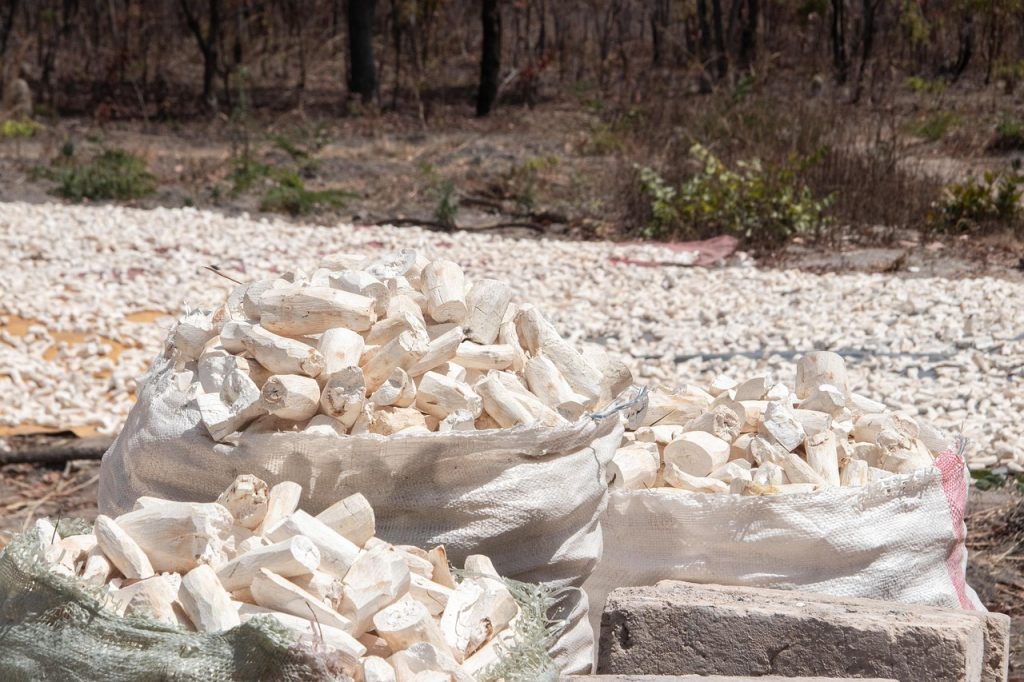
Another major focus of the workshop involved addressing inefficiencies in the cassava value chain. Nigeria is currently the world’s largest producer of cassava, generating more than 50 million metric tonnes every year.
However, large volumes of cassava never reach processing facilities. Industry estimates suggest that between 25 percent and 40 percent of harvested cassava is lost after harvest due to weak storage systems, transport delays, and limited processing capacity.
Consequently, these losses reduce the economic potential of the crop and limit opportunities for farmers and processors.
To address the issue, stakeholders discussed the creation of aggregation hubs and the adoption of faster processing technologies. These measures are expected to reduce the time between harvest and processing, which helps preserve starch quality and improves efficiency across the value chain.
Furthermore, improved processing systems could help Nigeria meet international industrial standards for ethanol production.
Linking Agriculture to Industrial and Energy Growth
Beyond energy production, the cassava bioethanol initiative reflects a broader effort to expand industrial uses for agricultural products. At present, most cassava grown in Nigeria is processed into food products such as garri and fufu.
While these products remain important for food security, they capture only a small share of the global cassava processing market. Globally, the cassava processing industry is valued at more than 180 billion dollars. Yet Nigeria currently captures only a small portion of that market despite being the largest producer of the crop.
Therefore, policymakers increasingly see cassava industrialisation as an opportunity for economic expansion. By linking farmers, processors, and energy producers, the bioethanol value chain could generate new income streams and strengthen rural economies.
In addition, the initiative could create new opportunities for private sector investment in processing plants, logistics, and technology.
Environmental and ESG Implications
The development of cassava bioethanol also intersects with environmental and sustainability goals. Bioethanol is considered a renewable fuel because it is produced from agricultural feedstock rather than fossil resources.
When blended with petrol, ethanol can lower greenhouse gas emissions compared with conventional fuels. Some studies suggest that cassava based ethanol can reduce emissions by more than 60 percent (1).
At the same time, the industry presents opportunities to reduce agricultural waste. Nigeria generates millions of tonnes of cassava processing residue each year. Much of this waste remains underutilized or is disposed of improperly. However, circular processing models can convert cassava waste into animal feed, fertilizer, or renewable energy.
As a result, these systems support several environmental, social, and governance priorities. They promote waste reduction, sustainable production, and stronger rural livelihoods.
Collaboration Across the Value Chain
The Nasarawa workshop highlighted the importance of collaboration among stakeholders in the cassava sector. Participants included representatives from regulatory agencies, agricultural ministries, research institutions, and farmer associations.
Such cooperation remains essential because bioethanol production relies on coordinated supply chains. Farmers must supply high quality cassava, while processors must convert it into ethanol efficiently.
Regulators also play a role by ensuring quality standards and monitoring industrial safety. Meanwhile, investors and private sector operators help scale infrastructure and processing capacity.
For this reason, stakeholders emphasized the need for continued cooperation between public institutions and private industry.
Read More: FMN’s N5m Cassava Challenge
Growing Focus on Sustainable Agriculture
Nigeria’s cassava bioethanol initiative reflects a broader shift toward sustainable agricultural development. Increasingly, policymakers are looking for ways to connect agriculture with renewable energy production and industrial manufacturing.
These integrated systems can deliver both economic and environmental benefits. For example, stronger value chains can increase farmer incomes while reducing agricultural waste. At the same time, renewable fuel production can lower reliance on imported fossil fuels and support climate goals.
However, experts note that long term success will depend on sustained investment, improved infrastructure, and consistent policy coordination. If these conditions are met, cassava could evolve from a traditional food crop into a key driver of Nigeria’s renewable energy and industrial economy.
References
- Nguyen, T. L., Gheewala, S. H., & Garivait, S. (2007). Full chain energy analysis of fuel ethanol from cassava in Thailand. Environmental science & technology, 41(11), 4135–4142. https://doi.org/10.1021/es0620641