

 csrreporters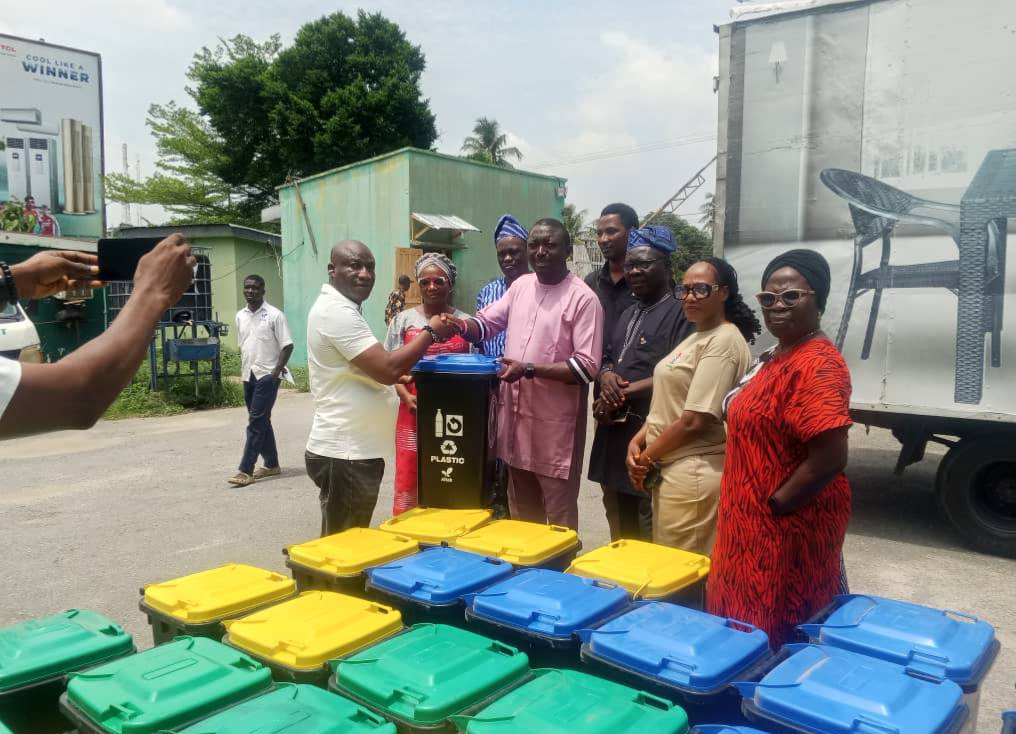
The Oyo State Government has introduced a structured waste segregation initiative at its State Secretariat, signalling a practical step toward improving environmental practices within public institutions. Although the move appears modest, it reflects a broader shift in how government offices approach waste management and resource use. In many ways, it also highlights how small operational changes can influence wider societal behaviour.
The programme began with the distribution of colour coded bins across key departments. These bins separate paper, plastic, and organic waste at the point of disposal. As a result, workers now sort waste before it leaves their offices. This approach reduces contamination and improves the chances that recyclable materials will be recovered and reused.
The initiative has also drawn support from the private sector. Altak Industries provided the bins as part of its contribution to environmental efforts in the state. While such collaborations are not new, they continue to show how businesses and public institutions can align on shared environmental goals without formal mandates.
A Practical Start Within Government
Officials say the initiative is designed to lead by example. By focusing first on government offices, authorities hope to demonstrate how structured waste practices can work in real settings. This strategy recognises that behaviour change often starts with visible action.
Moreover, the Secretariat serves as a central hub with daily foot traffic and administrative activity. Therefore, introducing waste sorting in this environment creates a controlled space for testing compliance and identifying gaps. If the system proves effective, it could be expanded to other government facilities and eventually to public spaces.
The emphasis on sorting waste at source is especially important. When waste is separated early, recyclable materials are easier to process. In contrast, mixed waste often ends up in landfills because separation becomes too costly or complex later on. Consequently, early sorting reduces both environmental impact and operational costs.
Economic Value in Waste Streams
Beyond environmental benefits, the initiative also points to emerging economic opportunities. Recyclable materials such as plastics, metals, and paper retain value when properly sorted. Therefore, they can feed into recycling supply chains that support jobs and small scale enterprises.
In Nigeria, informal waste collectors already play a significant role in recovering reusable materials. However, poorly sorted waste limits their efficiency. By improving waste quality at the source, the system indirectly supports these actors and strengthens the recycling ecosystem.
In addition, reduced landfill use can lower waste evacuation costs over time. When less waste requires disposal, governments may spend less on transportation and landfill management. This creates room for reinvestment in other environmental or social initiatives.
Growing Role of Private Sector Support
The involvement of Altak Industries reflects a wider trend in corporate participation in public projects. Companies increasingly support initiatives that align with environmental and community goals. Although these efforts vary in scale, they contribute to a gradual shift in expectations around corporate responsibility.
At the same time, such partnerships remain largely voluntary. This means their impact depends on sustained commitment rather than regulatory enforcement. Even so, they help bridge resource gaps, especially in areas where public funding may be limited.
Furthermore, collaboration between businesses and government agencies can encourage knowledge sharing. Companies may introduce operational efficiencies or innovations that improve project outcomes. In return, they gain visibility and strengthen relationships with local communities.
Read Also: How Nigeria Squandered Its Most Powerful Energy Windfall
Behaviour Change Beyond the Secretariat
While the initiative is currently limited to the Secretariat, its long term success depends on broader adoption. Authorities have encouraged residents to apply similar waste sorting practices at home and in their communities. However, scaling this behaviour requires consistent awareness and accessible infrastructure.
Public response will likely depend on how easy the system is to replicate. For instance, households need access to multiple bins or collection systems that support separation. Without these, compliance may remain low despite good intentions.
Nevertheless, the visibility of government action can influence public perception. When institutions adopt responsible practices, they set a standard that others may follow. Over time, this can shape social norms around waste disposal and environmental responsibility.
A Gradual but Notable Shift
Although the initiative does not solve broader waste management challenges, it represents a step in the right direction. Nigeria continues to face issues such as inadequate recycling infrastructure and rapid urban waste growth. Therefore, incremental improvements remain important.
What stands out is the focus on practical implementation rather than policy statements alone. By introducing a simple system within its own offices, the Oyo State Government has created a starting point for measurable change. This approach may offer useful insights for other states exploring similar solutions.
In the bigger picture, initiatives like this quietly reinforce the idea that environmental responsibility is a shared effort. Governments, businesses, and citizens all play a role, even through everyday actions like sorting waste. While progress may be gradual, consistent efforts can build a more sustainable and efficient system over time.
As more communities explore practical solutions to everyday challenges, small actions like waste segregation continue to shape bigger outcomes. Follow CSR Reporters for more updates, insights, and stories driving responsible impact across Nigeria.
[give_form id="20698"]