


 csrreporters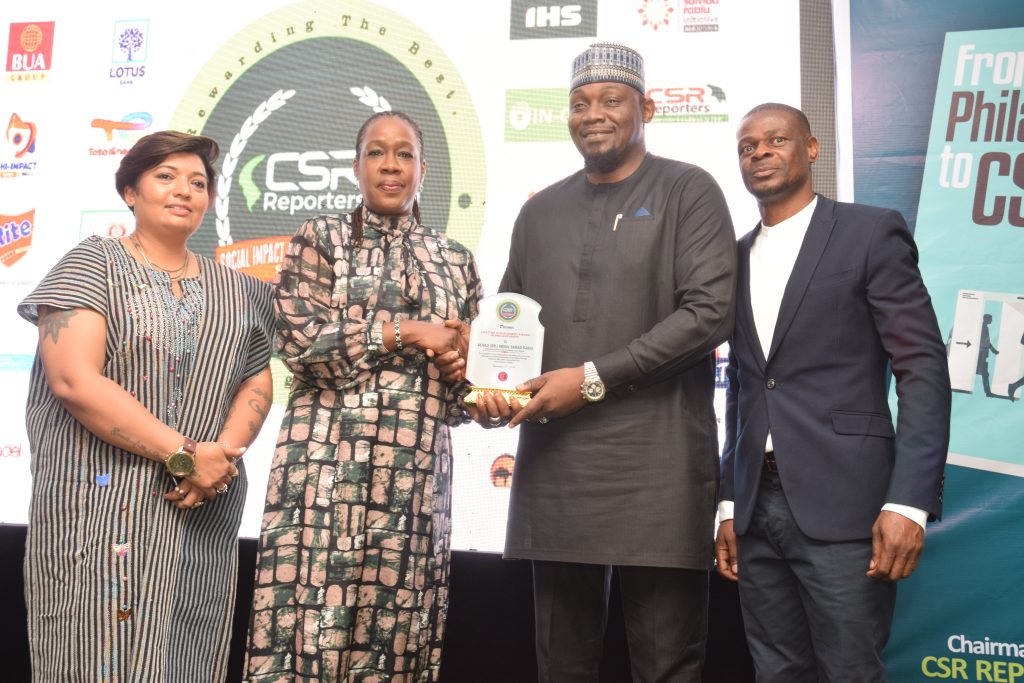
The Role of Recognition in Advancing ESG and Sustainability in Africa
Across Africa, sustainability is no longer a side conversation.
It is now part of how organisations define relevance, responsibility, and long-term value.
From banking halls to manufacturing plants, from telecom infrastructure to energy projects, there is a growing awareness that business cannot exist in isolation from society. ESG and sustainability have moved from being optional to being expected.
But as this momentum grows, so does a critical challenge:
How do we distinguish real impact from well-packaged narratives?
This is where recognition begins to play a far more important role than many realise.
Why Recognition Matters in Sustainability
Sustainability, by its nature, is complex.
It is not always immediate.
It is not always visible.
And it is not always easy to measure.
Unlike financial performance, where results are clear and standardised, impact often unfolds over time—across communities, ecosystems, and social structures.
That complexity creates room for ambiguity.
Organisations can report selectively.
They can highlight successes while ignoring gaps.
They can shape narratives that are difficult to independently verify.
Recognition, when credible, introduces a counterbalance.
It creates a moment where claims are assessed externally.
Where efforts are placed side by side.
Where impact is subjected to a level of scrutiny.
And in doing so, it begins to establish something the ESG space in Africa urgently needs:
standards.
The Role of CSR Awards in Africa
CSR and sustainability awards across Africa have grown in visibility over the years.
But their true value is not in the ceremonies or the visibility they provide.
It lies in what they signal.
They define what leadership looks like.
They highlight what meaningful impact should resemble.
They create benchmarks that others can aspire to.
In emerging ESG ecosystems, these signals matter.
They shape behaviour.
Organisations begin to think more intentionally about their interventions.
They begin to measure more carefully.
They begin to communicate more responsibly.
But this influence comes with responsibility.
Because not all recognition platforms are created equal.
Without rigour, awards risk reinforcing narratives rather than validating impact.
How SISA Supports Social Impact Leadership
Since 2020, the CSR REPORTERS has built one of the continent’s most credible recognition platforms through its Social Impact & Sustainability Awards (SISA).
More than an awards initiative, SISA has become a point of reference in Africa’s sustainability landscape.
It is not just about celebrating organisations.
It is about recognising those whose work demonstrates measurable impact, consistency, and alignment with real societal needs.
Over the years, SISA has honoured a number of leading organisations that have shown commitment to responsible business and social impact. These include the Tony Elumelu Foundation, a major driver of entrepreneurship and economic empowerment across the continent.
Other recognised organisations include Zenith Bank, First Bank of Nigeria, BUA Group, Dangote Group, Seplat Energy, IHS Towers, TotalEnergies, Axxela Group, MTN Nigeria, Nestlé Nigeria, and Rite Foods, among others.
The importance of this is not just in the list of names.
It is in the message it sends.
That impact can—and should—be seen, assessed, and acknowledged beyond corporate storytelling.
Over time, SISA has evolved into something more than recognition.
It has become a reckoning point for impact-driven organisations—a moment where their work is viewed through an independent lens.
Why ESG Recognition Drives Accountability
Recognition introduces a subtle but powerful form of accountability.
It is not regulatory.
It is not enforced by law.
But it influences behaviour in meaningful ways.
When organisations know their work may be independently reviewed and publicly recognised, they begin to pay closer attention to:
• How impact is measured
• How data is documented
• How results are communicated
• How consistent their efforts are over time
Recognition creates pressure—but the right kind of pressure.
The kind that pushes organisations to move beyond intention and towards credibility.
In today’s environment, where stakeholders are more informed and more demanding, that credibility is critical.
Investors are asking harder questions.
Communities are paying closer attention.
Reputations are more fragile than ever.
Recognition, when credible, helps bridge the gap between what organisations say and what stakeholders believe.
The Risk of Recognition Without Rigour
It is important to be clear—recognition is not automatically valuable.
When awards lack transparency or rely solely on self-submitted information, they risk amplifying perception rather than reality.
This creates a dangerous dynamic where:
Visibility is mistaken for impact.
Storytelling is mistaken for substance.
Participation is mistaken for performance.
For recognition to truly advance ESG in Africa, it must evolve.
It must move closer to:
- Independent verification
- Transparent evaluation criteria
- Inclusion of stakeholder perspectives
Because without these, recognition becomes noise—and in some cases, part of the problem.
The Future of Sustainability in Africa
Africa’s ESG and sustainability journey is gaining momentum.
There is increasing awareness.
There is growing investment.
There is a stronger push for accountability.
But the next phase will require more than ambition.
It will require structure.
Systems that ensure:
- Impact is measurable
- Claims are verifiable
- Leadership is credible
Recognition platforms will continue to play a role—but they must rise to meet this moment.
They must move from simply celebrating impact to helping validate it.
Final Thought
Recognition, at its best, is not about applause.
It is about setting standards.
It is about asking harder questions.
It is about rewarding credibility over visibility.
It is about reinforcing accountability in a space that needs it.
As ESG continues to take shape across Africa, recognition will remain an important tool.
But its true value will depend on one thing:
Whether it can distinguish real impact from well-told stories.
[give_form id="20698"]