


 csrreporters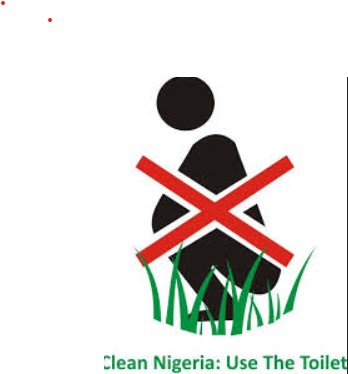
Wrestling Open Defecation in Nigeria
Nigerians wake up daily to the disturbing reality of open defecation, an act that is not only unhygienic but deeply unsustainable for people and the planet.
Beyond the stench and shame, it evokes, this practice contaminates soil, rivers, and groundwater, undermining both public health and environmental integrity.
According to UNICEF, as of 2021, nearly 46 million Nigerians still defecated in the open. The number could be even higher today. In many communities, the absence of safe sanitation systems forces people to improvise some use plastic bags, later dumped into drains, rivers, or bushes. This is not just a failure of infrastructure but a collapse of sustainable urban and rural planning. Sadly, most state and local governments have treated sanitation as an afterthought rather than a critical investment in environmental health and human dignity.
The cost is staggering. Open defecation fuels the spread of cholera, diarrhoea, typhoid, and other preventable diseases, straining fragile healthcare systems. But the ripple effects go further: polluted water sources disrupt ecosystems, kill biodiversity, and compromise food security as contaminated rivers seep into farms. It is a vicious cycle of poverty, illness, and environmental degradation, one that Nigeria cannot afford to sustain.
In 2016, the Federal Government launched a National Roadmap to End Open Defecation by 2025, aligning with international commitments on WASH (Water, Sanitation and Hygiene). Two years later, a state of emergency was declared, followed by the “Clean Nigeria: Use the Toilet” campaign. Yet, in 2025, we are still far from the finish line. This has become another failed sustainability target, much like the unfulfilled promises of “Vision 2010” or “Education for All by 2000.”
India shows us that success is possible. Once the world’s epicentre of open defecation, it declared itself ODF (open-defecation-free) in 2019 through the “Clean India Campaign.” India mobilised communities, invested heavily in sanitation infrastructure, and, importantly, created behavioural change through incentives and grassroots champions. It was not speeches that delivered results, but sustained political will, adequate financing, and local ownership.
Nigeria can replicate this model if it chooses to treat sanitation as a cornerstone of sustainability. Toilets are not a luxury, they are fundamental to achieving the Sustainable Development Goals (SDGs), from good health and well-being (SDG 3) to clean water and sanitation (SDG 6), sustainable cities (SDG 11), and even climate action (SDG 13), since waste management affects emissions and ecosystem health.
The path forward requires urgent action. Governments must build safe, affordable, and environmentally friendly toilets in schools, markets, parks, and rural communities. Local governments must enforce sanitation laws while creating financing models that empower households and communities to own their solutions. Civil society and the private sector must also play their part, innovating around eco-toilets, bio-digesters, and circular sanitation models that turn waste into resources.
If India, with over four times Nigeria’s population, could achieve this milestone, Nigeria has no excuse. Ending open defecation is not only a matter of public health, it is a litmus test of whether we are serious about sustainability, human dignity, and the future of our environment.
[give_form id="20698"]