csrreporters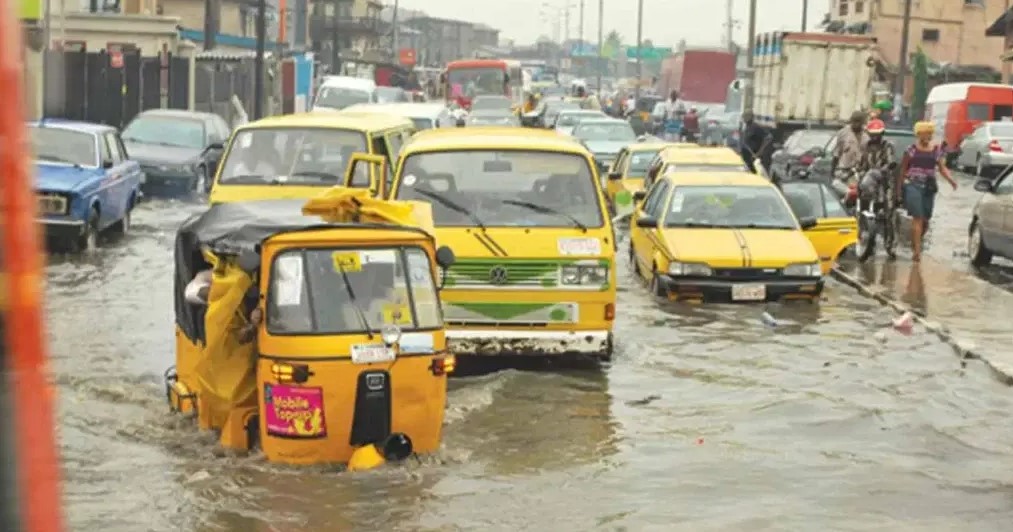
Sustainable action towards flood warnings
As the rainy season deepens and the Nigerian Meteorological Agency warns of impending severe floods in states like Lagos, Ogun, Delta, and Rivers, it is critical to shift the national flood response from reaction to resilience.
Sustainability must underpin our approach, not only to prevent loss of lives and property but also to safeguard the environmental and social systems that support vulnerable communities.
On the heels of this is the Lagos State Government fresh warning to residents living in low-lying areas across Lekki, Ikorodu, and Ajegunle to relocate immediately to higher ground, as more flooding is expected due to intensified rainfall this season.
Speaking during an appearance on Channels Television’s Politics Today on Tuesday, Commissioner for Environment and Water Resources, Tokunbo Wahab, advised vulnerable communities to act now to avoid avoidable disasters as the rains intensify.
Flooding in Nigeria is no longer an occasional disaster, it is a chronic environmental crisis worsened by poor planning, unchecked urbanisation, and infrastructure neglect. The devastating 2024 floods, which claimed over 300 lives and displaced more than 1.2 million people across 31 states, are a glaring indictment of the absence of a sustainable, proactive flood management framework.
The recent $5 million funding from the United Nations for flood preparedness is a welcome intervention, targeting early warning systems and emergency support. Yet international aid cannot compensate for the failure of domestic systems. Nigerian authorities, federal, state, and local must accept primary responsibility and demonstrate the political will to plan sustainably, enforce environmental regulations, and prioritise climate adaptation.
There are glimpses of progress. Lagos State has begun clearing structures obstructing waterways and sensitising residents. But the general picture across the country remains one of inertia. Waiting until disaster strikes before acting has led to repeated loss of lives, damage to ecosystems, and significant economic costs. The catastrophic 2012 floods, which displaced over four million people and cost an estimated $17 billion about 1.4% of the nation’s GDP, remain a painful lesson in what happens when we do too little, too late.
The recurring floods are largely man-made. Buildings continue to spring up along natural waterways, drainages are choked with waste, and critical infrastructure such as dams, levees, and canals remain either poorly maintained or non-existent. These are not accidents, they are failures of governance and planning.
To build true resilience, Nigeria must take a multi-layered approach. State governments must overhaul waste management systems to prevent blocked drainage networks. Regulatory bodies must enforce planning and environmental laws and penalise violators, no matter how politically connected. Communities, too, must take responsibility by ending the culture of indiscriminate dumping and passive detachment.
The National Emergency Management Agency (NEMA) and the National Orientation Agency must roll out nationwide environmental education campaigns to deepen public understanding of how local actions, good or bad, directly affect flood outcomes. The floods in Borno State following the Alau Dam collapse, which claimed over 150 lives, prove that even decades-old infrastructure must be part of continuous safety reviews.
Short-term measures such as dredging canals, clearing drainage, demolishing obstructive structures, and equipping emergency responders are urgently needed. But these must feed into long-term, sustainability-driven solutions: smart urban planning, investment in resilient infrastructure, stronger climate governance, and public accountability in the management of ecological funds.
Denmark, faced with similar flood threats in 2018, avoided disaster through deliberate investments in green infrastructure and water-sensitive urban design. The United States, through FEMA, has spent years refining its community-based flood preparedness strategies. Nigeria must learn from these examples and adapt them within its local realities.
Floods may be natural, but their impact is shaped by human choices. By embracing a sustainable mindset, one that anticipates, prevents, and educates, we can turn flood management from a cycle of tragedy into a story of transformation.
[give_form id="20698"]