csrreporters
2026 predictions
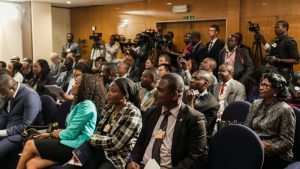
The final applause has faded at the Muson Centre. The trophies have been lifted, the photographs taken, and the connections made. SISA 2025 is now part of our collective memory. But for the astute Nigerian business leader, the real work and the real insight begins now.
An awards ceremony of this calibre is more than a celebration. It is a powerful, concentrated snapshot of the nation’s sustainability consciousness. It is a crystal ball, reflecting not just what we have achieved, but more importantly, where we are urgently heading.
The entries, finalists, and winners of SISA 2025 have broadcast a clear signal: The Nigerian corporate agenda is undergoing a profound and irreversible shift. From the boardrooms of Lagos to the factories in the North, five powerful trends have emerged from the submissions, and they are poised to define the strategic priorities for every serious enterprise in 2025 and beyond.
The first and most unmistakable trend is the Rise of the Hyper-Local Impact Model. Gone are the days of generic, nationwide CSR initiatives that lack depth and resonance. SISA 2025 was dominated by programmes that demonstrated an intimate, street-level understanding of community needs. For instance, we saw a financial institution not just offering loans, but building a data-driven model for financial inclusion tailored to the specific saving patterns of market women in Idumota. We saw a consumer goods company whose environmental strategy wasn’t a broad tree-planting campaign, but a precise plastic waste buy-back scheme integrated with the existing informal collection networks in Ajeromi-Ifelodun.
The winning formula was granularity.
In 2026, the question will no longer be “What is your community spend?” but “How deeply have you diagnosed and solved a hyper-local problem in a way that builds irreplaceable social capital and market loyalty?” The era of the corporate outsider is over. Welcome the era of the embedded community partner.
Closely tied to this is the second trend: Operational Sustainability as a Cost-Survival Imperative. The most compelling entries were not philanthropic side projects. They were innovations hardwired into core business operations to ensure survival and competitiveness. The finalists that captivated the judges were companies that turned the relentless Nigerian challenges of energy cost, waste, and water scarcity into engines of efficiency. We saw manufacturers whose transition to solar wasn’t a “green” trophy, but a detailed case study on slashing diesel budgets by 60%. We saw agri-businesses that framed water conservation as the only path to securing their long-term crop yields in the face of a changing climate. SISA 2025 made it clear: sustainability has shed its “soft” reputation. In 2026, it will be the hard-nosed CFO, not the CSR manager, who becomes its biggest champion, because the data will show it is directly defending the bottom line against Nigeria’s most pressing operational threats.
The third trend, and perhaps the most sophisticated, is the Strategic Integration of the Informal Sector. The most forward-thinking entries recognised that Nigeria’s powerful informal economy is not a problem to be circumvented, but the nation’s greatest strategic asset to be integrated. Winning projects showcased formal companies building innovative bridges: technology platforms that onboarded thousands of informal artisans into visible, digital supply chains; healthcare giants that leveraged networks of neighbourhood patent medicine vendors for last-mile distribution of essential goods; food processors that formalised partnerships with smallholder farmer clusters with traceability and fair pricing. SISA 2025 highlighted that the next wave of scalable, resilient, and authentically Nigerian business models will be built on hybrid formal-informal architecture. In 2026, sustainability will be synonymous with inclusion, and the most successful companies will be those that can ethically harness the scale and agi
Fourth, we witnessed the maturation of Data-Driven Impact Storytelling. The submissions that rose to the top did not rely on emotive anecdotes alone. They were backed by robust, real-time dashboards tracking social and environmental metrics with the same rigor as financial ones. The narrative has shifted from “we feel we are making a difference” to “here is the live data that proves our impact per naira spent.” We saw companies tracking the longitudinal educational outcomes of scholarship recipients, the incremental increase in household income from livelihood programs, and the real-time reduction in carbon emissions from logistics optimisation. This trend signals that in 2026, sustainability reporting will move from an annual PDF to a dynamic management tool. Stakeholders from investors to communities will demand this transparency. The ability to measure, verify, and communicate impact with concrete data will separate credible leaders from those accused of mere greenwashing.
Ultimately, SISA 2025 underscored the trend of Regulatory Foresight and Preparedness. While comprehensive ESG disclosure mandates may still be on the horizon, the leading entries were those acting as if they were already in place. They were proactively adopting global reporting frameworks (GRI, SASB), conducting voluntary third-party audits, and stress-testing their operations against emerging global standards. They recognised that for any Nigerian company with ambitions to attract foreign investment, access international markets, or partner with global corporations, these practices are no longer optional. They are the price of entry. The SISA stage showed that the vanguard of Nigerian business is not waiting to be regulated; it is self-regulating to gain a formidable first-mover advantage. In 2026, this gap between the prepared and the passive will widen dramatically, determining who leads and who follows in the new economy.
The SISA 2025 effect, therefore, is a clarion call. The awards have not just honoured past achievements but have laid down the gauntlet for the future.
The trends of Hyper-Local Impact, Operational Survival, Informal Sector Integration, Data-Driven Stories, and Regulatory Preparedness are now the five pillars of modern Nigerian corporate strategy. To ignore them is to risk irrelevance. To embrace them is to build a business that is not only profitable but also purposeful, resilient, and perfectly aligned with the future of Nigeria itself. The lesson from the winners is clear: sustainability is no longer a department. It is the blueprint for the next decade of business.
Is your business aligned with the trends that will define 2026? CSR REPORTERS provides the strategic advisory, measurement tools, and storytelling expertise to help you not just follow these trends, but lead them. Contact us to future-proof your impact and your business.
[give_form id="20698"]