


LAPO, WSBI Champion Climate Smart Finance to Empower Women Led Businesses in Rural Nigeria
 csrreporters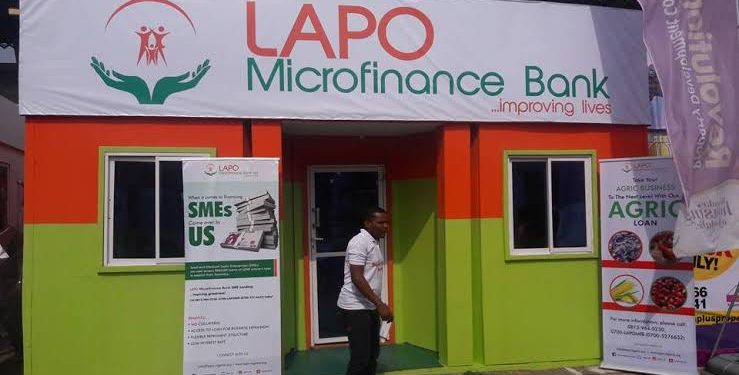
LAPO Microfinance Bank has partnered with the World Savings and Retail Banking Institute (WSBI) to launch a climate finance pilot programme aimed at improving access to climate-smart funding for women smallholder farmers and women led businesses in rural Nigeria.
Supported by grants from the Visa Foundation and the la Caixa Foundation, the initiative seeks to promote sustainable agricultural practices, enhance rural livelihoods and build resilience to climate-related risks. The programme targets 20,000 smallholder farmers, including at least 6,600 women, as well as 5,000 micro, small and medium sized enterprises (MSMEs), with more than 2,200 being women led.
Under the pilot, beneficiaries will access financial products tailored to climate adaptation needs, while participating financial institutions will receive technical assistance to strengthen their environmental and social impact frameworks. Support tools include ecosystem-based adaptation frameworks, climate risk mapping, biodiversity assessments and improved impact measurement systems. The programme will also position LAPO Microfinance Bank as a national reference institution under the Women Entrepreneurs Finance Code, a global initiative that promotes gender-inclusive finance.
The partnership aligns with Nigeria’s climate and financial inclusion priorities outlined in the Nationally Determined Contribution (NDC) 3.0 and the National Financial Inclusion Strategy 3.0. It also supports LAPO Microfinance Bank’s rural resilience agenda and WSBI’s global efforts to advance inclusive finance at the intersection of gender, climate and development. Implementation will be led by WSBI’s Development Finance Unit, established in 2023 to scale initiatives that link financial inclusion with climate resilience and women’s economic empowerment in emerging markets.
Beyond expanding access to finance, the pilot is expected to deliver measurable social and environmental impact by strengthening women’s capacity to adapt to climate change while improving productivity and income stability across rural communities. By integrating climate risk considerations into financial decision-making, the programme will help women farmers and entrepreneurs better manage weather-related shocks, safeguard assets and adopt more sustainable production practices.The initiative also places strong emphasis on institutional capacity building, enabling participating financial institutions to embed environmental and social risk management into their operations. Through the adoption of global frameworks on ecosystem-based adaptation and biodiversity protection, the pilot will support the development of responsible finance models that balance profitability with long-term environmental stewardship.For LAPO Microfinance Bank, the partnership reinforces its role as a leading driver of inclusive finance in Nigeria, particularly within underserved rural and agrarian communities.
By aligning its operations with international standards under the Women Entrepreneurs Finance Code, the bank is strengthening its commitment to closing gender financing gaps and supporting women as key agents of economic growth and climate resilience.WSBI, through its Development Finance Unit, will provide strategic oversight and technical leadership, ensuring the pilot delivers scalable lessons for broader replication across Nigeria and other emerging markets. Established in 2023, the unit focuses on mobilizing inclusive financial systems that respond to the interconnected challenges of climate change, gender inequality and sustainable development.As Nigeria intensifies efforts to meet its climate and financial inclusion targets, the LAPO WSBI climate finance pilot underscores the growing role of public-private and philanthropic partnerships in delivering impact-driven solutions. The programme is expected to serve as a blueprint for how financial institutions can support women-led climate action while driving sustainable rural development and long-term economic resilience.
[give_form id="20698"]