csrreporters
Business Confidence Under Pressure
Global tensions are no longer distant headlines; they are shaping the way businesses in Kenya operate. Rising fuel prices, supply chain disruptions, and cautious consumer spending have slowed private sector activity. For SMEs and larger firms alike, the challenge is clear: adaptability and innovation are no longer optional, they are essential for survival. According to the latest S&P Global Purchasing Managers’ Index report, Kenya’s private sector fell into contraction in March 2026.
The latest S&P Global Purchasing Managers’ Index (PMI) indicates that business activity has softened, signaling the first contraction since August 2025. While numbers give context, the story lies in how companies are responding to these challenges.
Consumers Tighten Spending, Businesses Respond
Household budgets are under pressure. Reduced cash flow and cautious spending have impacted demand, forcing businesses to rethink strategies. Many firms are reluctant to increase prices despite rising input costs, reflecting the delicate balance between maintaining sales and covering expenses.
Some companies, however, are finding ways to adapt. CSR Reporters and the SME Advantage highlight how small and medium enterprises remain central to economic resilience and how visibility and responsibility support their long‑term competitiveness. Stanbic Bank Kenya reports that businesses embracing digital sales channels, innovative marketing, and operational efficiency are better positioned to weather the slowdown.
Global Shocks Test Supply Chains
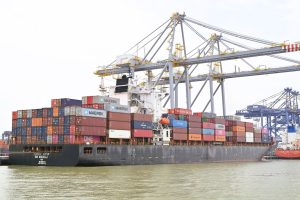
The slowdown is not happening in isolation. Conflicts involving the United States, Israel, and Iran have disrupted global shipping routes and driven up transportation and fuel costs. With crude oil prices above $100 per barrel, businesses that rely on imports are facing growing operational challenges.
This highlights a broader lesson for African businesses: external shocks can ripple quickly through local economies, making agility and risk management critical.
Rising Costs Demand Smarter Strategies
Across Kenya, firms are navigating rising input costs while trying to maintain customer demand. Some are leveraging innovation and technology to reduce operational expenses, while others explore alternative markets or adjust pricing strategies to stay competitive.
The message is clear: business resilience now depends on strategic thinking, efficiency, and long-term planning.
Lessons for African Businesses
Kenya recorded the weakest private sector conditions among the eight African economies surveyed, while countries like Uganda, Nigeria, and Zambia continued to expand. This uneven recovery emphasizes the importance of strategic foresight in navigating complex economic environments.
Inflation pressures are rising again, particularly in food, transport, and energy—key household expenses. Employment remains relatively stable, supported mainly by agricultural hiring, but businesses are approaching the months ahead with caution, adjusting backlogs, and slowing inventory growth.
Key Takeaway for Leaders
The situation also serves as a reminder to business leaders across Africa: global events can no longer be seen as distant—they shape local operations and livelihoods directly.
For many businesses, especially SMEs, today’s environment underscores one lesson: resilience is a strategic asset. Companies that invest in innovation, diversify supply chains, leverage technology, and plan for uncertainty are better positioned to thrive, even in turbulent times.
[give_form id="20698"]