csrreporters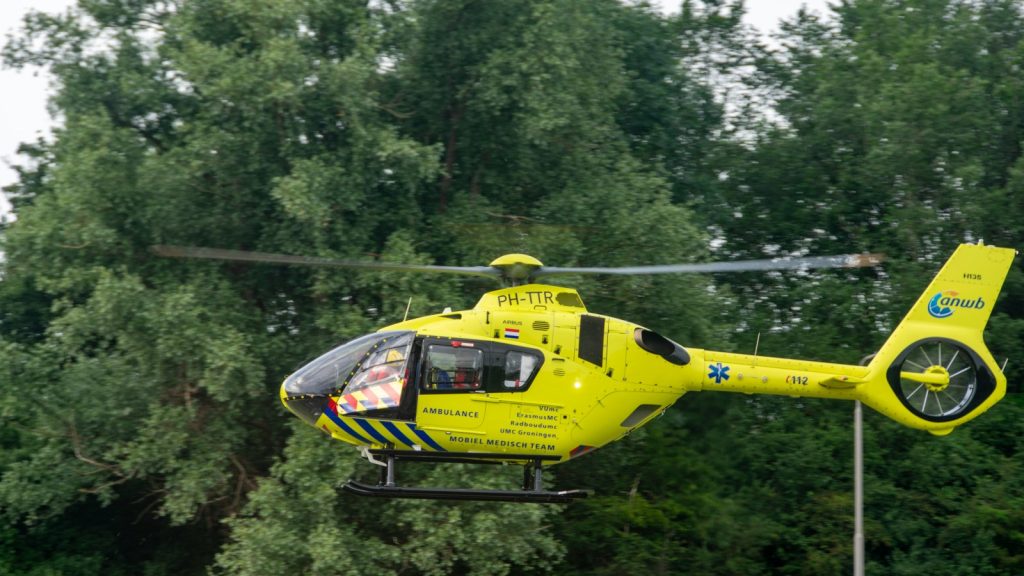
Nigeria’s Federal Government has opened formal negotiations with Airbus, the European aerospace giant, to procure helicopters for a new National Medical Emergency Management System. The Minister of Health and Social Welfare, Prof. Muhammad Ali Pate, is leading the initiative after an assessment visit to Airbus facilities in Lyon, France. The proposed system will integrate air ambulance services with existing ground-based emergency infrastructure, especially for remote and underserved communities.
It is an ambitious idea and, in medical terms, a defensible one. However, Nigeria’s track record with government-procured aviation assets calls for both celebration and scrutiny. The deeper question is not whether the idea is good, but whether execution will finally match ambition.
The Promise Behind the Proposal
At its core, the vision is medically sound and reflects a global reality: aerial emergency response saves lives. A report cited by CSR Reporters shows that Germany’s helicopter emergency medical services system has reduced preclinical response times (1). As a result, patients reach appropriate facilities faster than ground services typically allow.
The relevance for Nigeria is direct and urgent. The country faces a heavy burden of road accidents, maternal emergencies, strokes, and cardiac events. For years, emergency services have struggled with poor ambulance coverage, weak hospital coordination, and slow referrals. Experts continue to link these gaps to avoidable deaths nationwide.
Minister Pate has positioned the initiative within a broader reform agenda. He explained that the system will unify ambulance services, emergency communications, and aeromedical evacuation under one coordinated national framework.
Progress is already visible at the state level. In October 2025, the Kaduna State Government launched its Emergency Medical Services and Ambulance System. The framework provides round-the-clock emergency response across the state.
The federal air ambulance push is therefore not isolated. It forms part of a larger, multi-tiered emergency health reform effort.
The minister also highlighted existing programmes such as the National Emergency Medical Services and Ambulance Scheme and the Rural Emergency Service and Maternal Transport programme. The government plans to strengthen these programmes to support the helicopter system. In addition, the Ministry is working with the aviation sector to ensure cross-agency coordination. This level of detail stands out compared to typical public health announcements in Nigeria.
A Private Sector Already Doing the Work
Before celebrating the government’s move too loudly, it is important to acknowledge the private sector’s role. Flying Doctors Nigeria, the first indigenous air ambulance service in West Africa, has operated for over a decade. Its network spans Lagos, Abuja, Port Harcourt, and other major cities.
The company keeps both fixed-wing and rotary aircraft on standby around the clock. Trained doctors, emergency technicians, and intensive care specialists staff these operations.
FDN maintains 24/7 readiness throughout the year. Its teams use ventilators, defibrillators, infusion pumps, and advanced monitoring systems. The company has earned recognition from global media and routinely handles trauma transfers, cardiac emergencies, and maternal evacuations. These are cases the public system often cannot address.
FDN already serves government agencies and corporate organisations. This shows that structured public-private cooperation is not theoretical. It already exists.
In addition, Nesto Aviation Services, ADAC HEMS Academy Germany, and Kasi Healthcare Offshore and Aeromedical Unit have partnered to build a training centre in Nigeria. The centre links directly to the ADAC HEMS Academy in Germany. They also plan to run a dedicated air ambulance service for the oil and gas sector across West Africa.
Private operators are actively building the ecosystem the government now seeks to expand. The government’s strongest role lies in scaling access, strengthening regulation, financing equity, and integrating systems, not duplicating existing efforts.

The Nigeria Air Ghost Is Still in the Room
Public skepticism is understandable. The Nigeria Air debacle still lingers in public memory. In 2023, the government presented an Ethiopian Airlines aircraft repainted in Nigerian colours as part of a launch many critics called a publicity stunt.
The project was later suspended indefinitely. The incoming administration confirmed that it was never structured as a true national carrier. Officials even described it as a foreign entity using Nigerian branding.
This history explains the sharp public reaction to the helicopter announcement. Many Nigerians pointed to more immediate concerns. These include unreliable ground ambulances, unstable hospital power, drug shortages, and ongoing doctors’ strikes.
Read Also: Doctors Halt Strike. Now Businesses Must Step Forward
These criticisms are valid. However, they should not lead to a complete rejection of long-term health infrastructure reform.
The key lesson from Nigeria Air is not to abandon aviation ambitions. Instead, Nigeria must prioritise transparent procurement, local capacity, and sustainable financing before placing any order.
Encouragingly, Minister Pate has addressed personnel capacity, infrastructure readiness, and financing as core pillars of the plan. This level of structure was missing in the Nigeria Air rollout. It must now be matched with accountability.
What the Evidence Demands
Globally, HEMS programmes offer both promise and risk. Safety records require close attention. A report cited by CSR Reporters found that, in the United States, pilot and human errors occur more often among commercial HEMS providers than public safety operators (2).
The study identified gaps in training, equipment, and flight selection as key risks.
These findings matter for Nigeria. Authorities must prioritise pilot training, maintenance standards, mission selection, and crew qualifications from the start. Any partnership with Airbus should include knowledge transfer, structured training, and clear certification pathways for Nigerian personnel.
Another study from Australia examined physician-staffed HEMS systems (3). It found that, although air ambulances cost more upfront, they improve survival rates for patients with severe injuries and traumatic brain conditions. Over time, the cost per life-year saved becomes more justifiable.
This means the programme can make economic sense. However, that depends on strict dispatch criteria, proper patient selection, and a focus on those who need it most.
The Path Nigeria Must Walk
The debate should not be framed as helicopter versus ambulance. Nigeria needs helicopters and ambulances and functional clinics and stable electricity and essential medicines. It also needs doctors who remain in the system.
Emergency healthcare requires coordinated improvement across all levels. A high-profile aviation programme cannot replace foundational fixes.
The government must also build strong partnerships with existing operators. Flying Doctors Nigeria and EAMS Nigeria already have operational experience, equipment, and regulatory knowledge. A new system would take years to match that capacity.
Bringing these players into the national framework is not a compromise. It is a strategic move that could save time and public funds.
The proposed system aims to improve emergency care by linking air and ground services, especially in rural and hard-to-reach areas. This vision is right. However, it will only save lives if transparency, accountability, and local partnerships guide every stage of implementation.
Nigeria has a long history of bold announcements followed by quiet failure. At the same time, the private sector has consistently delivered life-saving solutions.
The helicopter emergency plan deserves serious pursuit. Still, it will only become a true lifeline if Nigeria applies the lessons of past failures. Every delay matters, because in an emergency, time is never on the patient’s side.
References
- Schellhaaß, A., & Popp, E. (2014). Luftrettung: Aktueller Stellenwert und praktische Aspekte [Air rescue: current significance and practical issues]. Der Anaesthesist, 63(12), 971–982. https://doi.org/10.1007/s00101-014-2356-1
- Habib, F. A., Shatz, D., Habib, A. I., Bukur, M., Puente, I., Catino, J., & Farrington, R. (2014). Probable cause in helicopter emergency medical services crashes: what role does ownership play?. The journal of trauma and acute care surgery, 77(6), 989–993. https://doi.org/10.1097/TA.0000000000000429
- Taylor, C., Jan, S., Curtis, K., Tzannes, A., Li, Q., Palmer, C., Dickson, C., & Myburgh, J. (2012). The cost-effectiveness of physician staffed Helicopter Emergency Medical Service (HEMS) transport to a major trauma centre in NSW, Australia. Injury, 43(11), 1843–1849. https://doi.org/10.1016/j.injury.2012.07.184