csrreporters
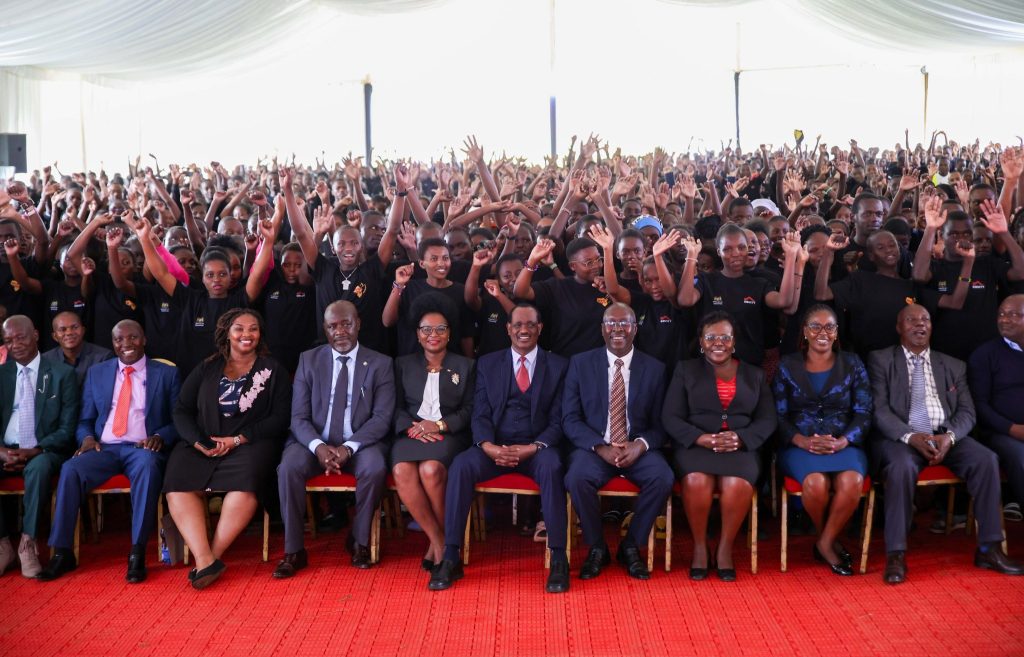
In April 2025, more than 18,000 secondary school students assembled across 11 regions in Kenya. They were not government delegates or corporate guests. They were Wings to Fly scholars, gathered for Equity Group Foundation’s 16th Annual Education and Leadership Congress.
The two-day congress, held under the theme “The Innovation Generation: Igniting Ideas, Creating Impact,” captured something essential about a programme that has spent 15 years transforming educational access into genuine social change.
A Foundation Built on Deliberate Inclusion
Equity Group Foundation, commonly known as EGF, was established in 2006 as the social investment arm of Equity Group Holdings. From the beginning, the group built it to use its extensive branch network and community relationships to scale social programmes beyond what standalone philanthropy could achieve.
Today, EGF works across Kenya, Uganda, Tanzania, Rwanda, and the Democratic Republic of Congo. Furthermore, the foundation operates across six pillars: education, agriculture, health, financial literacy, environmental sustainability, and entrepreneurship. However, education and leadership development remain its defining priority.
What sets EGF apart from most peer foundations is its selection process. Community Scholarship Selection Boards operate across all 47 Kenyan counties. Importantly, board members conduct home visits to verify each applicant’s financial circumstances.
Consequently, the programme consistently reaches the students who need support the most, not simply those best positioned to navigate an application process. This approach is deliberate, and its consistency over 15 years reflects a genuine institutional commitment to equity.
Wings to Fly: A Lifeline That Goes Far Beyond School Fees
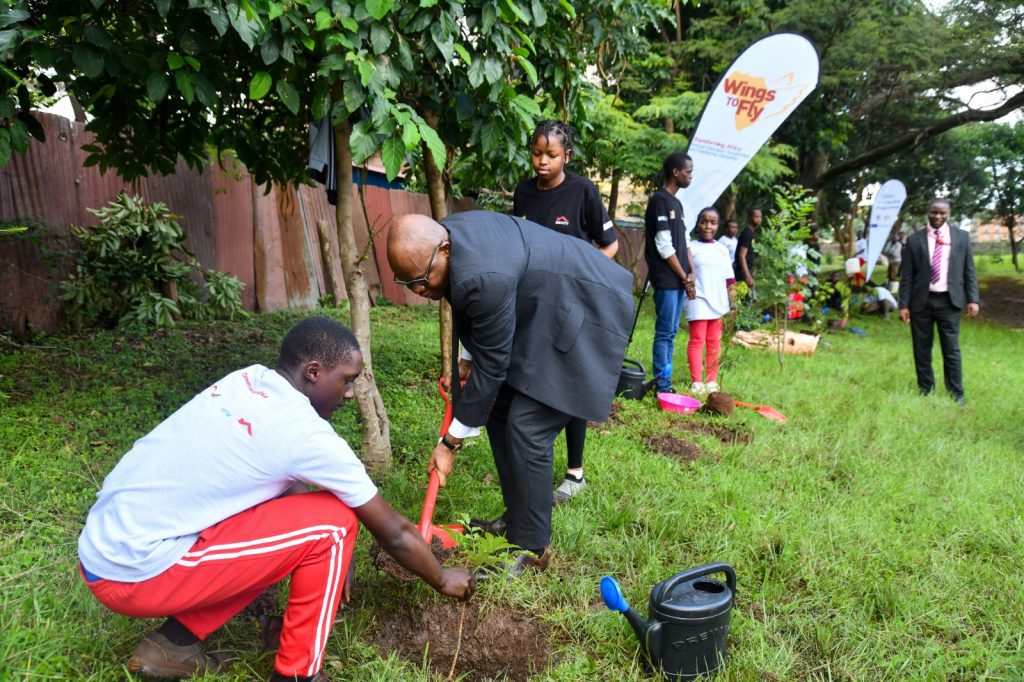
The Wings to Fly programme is the centrepiece of EGF’s education work. Since its launch in 2010, the programme has supported 60,009 scholars from financially disadvantaged backgrounds across East Africa. Additionally, the scholarship is comprehensive. Each scholar receives tuition, boarding costs, uniforms, books, pocket money, and transport for the full four years of secondary school.
Furthermore, every scholar receives mentorship and psychosocial support throughout their journey. Therefore, families do not encounter the hidden costs that typically force students to drop out before they graduate.
Beyond secondary school, the programme builds a longer pipeline. Through the Equity Leaders Program, Wings to Fly graduates access professional development and leadership training at the tertiary level. Moreover, top-performing alumni receive preparation for leading global universities. The Equity Leaders Program currently supports 29,515 university scholars. As a result, 1,115 Wings to Fly alumni attend, or have already attended, some of the world’s most prestigious institutions. These numbers reflect a programme that values follow-through as much as it values access.
The 2025 Annual Congress included 2,512 refugee scholars from Dadaab and Kakuma. That detail matters. Including refugees from Kenya’s most marginalised communities within a mainstream scholarship programme is a design choice that most corporate foundations have not made. EGF has made it consistently. That consistency is a form of institutional integrity that deserves recognition.
The Congress: Leadership Is Embedded in the Scholarship
One of the most distinctive elements of the Wings to Fly model is its Annual Education and Leadership Congress. Financial support is necessary, but EGF recognises that it is not sufficient. Therefore, the foundation embeds leadership development directly into the scholarship experience.
The congress brings scholars into dialogue with senior corporate executives, government officials, academics, and religious leaders. Furthermore, the agenda builds around five core pillars: academic excellence, value-centred living, transformative leadership, gender sensitisation, and giving back to society.
The April 2025 edition challenged scholars to think beyond personal ambition and toward collective impact. As a result, Wings to Fly scholars graduate not only with improved academic credentials but with a sense of civic purpose. Over 16 editions of the congress, this commitment to holistic development has remained central to the programme’s design. That continuity is not accidental. It reflects a foundation that understands education as a process, not a transaction.
Evidence That Separates Equity Group from Most Peers
What distinguishes EGF from many of its peers in Africa’s corporate CSR landscape is its commitment to tracking outcomes over time. While most programmes report participation numbers and stop there, EGF maintains monitoring systems that follow scholars into tertiary education and beyond.
In September 2024, Equity Group released its third annual sustainability report, themed “A Sustainable World is a Transformed Africa.” The report integrated Environmental, Social, and Governance principles into the group’s core operations. Therefore, education CSR at Equity Group is not a communications exercise. It sits within a governance framework that holds the institution publicly accountable.
Furthermore, in April 2025, Dr. James Mwangi, Equity Group’s Managing Director and CEO, received the Freedom of the City of London Award for his work in inclusivity and building equitable communities across Africa. This recognition reflects the global credibility that a serious, long-term approach to social investment can generate over time.
The Challenges That Still Require Attention
Nevertheless, EGF’s story is not without complications. The Mastercard Foundation’s partnership, which funded the original Wings to Fly cohorts, has since concluded. Reports indicate that donor funding to the foundation declined by approximately 44.7% following broader reductions in international aid.
Moreover, Kenya’s shift to a Competency-Based Curriculum has complicated beneficiary selection, since students no longer receive standardised marks that once made financial need and academic merit easier to compare. As a result, EGF is reportedly working toward a model that incorporates Technical and Vocational Education and Training scholarships as part of its next phase.
Additionally, the transition from secondary school into tertiary education remains uneven for many Wings to Fly graduates. The Equity Leaders Program provides essential support, but university access is still a barrier for a meaningful proportion of alumni. Consequently, the next evolution of the programme must address this pipeline with the same intentionality that has defined its secondary school work.
A Model That the Sector Needs to Study
Despite these challenges, Equity Group Foundation remains the clearest example in East Africa of what structured, evidence-based corporate education investment looks like. Its Wings to Fly programme has kept its promise to 60,009 scholars across 15 years, six countries, and multiple shifts in funding, curriculum, and political context. Furthermore, its Annual Congress model demonstrates that human development is not complete at the point of financial access. It requires mentorship, aspiration, and a community of peers.
In a sector too often driven by photogenic projects and self-congratulatory disclosure reports, Equity Group Foundation has chosen a harder path. It has chosen a path that is measurable, sustained, and genuinely transformative. As Africa’s youth population grows and its education deficit deepens, that path is the only one that will matter.
At CSR Reporters, we track and spotlight institutions moving beyond optics to measurable change. Follow our coverage for more insights, case studies, and analysis shaping the future of responsible business across Africa, and join the conversation on what real impact should look like.
[give_form id="20698"]