csrreporters
Every April 25, something predictable happens. Press releases go out. Hashtags trend. Companies post carefully worded statements about their commitment to health. Then, by April 26, we move on. Meanwhile, across Nigeria’s cities, farms, factories, and offices, malaria quietly does what it has always done. It empties wallets, drains workforces, and kills people who did not have to die.
Nigeria is not just a high-burden country. According to the 2025 World Malaria Report, we account for 24.3% of global malaria cases and 30.3% of global malaria deaths (1). We hold the heaviest malaria burden of any country on earth. So before we talk about CSR commitments and sustainability strategies, let us sit with that number. Nearly one in three malaria deaths on this planet happens here.
That is not a health statistic. That is a national emergency with a very large, very preventable price tag.
The Invisible Tax Draining Every Nigerian Household
Think about what malaria in Nigeria actually costs a family. A single episode strips a low-income household of between 30% and 60% of its monthly earnings once you factor in drugs, transportation, diagnostic tests, and days lost to illness. For a country where millions of people are one financial shock away from hardship, that is not an inconvenience. That is a recurring catastrophe arriving with the rains.
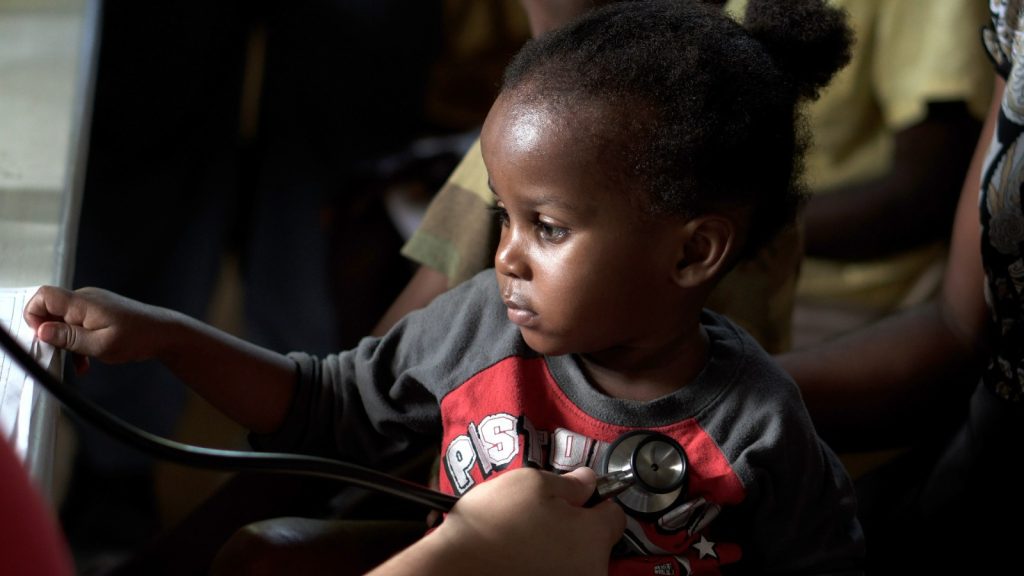
Then consider the caregiver dimension. When a child falls sick, a mother, an aunt, or a grandmother typically stops working to provide care. That unpaid labor does not appear in GDP calculations, but it represents real economic output disappearing into a clinic waiting room. Furthermore, when the same illness strikes two or three times a year, as it routinely does across high-transmission zones in the South-South, Middle Belt, and North-West, the cumulative damage is devastating.
Nigeria’s economy would see a boost of $35 billion if malaria targets were met, according to analysis accessed by CSR Reporters (2). That figure alone should end every debate about whether malaria belongs in a boardroom conversation. Beyond households, the ripple effect touches every sector. Agricultural output drops during peak transmission seasons. School attendance declines. Supply chains stall. Malaria in Nigeria is, fundamentally, a poverty engine dressed in a mosquito’s wings.
Your Workforce Is Losing the Battle, and You Are Paying for It
Let us bring this closer to the office. Consider Adaeze, a 31-year-old field sales executive at a consumer goods company in Onitsha. She is reliable, she hits her numbers, and her manager rates her among the strongest on the team.
Twice a year, she goes down with malaria. Each episode costs her employer four to five days of lost productivity, costs her out-of-pocket medical expenses she cannot easily absorb, and costs her team the momentum they had been building. Multiply Adaeze by the thirty or forty field staff in her company. Then multiply that picture across every medium and large employer operating in Nigeria.
The math becomes deeply uncomfortable. Malaria can indirectly impact productivity due to sick leave, lost work productivity, and time spent seeking treatment, causing significant absenteeism in which the affected individual fails to go to work. For Nigerian employers, this is not a welfare issue tucked neatly into an HR policy. It is an operational risk with real numbers attached, and those numbers affect output, retention, team morale, and ultimately, profitability.
And yet most companies still respond reactively. They stock their clinics with artemisinin-based treatments, offer basic sick leave, and consider the matter handled. That is not a malaria strategy. That is a company watching money walk out the door every quarter and calling it unavoidable.
The CSR Gap: When Awareness Replaces Action
Here is where the conversation needs to get uncomfortable. Many companies in Nigeria do something for World Malaria Day. They donate insecticide-treated nets to a community school. They organize a health talk. And they partner with an NGO for a one-day screening exercise and post the photos. These gestures are not without value, but they are not transformation.
The real gap in how corporations engage with malaria in Nigeria is the absence of systemic, measurable, sustained intervention. Real malaria prevention at the corporate level requires environmental management around company facilities and field operations. It requires prophylactic programs for staff in high-risk zones, access to rapid diagnostic testing, and subsidized treatment for employees and their dependents throughout the year, not just around World Malaria Day.
Moreover, too many CSR reports in Nigeria vaguely mention malaria under a broad “community health” banner, without specifying investment figures, program coverage, or outcomes. Consequently, it becomes genuinely impossible to distinguish strategic impact from communication optics. And that distinction matters enormously because it determines whether real people actually benefit.
CSR Reporters Review: 5 Top Malaria Efforts in Nigeria
To understand what real action looks like beyond awareness campaigns, CSR Reporters reviewed recent corporate, government, and public health interventions across Nigeria. What we found shows early progress. However, it also reveals where momentum remains uneven.
1. Corporate malaria insurance pilots
In 2025, LG Electronics partnered with AXA Mansard to offer free malaria insurance. It covers treatment, telemedicine, and medication support. This moves beyond awareness into practical financial protection.
2. Local test kit manufacturing scales up
Codix Bio Ltd launched large-scale production of malaria rapid diagnostic kits. Capacity is projected at over 100 million annually. This strengthens local supply chains and reduces reliance on imports.
3. Lagos public-private elimination push
The Lagos State Ministry of Health is working with private and development partners to reduce malaria prevalence to about 1.3 percent. The model reflects coordinated, locally driven action.
4. Nationwide prevention campaigns continue
Nigeria has distributed tens of millions of insecticide-treated nets in recent years. Coverage now reaches a majority of households, preventing millions of cases annually. Scale is improving, but sustained usage remains a challenge.
5. Local production of prevention tools
Vestergaard is partnering locally to produce next-generation mosquito nets in Ogun State. This signals growing investment in domestic production of essential malaria tools.
These efforts signal progress. However, a pattern is clear. Most high-impact interventions are still driven by government and global partnerships such as the World Health Organization and the Global Fund. Corporate Nigeria is participating, but it is not yet leading at the scale the problem demands.
What Some Leaders Are Doing, and What Most Are Not
It is important to acknowledge where genuine momentum exists. In August 2024, the Nigerian government reinaugurated the Nigeria End Malaria Council (NEMC) with a clear signal that the private sector must carry meaningful weight in this fight. The federal government enlisted prominent business leaders Aliko Dangote, Femi Otedola, and Tony Elumelu to lead the national initiative aimed at eradicating malaria in Nigeria. The council is tasked with mobilizing resources from new sources, closing the funding gap in Nigeria’s National Malaria Strategic Plan, and keeping malaria elimination firmly on the national agenda.
This is significant. It represents a deliberate, structured model of private sector engagement, not a one-off donation. Through corporate social responsibility initiatives, the private sector can contribute significantly to malaria control efforts, freeing up public health resources and strengthening the overall response, according to the CEO of the RBM Partnership to End Malaria.
However, these leadership examples remain exceptions rather than the norm. For the majority of Nigerian businesses, particularly in the rapidly scaling fintech, logistics, manufacturing, and retail sectors, malaria barely registers as a strategic operational risk. This is a significant oversight, especially as these sectors build large workforces in urban and peri-urban environments where transmission pressure is constant and climate patterns are shifting.
ESG Cannot Afford to Ignore Malaria Anymore
The global shift toward Environmental, Social, and Governance reporting has opened a critical window. The “S” in ESG is precisely where malaria in Nigeria belongs, and Nigerian companies need to start treating it accordingly.
Internationally, investors and development finance institutions are paying closer attention to how companies manage workforce health in high-burden disease environments. In 2024, available malaria funding of $3.9 billion fell far short of the Global Technical Strategy target of $9.3 billion by 2025 (3). That funding gap is a direct signal that market actors, including corporate Nigeria, must step into the space that donor dependency alone cannot fill.
Read Also: Leaders Warn Africa’s Malaria Funding Crisis Could Reverse Years of Progress
Beyond compliance and investor optics, however, there is a stronger argument. A company that invests in the health of its workers and surrounding communities builds real social capital, reduces operational disruption, and strengthens its license to operate. Therefore, malaria prevention is not charity. It is competitive positioning. It is what serious ESG commitment actually looks like when you strip away the language and examine the actions.
A New Intervention Demands a New Corporate Response
One development in particular demands the attention of Nigerian business leaders. In October 2024, in a historic step toward combating malaria in Nigeria, the first-ever malaria vaccines were delivered to the Government of Nigeria, thanks to efforts by Gavi, the Vaccine Alliance, UNICEF and WHO. Nigeria officially commenced its malaria vaccination program in December 2024, with the rollout beginning in Bayelsa and Kebbi States.
This R21 vaccine rollout is a genuine turning point. However, the vaccine is currently focused on children under one year of age in high-burden states. It does not address the adult workforce directly. Companies cannot look at the vaccine news as a reason to disengage. If anything, the government’s momentum should embolden private sector actors to match it with equal urgency.
Nigeria needs mandatory CSR allocations from the private sector and bipartisan commitment to hold the line beyond electoral cycles. Domestic financing, is not just an option, it is a signal of serious national ownership.
From Awareness to Action: What Needs to Happen Now
So what should companies actually do differently? First, conduct an honest malaria risk assessment. Track employee absenteeism data, map operational sites against malaria transmission zones, and quantify what current illness-related losses genuinely look like. That data builds the internal business case and reveals where to focus investment.
Second, move beyond net donations toward structural prevention. Environmental sanitation around company facilities, indoor residual spraying in high-risk zones, access to rapid diagnostic tests, and subsidized treatment for staff and their dependents all carry proven efficacy and measurable return on investment. Preventing illness consistently costs less than managing it after it arrives.
Third, leverage existing national frameworks rather than starting from scratch. The Nigeria End Malaria Council, the National Malaria Elimination Programme, the Global Fund, and a network of experienced implementing partners have operational infrastructure that companies can plug into. Partnership amplifies impact and reduces cost per outcome.
Finally, companies must report honestly and specifically. Include malaria prevention in CSR and ESG disclosures with concrete data: investment amounts, number of beneficiaries, reduction in employee sick days, and community reach. Visible, measurable commitment is what separates genuine action from calendar-driven messaging.
Prevention Is Strategy. It Is Time We Acted Like It.
World Malaria Day is not simply a moment for reflection. It is, or at least it should be, a call to make fundamentally different choices.
The persistence of malaria in Nigeria is not only a government problem. It is a business problem, a sustainability problem, and frankly, a leadership problem. The tools now exist in ways they never fully did before. A vaccine has arrived. The End Malaria Council is active. The economic case for elimination is worth $35 billion to this economy. What is missing is the corporate will to match the moment.
To the companies reading this: the most powerful thing you can do this World Malaria Day is not post a graphic. It is to open your workforce data, face what malaria is genuinely costing you, and commit to a structured, funded prevention strategy. Not because it looks good in your annual report. Because your people deserve to work without fighting a preventable disease.
To policymakers: the incentive frameworks that would bring more companies into the malaria elimination effort need urgent attention. Voluntary goodwill has limits. Structural partnerships do not.
And to the broader CSR and sustainability ecosystem in Nigeria: let us hold companies to a higher standard. Awareness without action is theater. Impact is the only metric that matters.
Malaria in Nigeria has persisted long enough. The tools exist, the business case is clear, and the leadership frameworks are now in place. What remains is the decision to act with urgency, consistency, and genuine accountability.
That decision starts today.
References
- World malaria report 2025: addressing the threat of antimalarial drug resistance. Geneva: World Health Organization; 2025. Licence: CC BY-NC-SA 3.0 IGO.
- Meineke, M. (2024) Here’s how reducing malaria can add $16 billion to Africa’s GDP every year, World Economic Forum. Available at: https://www.weforum.org/stories/2024/06/malaria-global-health-economy-africa/ (Accessed: 24 April 2026).
- Lennon, C. (2025) Malaria: Drug resistance and underfunding threaten progress towards eliminating killer disease | UN news, United Nations. Available at: https://news.un.org/en/story/2025/12/1166508 (Accessed: 24 April 2026).
CSR Reporters continues to spotlight the issues shaping business, society, and sustainability. Stay informed with us.
[give_form id="20698"]