csrreporters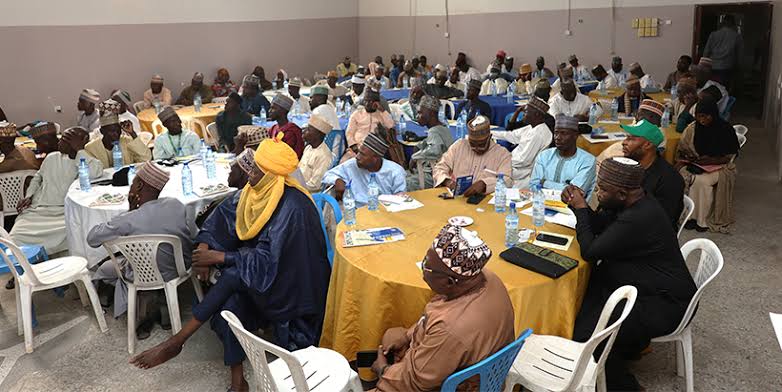
A Push to Build Climate-Resilient Agriculture in Northern Nigeria
The International Institute of Tropical Agriculture (IITA) has concluded a four-day training program aimed at improving climate-smart irrigation practices among farmers in Kano State, as part of ongoing efforts to strengthen food security and agricultural resilience in the region.
The programme brought together 208 participants, including smallholder farmers, agricultural extension workers, and local officials drawn from 16 local government areas across the Kano South Senatorial District.
Held across training centres in Karaye, Sumaila, Garko, and Tudun Wada, the intervention focused on equipping farmers with practical solutions to address the growing impact of climate change on agriculture.
Building Practical Responses to Climate Challenges
Farmers in the region continue to face increasing pressure from erratic rainfall patterns, drought, declining soil fertility, and environmental degradation factors that have significantly affected crop yields in recent years.
The training was designed to provide hands-on knowledge on climate-smart agriculture techniques that can help farmers adapt to these challenges while improving productivity.
Participants were also introduced to improved crop varieties, including soybean, cowpea, maize, groundnut, sorghum, and rice, which are more resistant to climate stress and better suited for changing weather conditions.
Strengthening Productivity Through Modern Irrigation Systems
A key focus of the programme was the adoption of efficient irrigation methods to improve water use and crop output.
Farmers were encouraged to embrace modern systems such as drip and sprinkler irrigation, which allow for better water management and improved yields compared to traditional methods.
There was also strong emphasis on the use of solar-powered irrigation systems, which were highlighted as a more sustainable and cost-effective alternative to fuel-powered options.
Scaling Impact Through Farmer Field Schools
According to organisers, the next phase of the intervention will involve the establishment of Farmer Field Schools at the beginning of the farming season.
These field schools will provide farmers with opportunities for practical demonstrations, peer learning, and direct comparison of improved seed varieties against traditional crops.
The model is expected to strengthen knowledge transfer and improve adoption of modern agricultural practices at the community level.
Support for Climate-Smart Agriculture Adoption
Agricultural facilitators involved in the programme also emphasized the importance of wider environmental practices to support sustainable farming.
Farmers were encouraged to adopt tree planting as part of broader efforts to reduce environmental degradation and improve soil health.
The training further highlighted the urgency of adopting improved farming techniques in response to rising food insecurity and increasing climate variability across agricultural communities.
Local Stakeholders Emphasize Urgency of Adoption
Participants and local agricultural stakeholders described the training as timely, noting that it provides practical solutions to challenges that have continued to affect farming productivity in the region.
They stressed that improving access to climate-smart tools and knowledge remains critical to boosting yields and supporting rural livelihoods.
A Step Toward Sustainable Food Systems
The intervention reflects broader efforts to strengthen agricultural systems through innovation, capacity building, and climate adaptation strategies.
By equipping farmers with practical skills and improved technologies, initiatives like this are helping to build more resilient food systems while supporting long-term environmental sustainability.
As climate change continues to reshape agricultural production patterns, targeted training programmes such as this are expected to play an increasingly important role in supporting food security and rural development across Nigeria.
Further Reading: CSR Reporters recently highlighted how innovative financing models are reshaping access to essential services. See New Women‑Focused Healthcare Financing Initiative Improves Access in Nigeria.
[give_form id="20698"]