csrreporters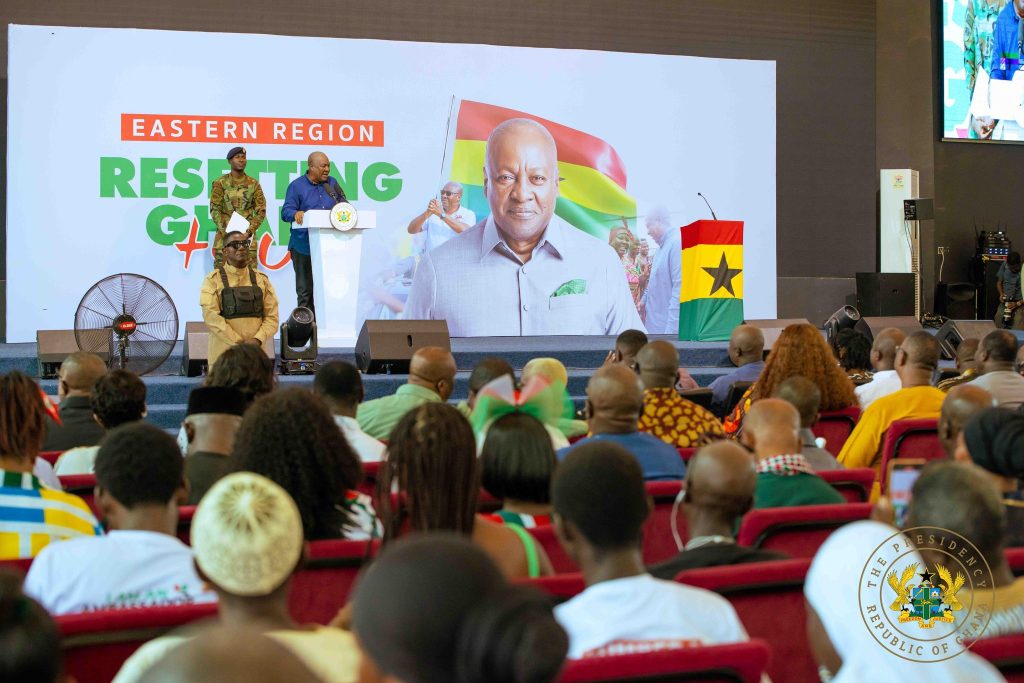
Image from Jubilee House on Facebook
Ghana is taking decisive steps to prevent a looming electricity crisis, and the move is already drawing attention across Africa. Recently, President John Dramani Mahama announced plans for a 1,200-megawatt gas-fired plant to strengthen the country’s power supply.
Currently, Ghana generates about 4,300 megawatts. However, with demand rising steadily, the government now aims to push capacity to roughly 6,000 megawatts. As a result, the country is positioning itself not just for stability but also for surplus generation.
At a town hall meeting in Koforidua, Mahama explained that recent disruptions, including a fire at the GRIDCo control room, exposed vulnerabilities in the system. Nevertheless, swift action by local engineers restored nearly 1,000 megawatts, which reinforced confidence in domestic technical capacity.
A Signal Beyond the Grid
Energy reliability is no longer just an infrastructure issue. Instead, it has become central to corporate social responsibility, environmental sustainability, and governance frameworks across Africa.
Reliable electricity directly supports economic inclusion, job creation, and industrial growth. Therefore, Ghana’s proactive investment signals a strong alignment with ESG principles, particularly in governance and long-term planning.
Moreover, partnerships with Jubilee stakeholders and ENI, involving investments of up to 3.5 billion dollars, highlight the role of private sector collaboration in sustainable development. In many ways, this reflects a growing shift where governments and corporations jointly drive impact.
Nigeria’s Power Reality in Contrast
While Ghana is planning ahead, Nigeria continues to struggle with persistent power shortages. Although Nigeria has an installed capacity of over 12,000 megawatts, actual generation often falls below 4,000 megawatts due to gas constraints, transmission issues, and maintenance gaps.
Consequently, millions of Nigerians rely heavily on generators, which increases both living costs and carbon emissions. In addition, businesses face rising operational expenses, thereby weakening competitiveness.
Unlike Ghana’s forward-looking approach, Nigeria’s power interventions are often reactive. For instance, grid collapses and fuel supply disruptions frequently trigger emergency responses rather than long-term solutions.
Across Africa: A Mixed Energy Landscape
Elsewhere on the continent, countries are adopting varied strategies to address energy deficits. South Africa, for example, continues to battle load shedding while accelerating renewable energy procurement. Meanwhile, Kenya is expanding geothermal and wind capacity to stabilize supply.
However, a clear pattern is emerging. Nations that invest early in infrastructure and diversify energy sources tend to achieve greater stability. On the other hand, countries that delay reforms often face prolonged crises.
Sustainability and the Road Ahead
Ghana’s gas-powered strategy raises important sustainability questions, yet it also offers a practical transition pathway. Although gas is a fossil fuel, it emits less carbon than diesel or coal, making it a relatively cleaner option in the short to medium term.
At the same time, long-term ESG alignment will require stronger integration of renewable energy sources. Therefore, Ghana’s current plan should be seen as a bridge rather than a final destination.
For Nigeria, the lesson is clear. Sustainable energy is not just about capacity but also about governance, investment discipline, and policy consistency. Without these elements, even abundant resources cannot guarantee reliable power.
Read Also: Nigeria’s Rural Communities Gain Momentum in Energy Access Through Mini Grids
The CSR Imperative
For corporates operating in Nigeria and across Africa, energy challenges present both risks and opportunities. Companies are increasingly expected to invest in alternative power solutions, support community electrification, and reduce carbon footprints.
As a result, energy has become a defining pillar of CSR strategy. Businesses that proactively address power challenges are more likely to build trust, enhance resilience, and contribute meaningfully to sustainable development.
Conclusion
Ghana’s move to avert a power crisis is more than a national policy decision. Instead, it serves as a regional signal that planning, partnerships, and sustainability must work together.
Nigeria, with its vast resources and growing demand, stands at a critical crossroads. The question is no longer whether reform is needed, but how quickly it can be executed.
If anything, Ghana’s example shows that the cost of preparation is far lower than the cost of crisis.
[give_form id="20698"]