csrreporters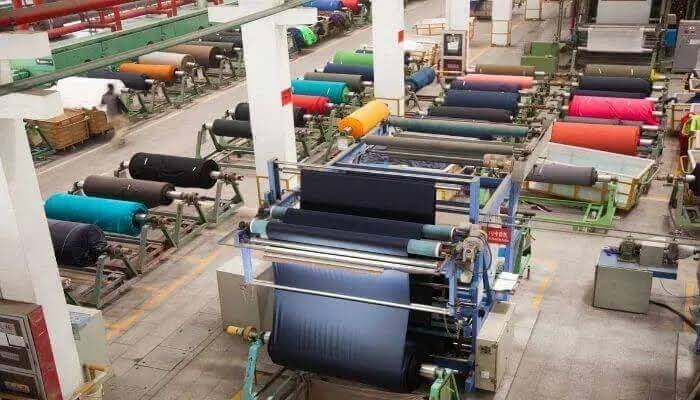
Nigeria is stepping up efforts to revive its Cotton, Textile, and Garment (CTG) sector in a renewed push that goes beyond industrial policy towards job creation, rural empowerment, and inclusive economic development.
At the heart of this initiative is a national ambition to rebuild one of the country’s most historically significant industries, while creating sustainable livelihoods for millions of Nigerians across farming communities, manufacturing hubs, and urban centres.
Once a vibrant pillar of Nigeria’s industrial landscape, the textile sector has experienced decades of decline. Factories that once provided steady employment across states such as Kaduna, Kano, Lagos, and Aba have either shut down or significantly reduced operations. This collapse has had a ripple effect on cotton farmers, artisans, and small-scale traders who depended on the value chain for income.
Now, the government is seeking not only to revive production but to restore the sector as a driver of inclusive growth and community development.
Rebuilding a Value Chain That Supports Communities
The renewed Cotton, Textile, and Garment initiative is structured around a full value chain approach—linking cotton farmers in rural communities to textile mills and garment producers in urban centres.
This model is expected to strengthen agricultural livelihoods while expanding industrial opportunities. For many rural farmers, the revival of local cotton demand could translate into improved income stability, better market access, and renewed confidence in cotton farming as a viable economic activity.
At the same time, textile manufacturers and garment producers are expected to benefit from a more reliable supply of locally sourced raw materials, reducing dependence on imports and supporting domestic production.
The initiative is being driven under the coordination of the Federal Ministry of Industry, Trade and Investment, which is leading efforts to reposition the Cotton, Textile, and Garment sector as a key pillar of industrial growth in Nigeria.
Job Creation with Social Impact
A key focus of the initiative is its projected creation of over 1.5 million jobs across the value chain. These opportunities are expected to cut across multiple levels, including smallholder farmers, factory workers, machine operators, designers, tailors, logistics providers, and technical professionals.
Beyond numbers, the employment drive carries a deeper social impact. It presents an opportunity to engage Nigeria’s growing youth population, many of whom continue to face limited access to stable employment.
For rural communities, particularly in cotton-producing regions, the initiative offers a pathway to economic inclusion by reconnecting them to structured agricultural markets and industrial supply chains.
Strengthening Rural Economies Through Cotton Farming
Cotton farming sits at the foundation of the textile value chain, and its revival is expected to have significant effects on rural development.
For many smallholder farmers, the decline of the textile industry led to reduced demand for cotton and shrinking income opportunities. The renewed focus on local sourcing is expected to re-establish cotton as a key cash crop, encouraging increased production and improved livelihoods.
With stronger institutional support, farmers could benefit from better access to improved seedlings, training, and more structured market systems. This shift is expected to enhance productivity while reducing post-harvest losses and exploitation by middlemen.
Restoring Industrial Communities
The collapse of textile factories over the years not only affected employment but also weakened entire industrial communities that once thrived around manufacturing activity.
The revival plan aims to gradually restore these ecosystems by encouraging investment in modern textile mills and garment factories. This could help revive local economies in industrial clusters, where small businesses such as transporters, food vendors, and equipment suppliers also depend on factory operations.
For many of these communities, the success of the textile revival is tied directly to broader economic recovery and social stability.
Early Signs of Renewal
Early pilot initiatives have shown encouraging signs of what coordinated value chain development can achieve. In one recent intervention, locally grown cotton was processed into finished garments, producing thousands of made-in-country T-shirts within a short period.
While still limited in scale, such initiatives demonstrate the potential for Nigeria to rebuild its textile capacity when production, processing, and distribution are properly aligned.
Stakeholders view these early results as proof that with the right investment and coordination, the sector can once again become a strong employer and contributor to national development.
Addressing Structural Barriers
Despite the optimism, several structural challenges remain. These include high production costs, inconsistent power supply, limited access to finance, and the continued presence of imported textiles in local markets.
Stakeholders have stressed that overcoming these barriers is essential to ensuring that the revival effort delivers long-term impact. Without improvements in infrastructure and policy enforcement, local manufacturers may continue to struggle to compete effectively.
Access to affordable financing is also seen as critical, particularly for small and medium-scale enterprises that form a large part of the textile ecosystem.
A Pathway to Inclusive Industrialisation
The textile industry revival is increasingly being viewed as more than an economic strategy—it is a pathway to inclusive industrialisation.
By linking agriculture, manufacturing, and trade, the initiative has the potential to create shared prosperity across different segments of society. From rural cotton farmers to urban factory workers, the benefits of a functioning textile value chain could extend widely across the country.
It also aligns with broader goals of reducing import dependence, strengthening local production capacity, and building a more resilient economy driven by value addition rather than raw material export.
Looking Ahead
As implementation continues, the success of the textile revival will depend on sustained commitment, strategic investment, and effective collaboration between government, private sector actors, and development partners.
If successfully executed, the initiative could mark a turning point in Nigeria’s industrial history—one that restores lost jobs, revitalises rural economies, and repositions the textile sector as a key pillar of national development.
For now, it represents a renewed opportunity to rebuild not just an industry, but the communities and livelihoods that depend on it.
Further reading: CPPE Urges FG to Drive Job Creation Through Agriculture and Industry
[give_form id="20698"]