The Visit That Must Not Be a One-Off: Dangote, Olokola, and the Community Compact Africa’s Infrastructure Boom Still Needs
 csrreporters
The Visit That Must Not Be a One-Off: Dangote, Olokola, and the Community Compact Africa's Infrastructure Boom Still Needs
By Eche Munonye
Before the concrete is poured, before the cranes arrive, before the surveys are complete — what a company does in the communities that will be most affected by its project is often the single most important signal of whether that project will generate lasting shared value or repeat the tired story of infrastructure that grows around people without ever growing with them.
Dangote Industries Limited has taken a step that deserves attention. Ahead of the takeoff of the Olokola Deep Seaport — a multi-billion-dollar maritime and industrial infrastructure project at the Olokola Free Trade Zone, straddling the border of Ogun and Ondo States — a high-powered delegation led by Capt. Jamil Abubakar, the MD of Infrastructure & Logistics, went directly to the host communities. They visited Ode-Omi in Ogun Waterside Local Government Area, the Araromi Seaside Kingdom in Ilaje, Ondo State, and Igbokoda town. They came with land and estate surveyors, environmental consultants, and senior officials. They sat with monarchs. They listened to chiefs. They looked youth leaders in the eye.
The response from the communities was striking. The Lenuwa of Ode-Omi, Oba Folailu Adekunle Hassan (Oshotekun II), told the delegation: “We have been expecting you for long. It is good that you are here today. Do your best and we will all benefit from this process.” The Alara of Araromi Seaside Kingdom, HRM Oba Adeoloye Olawole, went further: “We have been waiting for you and for this project to commence. We are going to give you physical and spiritual support. If it is possible for this project to begin tomorrow, you are welcome.”
These are not trivial words. In the context of Nigeria’s history with large industrial projects and host communities, they represent a social licence that is rarely earned — and even more rarely sustained.
The Olokola Project: Scale, Ambition, and What Is at Stake
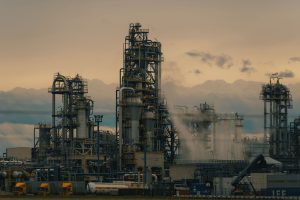
The scale of what is being proposed at Olokola is almost difficult to fully absorb. The Olokola Free Trade Zone covers over 10,000 hectares directly along the Atlantic coastline, less than 100 kilometres east of Lagos, abutting the eastern side of the Lekki-Epe corridor. Dangote’s Vision 2030 — the Group’s ambition to reach $100 billion in annual revenue — has this seaport at its core. The facility is designed to serve as the logistics backbone for exports of fertilisers, petrochemicals, and refined petroleum products, to enable future liquefied natural gas exports, and to function as a gateway for intra-African trade under the African Continental Free Trade Area (AfCFTA).
This is not a medium-sized corporate investment. This is potentially the largest deep seaport in Africa. And it sits on land that is home to fishing communities, coastal households, small kingdoms, and generations of people whose livelihoods are tied to the Atlantic waters on which Dangote now wants to build a global trade hub.
That is precisely why the community engagement visit matters. And precisely why it cannot be the end of the story.
Engagement Is Not the Same as Inclusion
Nigeria has a well-documented and deeply painful history of industrial projects that destroyed communities they were supposed to develop. The Niger Delta remains the most visible monument to that failure. Conflict between oil companies and host communities has been traced, again and again, to a pattern that begins with big promises and ends with uncompensated environmental damage, locked-out local labour, and resentment that boils into disruption. The Nigerian Ministry of Environment has noted that community conflict with companies often arises from the failure to pay compensation, the absence of employment opportunities, and other perceived negative impacts — grievances that begin in neglect and escalate into violence.
The pattern is recognisable: a company arrives, holds a town hall, takes photographs with traditional rulers, distributes a few bags of rice, and proceeds to build. The community is consulted but never embedded. It receives from the project but does not participate in it. And when the promises of jobs and long-term development fail to materialise — as they so often do — the goodwill evaporates, taking social stability with it.
Engagement, in the way the word is often practised, is a communication activity. Inclusion is a governance commitment. They are not the same thing, and the distance between them is where most corporate-community relationships collapse.
Dangote’s delegation to the Olokola host communities was not cosmetic — the presence of environmental consultants and estate surveyors signals serious preliminary intent, and Capt. Abubakar’s explicit commitment to continuous engagement throughout the execution process is the right language to use. But language must be held accountable. The communities have given their social licence. The question is what Dangote will build with it.
“Engagement, in the way the word is often practised, is a communication activity. Inclusion is a governance commitment. They are not the same thing — and the distance between them is where most corporate-community relationships collapse.”
From Engagement to a Sustainable Roadmap: What Dangote Must Now Build
CSR Reporters welcomes the community engagement. But we will be watching what comes after it. Here is what a genuinely sustainable community roadmap for the Olokola project must contain:
- A formal Community Development Agreement (CDA) — not a press release and not goodwill alone. A binding, independently witnessed agreement that specifies the obligations of Dangote to the host communities: the number of local jobs to be created at each phase, the compensation framework for displaced households and economic trees, the environmental monitoring responsibilities, and the community grievance mechanism. The CDA must be a living document, reviewed annually, not a framing device used at project launch.
- A local content commitment that goes beyond rhetoric — Capt. Abubakar’s promise that the port will “create real opportunities for host communities through jobs and business activities” must be translated into procurement targets, local employment percentages, and supplier development programmes that specifically prioritise Ogun and Ondo residents. Not casual labour from the community while skilled contracts flow elsewhere.
- Fishing community transition support — the coastal communities of Ode-Omi, Araromi, and Igbokoda are fishing communities. The Atlantic waters are not just scenery; they are the economic backbone of thousands of families. A seaport of this scale will disrupt fishing access, alter coastal water dynamics, and potentially eliminate traditional fishing grounds. Dangote must commission — and make public — a comprehensive livelihood transition plan for affected fishing households, with retraining, alternative income support, and time-bound follow-through.
- An independent environmental monitoring structure — the environmental consultants who visited communities alongside the Dangote delegation should not be the same consultants who certify environmental compliance throughout the project. The communities deserve independent environmental oversight, with results published and accessible, not filed away in regulatory submissions.
- A community equity participation model — the most ambitious but also the most transformative dimension. Across Africa, forward-thinking infrastructure projects are beginning to explore models where host communities hold a structured stake in project revenue — through community development funds with ring-fenced percentages, cooperative ownership models, or direct royalty arrangements. For a project of Olokola’s scale, this is not idealism. It is the difference between communities that protect infrastructure and communities that resent it.
- A public reporting commitment — CSR commitments made in front of traditional rulers but never documented publicly are not accountable commitments. Dangote should commit to annual community impact reports for the Olokola project: how many local residents were employed, how much compensation was paid, how many grievances were received and resolved, and what the environmental monitoring showed. Publish them. Let the communities and the public read them.
The Larger Call: Other Companies Must Take Note
Dangote’s community visit before project takeoff is commendable. It should also become the floor, not the ceiling, for how major corporate projects are launched across Africa.
Across Nigeria and the broader continent, industrial and infrastructure projects continue to be announced, broken-ground, and built without meaningful prior engagement with the communities most directly affected. The logic has historically been straightforward and deeply flawed: the project is good for the country, therefore it is good for the community, therefore the community should cooperate. It does not work that way. It has never worked that way.
The evidence accumulated across decades of Niger Delta conflict, of pipeline vandalism, of production shutdowns tied to community grievances, of judicial battles over land compensation, tells a consistent story: companies that treat community relations as a public relations task pay for it operationally, legally, and reputationally. The costs of neglect always exceed the costs of genuine inclusion.
To every Nigerian company planning a major project — whether in energy, agriculture, manufacturing, real estate, or mining — the lesson is not complicated. Go to the communities before you go to the regulatory authorities. Sit with the people whose land, waters, and livelihoods your project will reshape. Bring your consultants and your surveyors, yes — but also bring a genuine willingness to be accountable to what you find. And then build a structure that ensures the community is not a bystander to the prosperity it makes possible.
What CSR Reporters Will Be Watching
CSR Reporters will follow the Olokola Deep Seaport project with sustained interest. We will be monitoring:
- Whether a formal Community Development Agreement is signed and made public
- Whether compensation for displaced households and economic trees is paid transparently and on time
- Whether local employment targets are set, tracked, and met — or quietly abandoned
- Whether fishing and coastal communities receive structured livelihood transition support
- Whether Dangote publishes annual community impact disclosures for the project
The monarchy at Ode-Omi said: “Do your best and we will all benefit from this process.” That is a partnership offer, not a blank cheque. Dangote should honour it with the same seriousness with which it has designed this port.
Conclusion: Build the Port. But Build the Compact Too.
Africa needs infrastructure. Nigeria needs ports. The Olokola Deep Seaport, if delivered with integrity, could be transformative — for trade, for the region, and for the communities in Ogun and Ondo that have waited long for economic visibility.
But infrastructure built over communities rather than with them always costs more in the end. The costs are just paid differently — in social conflict, operational disruption, reputational damage, and the quiet, corrosive injustice of people who watched their land become someone else’s fortune.
Dangote has made the right first move. The communities have extended extraordinary goodwill. Now comes the harder work — building not just the largest deep seaport in Africa, but the most accountable community compact that has ever anchored a project of its kind on this continent.
That is the test. And it has only just begun.
CSR REPORTERS | Advisory & Impact Intelligence
If your organisation wants to move from random CSR activities to structured, measurable impact, CSR REPORTERS helps organisations:
- Conduct community needs assessments
- Track and measure CSR impact
- Document and report social investments
- Communicate CSR efforts transparently and independently
Responsible business should not begin when companies become big. It should begin the day the business starts.
[give_form id="20698"]