csrreporters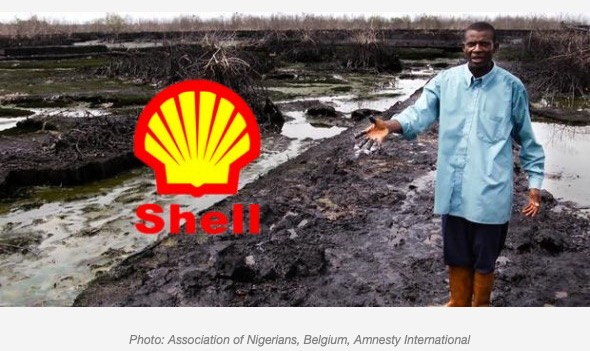
Pollution, Profit, and Shell’s Niger Delta Legacy
After seventy years of extraction, Shell has exited Nigeria without cleaning up a single barrel. Communities are still waiting. The world is watching.
By CSR Reporters Editorial Desk
For seven decades, Shell drilled, extracted, and profited from the Niger Delta — one of the most ecologically rich and economically significant regions on the African continent. It built empires of shareholder value on the backs of rivers, farmlands, and fishing communities. And then, in March 2025, it left.
It sold its Nigerian onshore subsidiary — Shell Petroleum Development Company of Nigeria (SPDC) — to a local consortium called Renaissance Africa Energy for $1.3 billion. A clean exit on paper. A catastrophe in practice.
What Shell left behind is not a business transition. It is a human rights crisis — documented, legally adjudicated, and now formally condemned by the United Nations. CSR Reporters is naming it plainly: Shell’s exit from Nigeria is one of the most consequential CSR failures in African corporate history.
“Nigeria is being used as an experiment for divestment without clean-up.” — UN Working Group on Business and Human Rights, July 2025
Seventy Years of Extraction, Zero Clean-Up
Shell’s presence in the Niger Delta stretches back to the 1950s. Over that period, its subsidiary SPDC became the largest operator in the region — and, according to Amnesty International, also its biggest polluter. A civil society study found that over 17.5 million litres of oil leaked from SPDC pipelines, devastating the health, livelihoods, and environment of communities living in and around its operational footprint.
The Bille and Ogale communities — two of the most severely affected, with a combined population of around 50,000 people — have lived for decades without access to clean drinking water, unable to farm their land or fish their rivers because of oil contamination. The United Nations Environment Programme (UNEP) documented this crisis in a formal report as far back as 2011. That report is now over fourteen years old. The pollution remains. The clean-up has not meaningfully begun.
The numbers are stark: Repairing the environmental damage in Bayelsa State alone — just one of the nine Niger Delta states — has been estimated by the local environment commission to cost at least $12 billion. Shell has committed to none of it.
| Key Facts: The Scale of Shell’s Niger Delta Legacy |
| ▸ 17.5 million litres of oil leaked from SPDC pipelines (civil society estimate) |
| ▸ 50,000+ residents in Bille and Ogale communities directly affected |
| ▸ $12 billion — estimated clean-up cost for Bayelsa State alone |
| ▸ UNEP documented the public health crisis in 2011 — 14+ years ago |
| ▸ Shell sold SPDC to Renaissance Africa Energy in March 2025 for $1.3 billion |
| ▸ No public commitment to environmental remediation was made as part of the sale |
The Divestment That Wasn’t a Resolution
Shell has framed its Nigerian exit as a strategic portfolio decision — a shift toward deepwater and gas operations, away from the operational complexities and security challenges of onshore production in the Delta. That framing, while commercially coherent, is morally evasive.
A responsible exit would have included binding commitments to environmental remediation, independently verified clean-up timelines, and compensation frameworks for affected communities. None of these conditions were attached to the sale. Shell referred vaguely to its business principles and declined to elaborate publicly — citing, as it frequently does, ongoing litigation.
Civil society organisations and community leaders were not consulted in any meaningful way before the sale was completed. The Nigerian government’s upstream regulator had initially rejected the sale, citing concerns about Renaissance’s capacity to manage the assets responsibly. The sale was nonetheless approved and completed.
“By selling its shares of SPDC before the clean-up of the Niger Delta’s polluted ecosystem has even properly started, it appears that Shell is washing its hands of the Niger Delta.” — Both ENDS, 195 civil society organisations, open letter to Shell Executive Committee
Both ENDS, together with 195 international and Nigerian civil society organisations, sent an open letter to Shell’s Executive Committee demanding a full clean-up of the SPDC pollution legacy. Their questions remain unanswered: What due diligence did Shell conduct to ensure Renaissance can meet Nigeria’s and international legal obligations for pollution remediation? Why should investors or affected communities trust that clean-up will happen when there are no public commitments?
The UN Speaks. Shell Stays Quiet.
In July 2025, a formal rebuke arrived from the highest level of international accountability. A working group comprising UN rapporteurs on human rights and environmental issues issued letters to Shell, Eni, ExxonMobil, and TotalEnergies — all of whom had divested Nigerian assets without environmental remediation. The letters were unambiguous.
The UN experts stated that the divestments were conducted without transparency and without following a human rights-based approach, in breach of international law obligations. They linked the legacy operations directly to violations of the right to life, the right to health, the right to safe drinking water, and the right to access remedy.
Most damningly, the UN experts warned that Nigeria was being used as an experiment for divestment without clean-up — and that this approach risked becoming a global template for corporate impunity in the energy sector.
ExxonMobil and TotalEnergies did not respond to the UN’s letters. Shell published a response stating it had embedded respect for human rights in its business principles. That response did not include a remediation commitment, a compensation framework, or a clean-up timeline.
“Shell’s divestment leaves behind a ticking time bomb of pollution, abandoned infrastructure, and unresolved grievances.” — SOMO and Amnesty International
The Courts Step In
With Shell unwilling to act voluntarily, the communities have turned to the courts — and are beginning to win. In June 2025, the UK High Court issued a landmark preliminary ruling: Shell plc and its former Nigerian subsidiary can be held legally responsible for historic oil pollution in the Niger Delta. The court rejected Shell’s repeated attempts to escape liability on procedural grounds.
Critically, the court found that oil spills may constitute trespass, and that failure to clean up could represent a continuing legal wrong — potentially enabling new claims for every day the pollution persists. A full trial is now scheduled for 2027. The Bodo community’s case is being pursued against Renaissance Africa Energy, which inherited SPDC’s liabilities alongside its assets.
Also active is a Nigerian court case filed by King Bubaraiye Dakolo, traditional ruler of Ekpetiama in Bayelsa State, challenging Shell’s divestment under the Petroleum Industry Act 2021 and seeking 40 years of remediation for the cumulative pollution of his domain. That case continues.
| Legal Timeline: The Communities vs. Shell |
| ▸ 2015 — Bille and Ogale communities file UK claims against Shell |
| ▸ 2021 — UK Supreme Court rules communities can pursue claims in UK courts |
| ▸ March 2025 — Shell completes sale of SPDC to Renaissance Africa Energy |
| ▸ June 2025 — UK High Court rules Shell can be held legally responsible for legacy pollution |
| ▸ July 2025 — UN Working Group formally condemns Shell, Eni, ExxonMobil, TotalEnergies |
| ▸ September 2025 — Amnesty International reaffirms Shell’s clean-up obligation post-divestment |
| ▸ 2027 — Full UK trial scheduled |
What Responsible Divestment Should Look Like
CSR Reporters is not opposed to corporate portfolio realignment. Energy companies will continue to divest from oil and gas assets as the global transition accelerates. That is neither surprising nor inherently wrong. What is wrong — what is, in fact, a fundamental CSR failure — is divestment that severs financial liability while abandoning moral and environmental accountability.
A responsible exit from the Niger Delta would have required, at minimum: an independently verified environmental baseline assessment; a legally binding remediation fund underwritten by Shell before transfer; community compensation mechanisms with third-party oversight; and full transparency on what obligations were transferred to Renaissance and what Shell retains.
None of these conditions were met. Shell’s public communications during this period leaned on legal caution rather than moral clarity. That is a choice. And it is a choice that 50,000 people in Bille and Ogale are living with every day.
CSR Reporters’ Final Verdict
Shell is not a company without resources. It is not a company without legal counsel, sustainability officers, or ESG reporting frameworks. It is a company with all of those things — and a Niger Delta that remains chronically polluted seven decades after it arrived.
The verdict of this editorial is straightforward: Shell’s Nigerian exit fails every meaningful test of corporate social responsibility. It fails the communities who cannot drink their water. It fails the legal standard that the UK High Court is now enforcing. It fails the international human rights framework that UN experts have explicitly invoked. And it fails the basic ethical standard that responsible leadership — whether corporate or otherwise — demands.
CSR Reporters will continue to monitor this case. We will report the trial in 2027. We will track whether Renaissance Africa Energy honours the obligations it has inherited. And we will hold both companies to account — because accountability, unlike oil, does not evaporate.
The question for Shell is no longer whether it will be held accountable. The courts, the UN, and history have already answered that. The question now is whether it will act before the trial — or wait to be compelled.
At CSR REPORTERS, we work with corporates, investors, and institutions committed to moving beyond CSR rhetoric toward verified, measurable impact. If your organisation is ready to be held to that standard — or to meet it — we want to hear from you. editor@csrreporters.com
[give_form id="20698"]